-2-1.png)


If you’re feeling burnt out, it might be time to look deeper than your symptoms. Chronic stress, a sense of hopelessness or futility, and losing your grasp on self-efficacy are hallmarks of personal or professional burnout.
Make no mistake; standard interventions like therapy can help. But you didn’t succumb to burnout overnight, so you shouldn’t expect to find a band-aid solution. If you’ve tried and failed to ease the symptoms of burnout, psilocybin could be a helpful option for you.
Why? When used along other healing techniques, psilocybin has been shown to potentially alleviate burnout, improve depressive symptoms, and encourage neural regeneration in ways traditional therapy and prescription medication may fall short.
What Is Burnout?
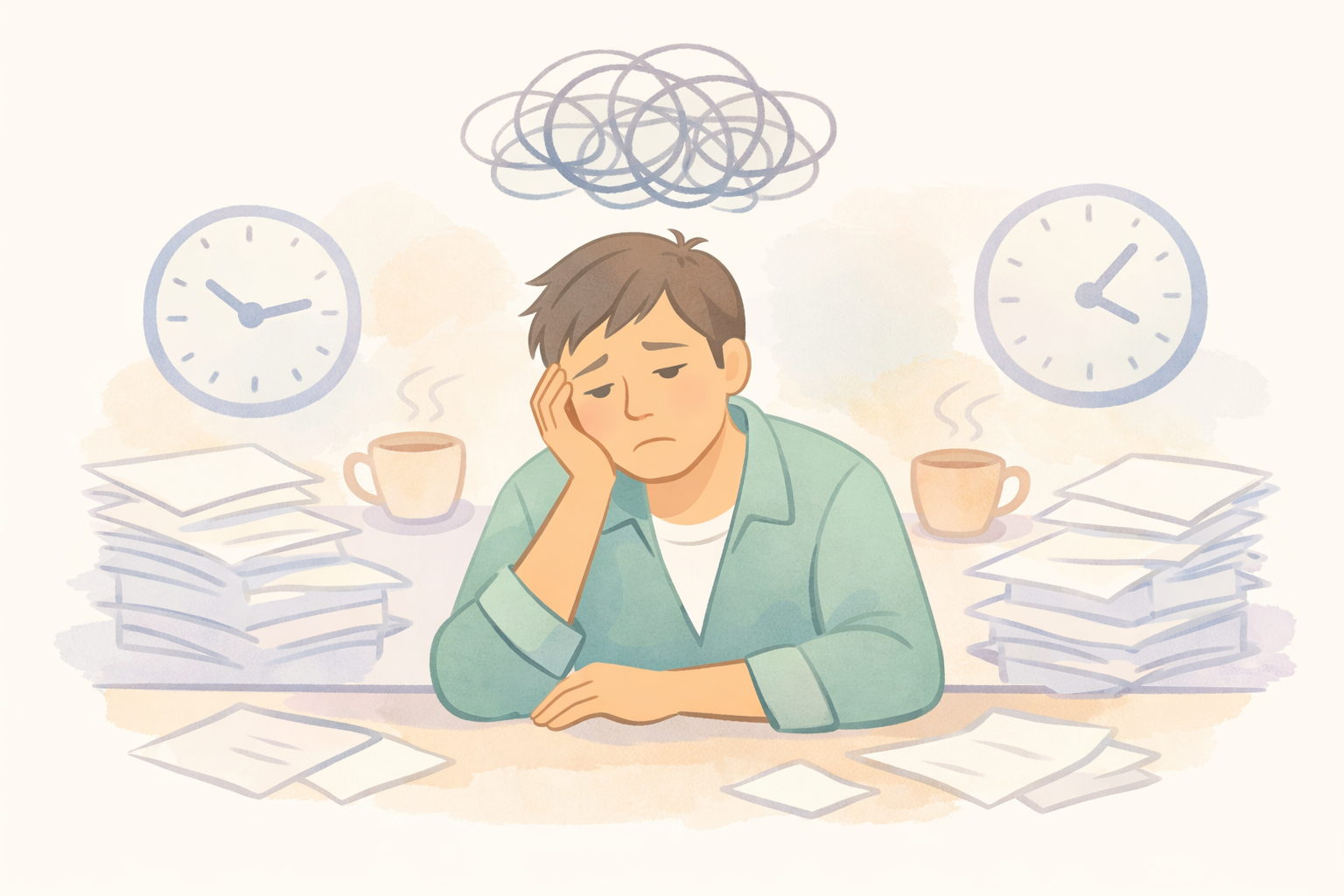
Burnout has a formal framing, but let’s start with a definition that’s more familiar. Like an engine running on fumes, burnout is more than general fatigue. It’s a persistent, lingering exhaustion, both physically and emotionally, no matter how deep you sleep each night or how many long weekends you take.
When the COVID-19 pandemic struck, healthcare workers became frontline soldiers. In the years since, researchers have taken a close look at the consequences. In one study, researchers highlighted the importance of “occupational health” - more sharply, how burnout is “one of the most important psychosocial hazards” for working professionals.
Authors Edu-Valsania & colleagues bottled the burnout issue like this:
- Definition: “...an individual response to chronic work stress that develops progressively and can eventually become chronic, causing health alterations.”
- Consequences: “...damage at a cognitive, emotional, and attitudinal level, which translates into negative behavior towards work, peers, users, and the professional role itself.”
How We Burn Out: The Science
New neuroscientific research has helped us better understand how we burn out. Identifying the causes of burnout is a crucial first step in remedying it. Conducting brain scans on burnout sufferers has revealed “impaired integration between self-referential processing and reward/emotion regulation systems.”
Put simply, burnout occurs when the various networks and arrays in your brain stop working together like they’re supposed to. Neural incongruity leads to a negative feedback loop. You get stuck in the same thought patterns, inhibiting the creation of new neural pathways.

What’s to blame? In part, the Default Mode Network, or DMN. Think of the DMN as a mental “screensaver.” This array comes online when you’re daydreaming, meditating, or to help facilitate personal rumination.
But the DMN can become overactive during periods of consistently elevated stress (sound familiar)? As a downstream consequence, your brain begins to calcify certain thought patterns. It limits your ability to see issues from new angles or imagine positive outcomes.
Psilocybin: A New Way Out of Burnout?
Combatting burnout is about more than just getting the fire going again - you have to encourage true neural regeneration. This is where standard therapies, like antidepressants, can sometimes fall short. Some studies on patients with major depressive disorder show that about a third of patients don’t get the relief they need, even after trying more than one drug.
Rigidity vs. Flexibility: The Key
This is where psilocybin - magic mushrooms and other psychoactive fungi - shows promise. In a landmark 2022 paper on psilocybin as an intervention for treatment-resistant depression, authors Goodwin et al. said the following:
- “25mg psilocybin … reduced depression scores,” but with caveats. “Adverse events” were frequent, and sustained efficacy after three months was spotty.
However, their work did spur a frenzy of other research, some of which has made stronger claims. In 2024, a systematic review & meta-analysis (essentially, a study of existing studies) by Fang et al. said: “Psilocybin has both short and long-term antidepressant effects and holds promise as a complementary or alternative therapy for depression…”
How Psilocybin Opens the “Escape Window”
Burnout comes from incongruity in your mind; a divorce between what you want or expect for yourself, and what’s actually happening. An overactive DMN “traps” you in negative loops. Psilocybin opens an escape window.

Scientists have argued that psilocybin induces a “neuroplastic window” - a phase of heightened sensitivity in which your brain is highly sensitive and engaged, able to view problems from new angles or think creatively about big-picture issues.
Psilocybin & Burnout: What We Know
In the hours and days after a psychedelic experience, your brain is primed for regeneration. One study published in the journal Nature by Siegel et al. looked at brain activity under psilocybin. The authors found typical communication patterns were less rigid and more flexible; brain “softwares” that didn’t typically interact showed increased connectivity as dominant patterns loosened.
Another study demonstrated the practical outcome: Psilocybin users who took just 3 milligrams reported “persisting reductions in anxiety…reduced neuroticism and burnout…and increased cognitive flexibility.”
It’s worth mentioning that psilocybin is not a “burnout cure.” Burnout and conditions like depression are similar, but you can have one without the other. We don’t have much direct research examining the utility of psychedelics in folks who are burnt out, but not depressed.
Moreover, recovering from burnout can take months to years in some cases. The good news is that the neuroplastic sensitivity sparked by psilocybin may help speed things along - if you capitalize on it.
Psilocybin for Burnout & Regeneration: Turning Insights Into Action
Psychedelic experiences can last hours, but the residual effects persist for weeks. Taking psilocybin to combat burnout isn’t a one-day affair. The research is clear: Psilocybin sessions help people feel more open, reflective, and receptive to change.
Integration, a series of “aftercare” practices and behaviors following a psychedelic trip, helps congeal that mindset into something long-lasting. Sure, there are instances of psychedelic users having a “switch flip” and coming out the other side profoundly different.
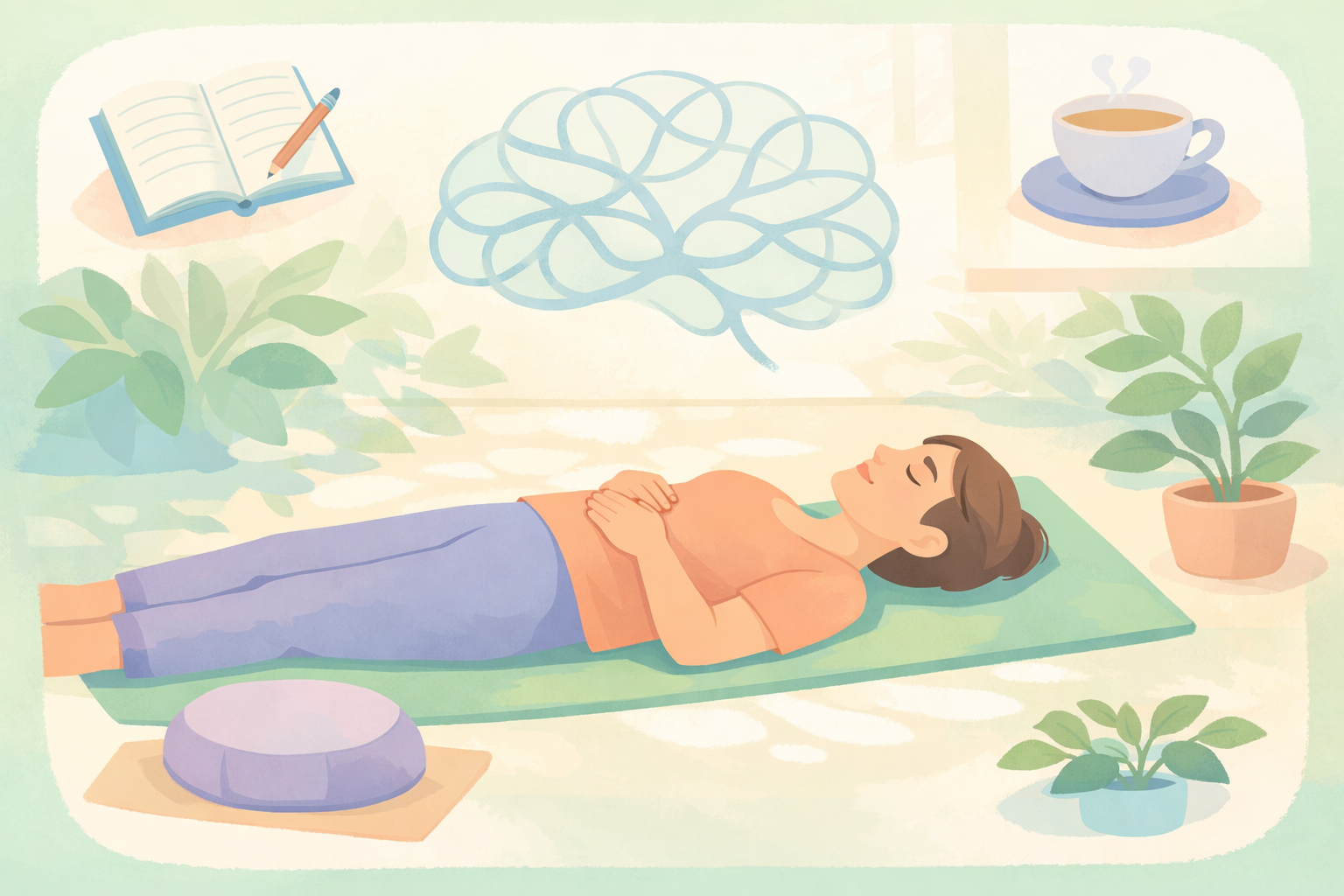
However, most people will have to do a bit of homework to combat burnout. Common integration practices that may help with burnout include talk therapy, journaling, meditation, and somatic activities such as rhythmic dance, drumming, or chanting.
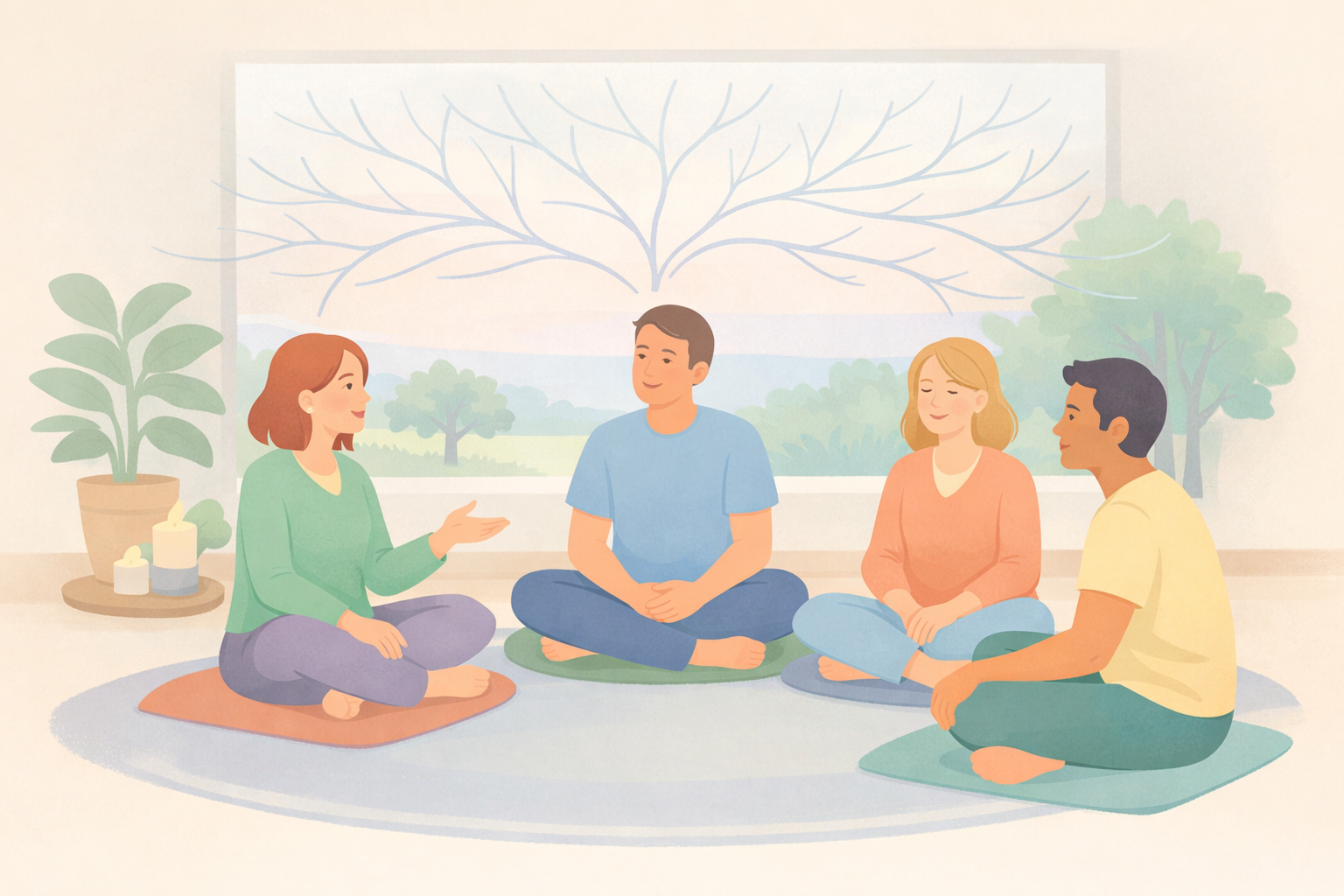
Psychedelic retreats systematize the process altogether, making it a hands-off, mind-on experience for participants. As such, weekend group excursions draw plenty of people looking to combat burnout.
Afterward, you’re advised to make space for a real recovery, which entails spending time in nature, away from high-pressure situations or the shackles of your previous routine. Psilocybin gives you a pile of emotional material to work with - it’s all about what you make out of it.
Frequently Asked Questions
Sources
- Back AL, Freeman-Young TK, Morgan L, et al. Psilocybin Therapy for Clinicians With Symptoms of Depression From Frontline Care During the COVID-19 Pandemic: A Randomized Clinical Trial. JAMA Netw Open. 2024;7(12):e2449026. doi:10.1001/jamanetworkopen.2024.49026
- Edú-Valsania S, Laguía A, Moriano JA. Burnout: A Review of Theory and Measurement. Int J Environ Res Public Health. 2022 Feb 4;19(3):1780. doi: 10.3390/ijerph19031780. PMID: 35162802; PMCID: PMC8834764.
- Liu JP, Gu SY, Song CM, Yang HC, Shi Y, Gu YF, Wang SF, Chen YZ. Abnormal intrinsic functional hubs and connectivity in nurses with occupational burnout: a resting-state fMRI study. Front Public Health. 2025 Jun 16;13:1595550. doi: 10.3389/fpubh.2025.1595550. PMID: 40589802; PMCID: PMC12206858.
- Guan, S., Takahashi, T., Tomita, N. et al. The chain mediation effect of rumination and worry between the intentionality and content dimensions of mind wandering and internalizing symptoms of depression and anxiety. Sci Rep 15, 21223 (2025). https://doi.org/10.1038/s41598-025-99249-5
- Menon V. 20 years of the default mode network: A review and synthesis. Neuron. 2023 Aug 16;111(16):2469-2487. doi: 10.1016/j.neuron.2023.04.023. Epub 2023 May 10. PMID: 37167968; PMCID: PMC10524518.
- Quitkin FM, McGrath PJ, Stewart JW, Deliyannides D, Taylor BP, Davies CA, Klein DF. Remission rates with 3 consecutive antidepressant trials: effectiveness for depressed outpatients. J Clin Psychiatry. 2005 Jun;66(6):670-6. doi: 10.4088/jcp.v66n0601. PMID: 15960558.
- Goodwin GM, Aaronson ST, Alvarez O, Arden PC, Baker A, Bennett JC, Bird C, Blom RE, Brennan C, Brusch D, Burke L, Campbell-Coker K, Carhart-Harris R, Cattell J, Daniel A, DeBattista C, Dunlop BW, Eisen K, Feifel D, Forbes M, Haumann HM, Hellerstein DJ, Hoppe AI, Husain MI, Jelen LA, Kamphuis J, Kawasaki J, Kelly JR, Key RE, Kishon R, Knatz Peck S, Knight G, Koolen MHB, Lean M, Licht RW, Maples-Keller JL, Mars J, Marwood L, McElhiney MC, Miller TL, Mirow A, Mistry S, Mletzko-Crowe T, Modlin LN, Nielsen RE, Nielson EM, Offerhaus SR, O'Keane V, Páleníček T, Printz D, Rademaker MC, van Reemst A, Reinholdt F, Repantis D, Rucker J, Rudow S, Ruffell S, Rush AJ, Schoevers RA, Seynaeve M, Shao S, Soares JC, Somers M, Stansfield SC, Sterling D, Strockis A, Tsai J, Visser L, Wahba M, Williams S, Young AH, Ywema P, Zisook S, Malievskaia E. Single-Dose Psilocybin for a Treatment-Resistant Episode of Major Depression. N Engl J Med. 2022 Nov 3;387(18):1637-1648. doi: 10.1056/NEJMoa2206443. PMID: 36322843.
- Fang S, Yang X, Zhang W. Efficacy and acceptability of psilocybin for primary or secondary depression: A systematic review and meta-analysis of randomized controlled trials. Front Psychiatry. 2024 Feb 15;15:1359088. doi: 10.3389/fpsyt.2024.1359088. PMID: 38426002; PMCID: PMC10902050.
- Laabi S, LeMmon C, Vogel C, Chacon M, Jimenez VM Jr. Psilocybin and psilocin regulate microglial immunomodulation and support neuroplasticity via serotonergic and AhR signaling. Int Immunopharmacol. 2025 Jun 26;159:114940. doi: 10.1016/j.intimp.2025.114940. Epub 2025 May 26. PMID: 40424654.
- Siegel, J.S., Subramanian, S., Perry, D. et al. Psilocybin desynchronizes the human brain. Nature 632, 131–138 (2024). https://doi.org/10.1038/s41586-024-07624-5
- Nayak SM, Jackson H, Sepeda ND, Mathai DS, So S, Yaffe A, Zaki H, Brasher TJ, Lowe MX, Jolly DRP, Barrett FS, Griffiths RR, Strickland JC, Johnson MW, Jackson H, Garcia-Romeu A. Naturalistic psilocybin use is associated with persisting improvements in mental health and wellbeing: results from a prospective, longitudinal survey. Front Psychiatry. 2023 Sep 19;14:1199642. doi: 10.3389/fpsyt.2023.1199642. PMID: 37795509; PMCID: PMC10545967.
- Karlson, B., Jönsson, P. & Österberg, K. Long-term stability of return to work after a workplace-oriented intervention for patients on sick leave for burnout. BMC Public Health 14, 821 (2014). https://doi.org/10.1186/1471-2458-14-821
- Bathje GJ, Majeski E, Kudowor M. Psychedelic integration: An analysis of the concept and its practice. Front Psychol. 2022 Aug 4;13:824077. doi: 10.3389/fpsyg.2022.824077. PMID: 35992410; PMCID: PMC9386447.
Sources
- shown (jamanetwork.com). https://jamanetwork.com/journals/jamanetworkopen/fullarticle/2827553
- one study (pmc.ncbi.nlm.nih.gov). https://pmc.ncbi.nlm.nih.gov/articles/PMC8834764/
- negative feedback loop (nature.com). https://www.nature.com/articles/s41598-025-99249-5
- stuck (pmc.ncbi.nlm.nih.gov). https://pmc.ncbi.nlm.nih.gov/articles/PMC3191246/
- Default Mode Network (sciencedirect.com). https://www.sciencedirect.com/science/article/pii/S0896627323003082
- Some studies (pubmed.ncbi.nlm.nih.gov). https://pubmed.ncbi.nlm.nih.gov/15960558/
- landmark 2022 paper (pubmed.ncbi.nlm.nih.gov). https://pubmed.ncbi.nlm.nih.gov/36322843/
- said (pubmed.ncbi.nlm.nih.gov). https://pubmed.ncbi.nlm.nih.gov/38426002/
- argued (sciencedirect.com). https://www.sciencedirect.com/science/article/abs/pii/S1567576925009300
- published (nature.com). https://www.nature.com/articles/s41586-024-07624-5
- study (pmc.ncbi.nlm.nih.gov). https://pmc.ncbi.nlm.nih.gov/articles/PMC10545967/
- months to years (link.springer.com). https://link.springer.com/article/10.1186/1471-2458-14-821
- Integration (pmc.ncbi.nlm.nih.gov). https://pmc.ncbi.nlm.nih.gov/articles/PMC9386447/
Before you apply
Beckley runs legal, guided psilocybin retreats in Jamaica and psilocybin retreats in the Netherlands: four weeks of preparation, two guided sessions on retreat, six weeks of integration, online and at your own pace, one to two hours a week. Plain answers to the questions people ask first:
What a psilocybin retreat costs · What happens, day by day · Jamaica or the Netherlands · Who should not attend · Apply