
-2-1.png)



Mushrooms are curious things. Flourishing, bountiful species may be delicate or tedious to harvest; rare or isolated species often display surprising resilience. When it comes to Psilocybe niveotropicalis, it seems to be the latter.
This newly-discovered type of psychedelic mushroom is of interest to hobbyists and cultivators alike due to its extreme rarity and unique properties. Here’s where to find it, and what we know so far.
What Psilocybe Niveotropicalis Is Known For
Psilocybe niveotropicalis (white-capped, tropically-found) is a recently discovered species of psilocybin-containing mushroom. In 2019, hobbyist mycologist Scott Ostuni stumbled upon Psilocybe niveotropicalis in the irrigated mulch bed on the grounds of a gated neighborhood in Jupiter, Florida.
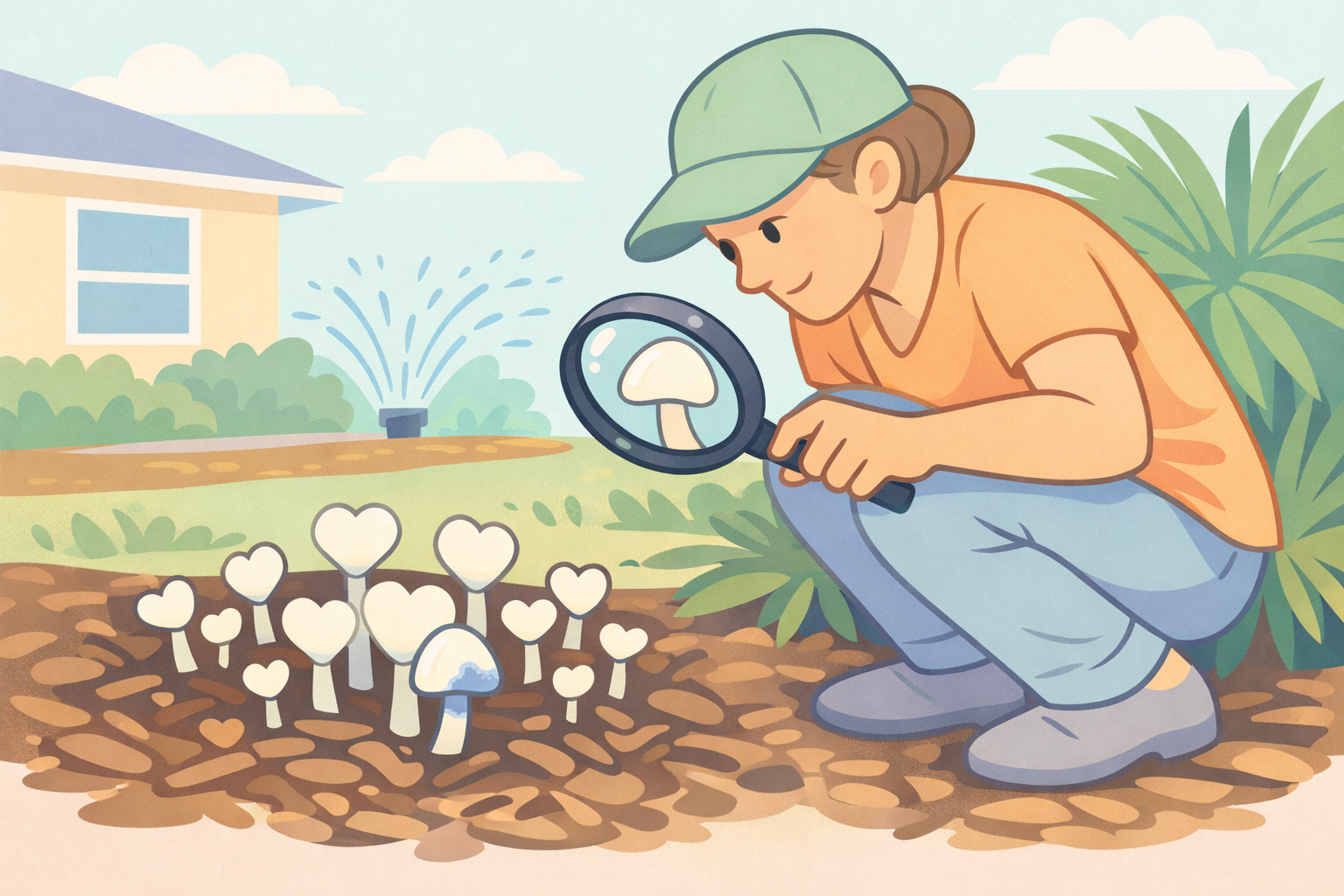
“Niveo,” as it is colloquially known, has since been observed in various locations in Palm Beach County, but as of 2024 hasn’t been found outside of Florida. Notably, we’ve yet to locate P. niveotropicalis outside of environments landscaped or irrigated by humans.
Quick Facts
- Species: Wood-rotting
- Common Names: Niveo, niveos
- Potency: Varies, but on the higher end
- Notable Traits: Fruits from January to mid-September, except for summer months. Like most Psilocybes, it bruises blue when touched.
In his scholarly reporting, Ostuni noted how Psilocybe niveotropicalis “differs from all closely related species” due to its notched, heart-like appearance.
How It Compares to Golden Teacher
Psilocybe cubensis, or “Golden Teacher,” is considered one of the de-facto psychedelic fungi - a reputation it earned by being widely accessible, resilient, and safe to ingest at moderate doses.
Due to its extremely limited growth area and relative rarity, it’s hard to compare Psilocybe niveotropicalis to Golden Teacher (Psilocybe cubensis) directly.
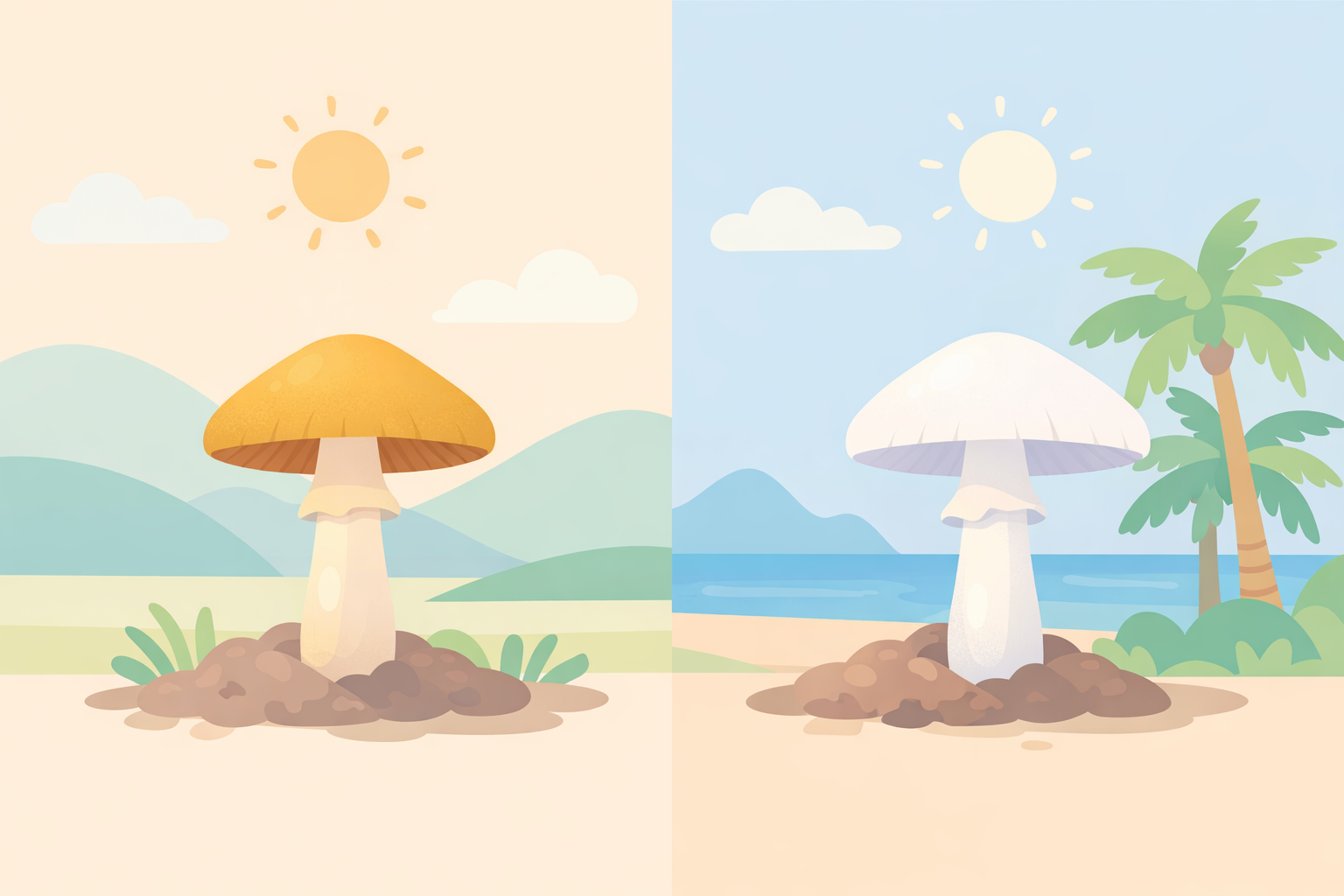
That said, Ostuni did note that, “Psilocybe niveotropicalis is very close to P. thaiaerugineomaculans, P. thaiduplicatocystidiata, and P. wayanadensis together in a sister clade to P. ovoideocystidiata.” We also know that P. niveotropicalis likes warmer weather and may be slightly more potent than Golden Teacher.
Reported Effects & Experiences With Psilocybe Niveotropicalis
As an emerging species, there is very limited reporting, clinical or casual, on the exact effects of Psilocybe niveotropicalis. However, its taxonomical proximity to other Psilocybes means we can assume it produces similar mental and physical effects to other “magic mushrooms”.
- Mental effects: Dreaminess, spatial distortion, dissociation, relaxation
- Physical effects: Moderate increases in heart rate, temperature, and blood pressure, pupil dilation
Other Effects & Emerging Research
Psilocybe niveotropicalis likely behaves similarly to other psilocybin-containing mushrooms when ingested, but we can’t know for certain until there’s more verifiable data. Until then, it pays to be mindful of ingestion risks.
According to the North American Mycological Association (NAMYCO), poisoning is a legitimate concern when consuming certain mushroom species. Misidentification can lead to serious problems; there are many similar-looking fungi to P. niveotropicalis, so look out for its distinct blue bruising, and proceed with caution when handling or consuming emergent bulbs.
Origins & Classification
Psilocybe niveotropicalis is currently believed to originate exclusively from southern Florida, United States. Experts have identified close relatives in parts of Asia, suggesting P. niveotropicalis may hail from other parts of the world, but this has yet to be confirmed. Psilocybe niveotropicalis is part of the Psilocybe genus.
- Kingdom: Fungi
- Phylum: Basidiomycota
- Class: Agaricomycetes
- Order: Agaricales
- Family: Hymenogastraceae
Where It Grows Naturally
So far, Psilocybe niveotropicalis seems to grow only in the Palm Beach region of Florida. Like all Psilocybes, it prefers growing on withering plant matter and enjoys warm weather, high humidity, and abundant water.
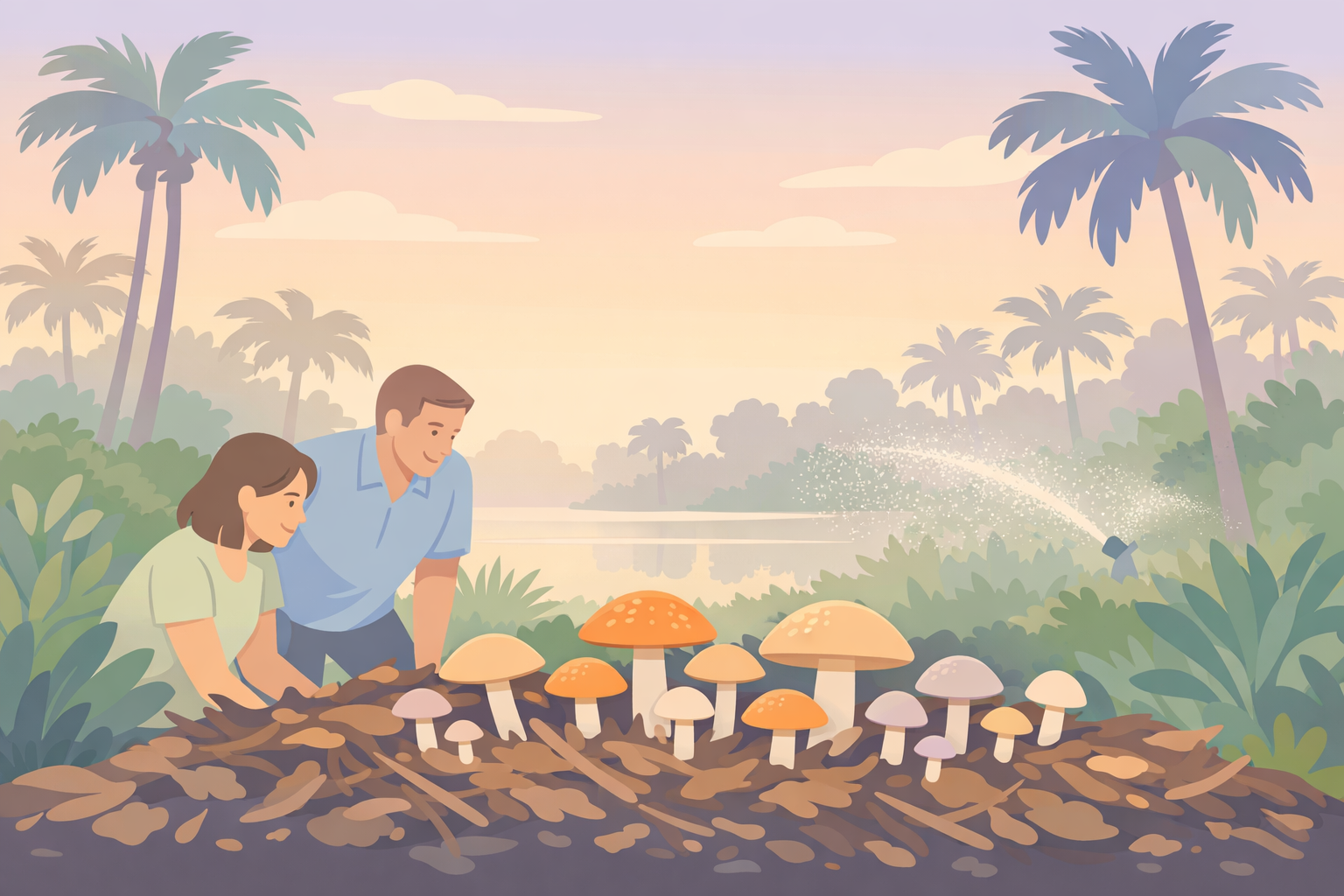
Ostuni’s reporting is likely one of the only verified findings currently available. However, his work did mention an unverified sighting from three years prior, which “may be the first documented instance” of the species. No specimens were retained for study.
Safety, Legal Status, & Harm Reduction
Psilocybin and its derivative psilocin are Schedule I controlled substances in the United States. Psilocybe niveotropicalis does not have any direct laws or statutes pertaining to it. Still, it’s safe to assume that possessing or distributing it may have legal consequences.
On the harm reduction front, standard psychedelic best practices apply. If you’re going to consume Psilocybe niveotropicalis, do so in a calm, serene environment, under supervision from a trusted friend. If you have a history of certain psychotic disorders or other mental health issues, exercise extreme caution, as psilocybin can make things worse in some cases.
Frequently Asked Questions
Sources
1. Ostuni, Scott & Rockefeller, Alan & Jacobs, Jordan & Birkebak, Joshua. (2024). Psilocybe niveotropicalis: a new species of psilocybin containing mushroom from South Florida. 33. 1-17.
2. Straumann I, Holze F, Becker AM, Ley L, Halter N, Liechti ME. Safety pharmacology of acute psilocybin administration in healthy participants. Neurosci Appl. 2024 Mar 16;3:104060. doi: 10.1016/j.nsa.2024.104060. PMID: 40656108; PMCID: PMC12244205.
3. Simonsson O, Goldberg SB, Osika W, Stenfors CUD, Chaturvedi S, Swords CM, Narayanan J, Hendricks PS. Longitudinal associations of naturalistic psychedelic use with psychotic and manic symptoms. Psychol Med. 2025 Mar 31;55:e99. doi: 10.1017/S0033291725000716. PMID: 40162511; PMCID: PMC12094617.