Book a Call Apply Now

Beckley_Logo_White_Vertical

Public Benefit Corporation

Are your clients asking about psychedelics? Here's some context.

Psilocybin is generating significant clinical interest. Nearly 150 clinical trials, spanning more than 50 potential indications, are currently underway worldwide, and your clients may be exploring retreat options. The intent of this resource is to support informed conversations - grounded in neuroscience and clinical evidence.

Neuroscience

What psilocybin does in the brain - and why it matters clinically

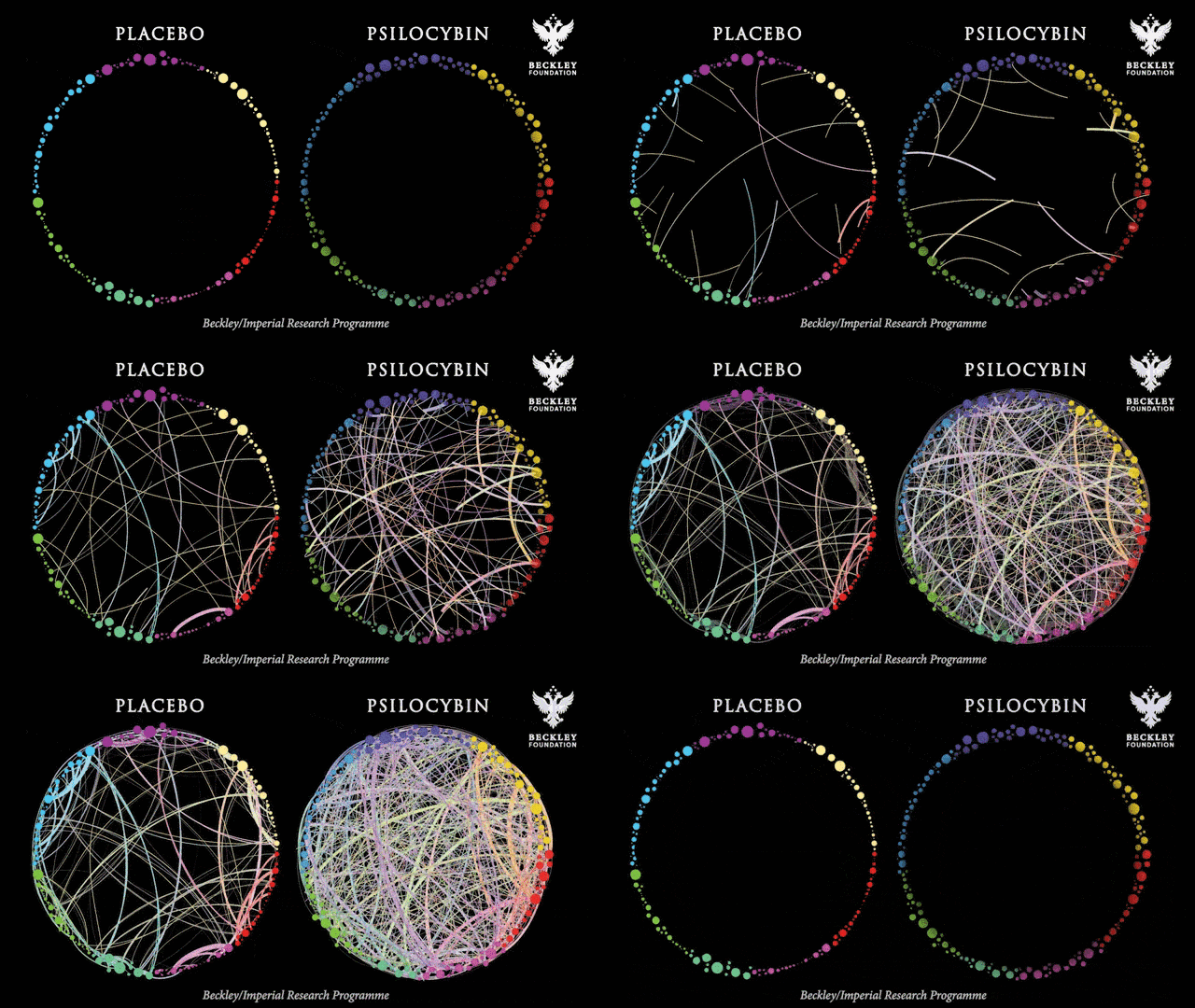
Brain connectivity on placebo vs. psilocybin

Brain functional connectivity on placebo (left) vs. psilocybin (right). Beckley Foundation / Imperial College London.

Psilocybin is converted to psilocin after ingestion, which binds to serotonin 5-HT2A receptors and produces downstream changes in brain network activity (Madsen et al., 2019). Three mechanisms are particularly relevant for clinicians:

Default Mode Network Suppression

The DMN is the brain network most associated with self-referential thinking, rumination, and the maintenance of rigid cognitive patterns. In depression and anxiety, the DMN becomes overactive, locking the brain into repetitive negative thought cycles that resist cognitive intervention. Psilocybin temporarily suppresses DMN activity, disrupting these patterns and increasing communication between brain regions that do not typically interact.

Carhart-Harris et al., 2013; Daws et al., 2022

Neuroplasticity

Psilocybin stimulates the release of Brain-Derived Neurotrophic Factor (BDNF) and promotes rapid dendritic spine growth in the prefrontal cortex. In preclinical research, a single dose produced measurable increases in the size and density of neuronal connections. This neuroplastic window, lasting days to weeks, represents a period of heightened capacity for behavioral and cognitive change.

Shao et al., 2021

Global Brain Integration

Brain imaging from the Beckley Foundation / Imperial College London research program shows significantly increased functional connectivity under psilocybin, with thousands of new cross-network connections forming that are not present under placebo. This state is associated with increased psychological flexibility, emotional processing, and the capacity for insight.

Petri et al., 2014

Clinical implication: Clients may return from a psilocybin experience with access to new emotional, psychological, and somatic material that can reinvigorate the therapeutic process. The neuroplastic window following the experience is when therapeutic support can really help the process of transformation in the client's life.

References

  1. Madsen, M.K., Fisher, P.M., Burmester, D. et al. "Psychedelic effects of psilocybin correlate with serotonin 2A receptor occupancy and plasma psilocin levels." Neuropsychopharmacology 44, 1328–1334 (2019). Nature · PubMed
  2. Carhart-Harris, R.L., Leech, R., Erritzoe, D. et al. "Functional connectivity measures after psilocybin inform a novel hypothesis of early psychosis." Schizophrenia Bulletin 39(6), 1343–1351 (2013). PMC · PubMed
  3. Daws, R.E., Timmermann, C., Giribaldi, B. et al. "Increased global integration in the brain after psilocybin therapy for depression." Nature Medicine 28, 844–851 (2022). Nature Medicine · PubMed
  4. Shao, L.X., Liao, C., Greber, I. et al. "Psilocybin induces rapid and persistent growth of dendritic spines in frontal cortex in vivo." Neuron 109(16), 2535–2544 (2021). PMC · ScienceDirect
  5. Petri, G., Expert, P., Turkheimer, F. et al. "Homological scaffolds of brain functional networks." Journal of the Royal Society Interface 11(101), 20140873 (2014). PMC · PubMed

Research cited in this content describes findings from independent studies and clinical trials, none of which describe Beckley Retreats' program. Findings reported in published research do not constitute claims by Beckley Retreats about its program, and Beckley Retreats does not represent that any individual will experience the outcomes described in the cited research.

Clinical Context

Why some clients access new material through psilocybin

The mechanisms described above, DMN suppression, increased neuroplasticity, and cross-network integration, help explain a pattern clinicians are increasingly observing: clients are returning from structured psilocybin experiences with access to new emotional and somatic material and a different perspective of themselves.

The experience is embodied

Psilocybin temporarily reduces the brain's reliance on top-down cognitive processing. Participants frequently report accessing emotions, sensations, and memories in a way that may bypass intellectual defenses. For therapists, this is important context: your client may return with a fundamentally different relationship to their body, their feelings, their emotions, and their relational and behavioral patterns - even if they cannot yet articulate it verbally.

Rigid patterns can shift when the DMN quiets

Repetitive negative thinking is a transdiagnostic feature of depression, anxiety, OCD, and PTSD. When psilocybin suppresses DMN activity, the self-reinforcing thought loops that maintain these patterns are temporarily interrupted. Clients often describe this as a felt sense of "unsticking." There is a greater freedom to approach these patterns in a new, more skillful way.

The neuroplastic window is where therapy can be very important

The days and weeks following a psilocybin experience represent a period of elevated neuroplasticity. The brain is more receptive to forming new patterns and connections. This is when the therapeutic process can be very supportive for integrating the experience, which means supporting the client to weave the insights and inspiration from the retreat into their being.

Integration is measured in months, not sessions

Some clients integrate rapidly. Others find that the full significance of their experience unfolds over months or even years. This is consistent with the neuroscience. Structural and functional brain changes following psilocybin are not instantaneous behavioral rewrites. The therapist's role in holding that long arc, giving space for the process to ripen and unfold, and providing continuity of support is central to the outcome of personal growth.

How We Work Together

How Psilocybin works alongside therapy

Many therapists worry that psychedelic retreats may sideline their work or disrupt their relationship with clients. We understand that concern, but it's important to note that Beckley Retreats is supporting an exploration of self, which is an experience. The role of therapy is to support the process of after the experience.

Beckley Retreats is not offering a psychotherapeutic or medical intervention. We do not provide diagnoses, treatment plans, or ongoing clinical care. What we offer is a structured, legal, and safe psilocybin experience that can potentially open new avenues for your clients - avenues that you are best positioned to help them navigate.

Our question to every therapist is simple: how can we support the therapeutic work you are already doing?

The Program

Our Programs are Backed by 25+ Years of Research

Many retreat programs end when you leave. Ours is built around a program geared towards personal growth, which means engagement with a process over time.  

Before the retreat

Prepare

4 weeks, digital

Group Zoom sessions to create a container of psychological and emotional safety; one-on-one support to provide individual preparation guidance; guided processes; and educational resources delivered via our app.

During the Retreat

Immerse

4 to 5 days, on-site

2 guided psilocybin sessions with live music and a 1:3 facilitator to participant ratio. Breathwork, meditation, movement, and integration sessions to support grounding insight and self-regulation. Chef-prepared nutritional meals to nourish your body.

After the Retreat

Integration

4 to 6 weeks, digital

Group sessions, daily practices, and science-backed tools to support your personal growth. Ongoing connection with your retreat group via online sessions and WhatsApp group.

Our Team

Lead Facilitators


Dingle Spence

Dingle Spence

Lead Facilitator
Full Bio →
Ben Sheinwald

Ben Sheinwald

Lead Facilitator
Full Bio →
Kosu Boudreau

Kosu Boudreau

Lead Facilitator
Full Bio →
Sergio Rodriguez-Castillo

Sergio Rodriguez-Castillo

Lead Facilitator
Full Bio →
Hanifa Nayo Washington

Hanifa Nayo Washington

Lead Facilitator
Full Bio →
Mark Mabon

Mark Mabon

Lead Facilitator
Full Bio →

Frequently Asked Questions


What is the process of discerning if someone is suitable (what is the "screening" provision)?

Our application process includes a suitability screening. Our screening team carefully reviews each application. This is not a diagnostic tool. It is designed to identify  certain conditions that may make participation inadvisable. We also use the screening to ensure the retreat is the right fit for the participant's presentation and objectives. For some individuals, we are simply unable to approve applications based on what the screening reveals.

Who is this retreat suitable for, and who it isn't?

Our programs are designed for individuals seeking personal change, deeper self-connection, improved relationships, or an exploration of consciousness and spirituality. We are unable to accept individuals with active substance addiction, those actively experiencing severe trauma response symptoms e.g. panic attacks, or those currently taking mood stabilizers or antipsychotic medications. We also cannot accept individuals with certain psychiatric conditions including bipolar disorder, a family history of bipolar disorder or predisposition to manic episodes, active or recent suicidal ideation, psychotic disorders such as schizophrenia or schizoaffective disorder, personality disorders, dissociative disorders, or a family history of psychosis. On a case-by-case basis, we may accept individuals with clinical depression, anxiety disorders, and PTSD. Specific physical conditions that prevent participation include epilepsy, brain tumors, history of stroke or aneurysm, uncontrolled high blood pressure, heart attack within one year, unstable heart failure, Long QT Syndrome, liver cirrhosis, chronic kidney disease stage 4 or end-stage renal disease, insulin-dependent diabetes, recent cancer diagnosis, or AIDS with a CD4 count below 200. We also cannot accept individuals who are pregnant or extremely physically ill.

What medications are contraindicated; what is Beckley's approach to SSRIs/ SNRIs?

We cannot admit individuals taking amiodarone, diltiazem, sotalol, quinidine, procainamide, dofetilide, ibutilide, the immunosuppressant mycophenolate, or those currently on chemotherapy or radiation therapy. Mood stabilizers and antipsychotic medications are also contraindicated. Regarding SSRIs and SNRIs: we generally require that participants, with the knowledge and support of their prescribing physician, be at least 3 months clear of all SSRIs/SNRIs and other mood-altering compounds prior to participation. We may consider individuals on very low doses on a case-by-case basis, but we cannot guarantee the experience will be comparable. Serotonin-based medications act on the same receptor system as psilocybin (5-HT2A), and concurrent use typically dulls the psychedelic effect. The transformative benefits are thought to be related to the intensity of the experience, so this interaction is clinically significant. We urge anyone considering tapering to do so only under the supervision of their prescribing physician. Additional medications and conditions that warrant caution (but do not necessarily prevent participation) include aromatase inhibitors and estrogen blockers, antiretroviral medications, triptans for severe migraines, estrogen-based oral contraceptives, and conditions like asthma or type 2 diabetes. We advise participants with any of these to consult their healthcare provider before attending.

What does the retreat experience actually offer? What is the program structure, what does the structure of a day look like?

Our program spans approximately 11 weeks across four phases:

- Preparation (4 weeks, digital): Group sessions by Zoom, a 1:1 preparation call, guided preparation in our app, intention-setting, psychoeducation, and optional supplementary 1:1 coaching.

- Immerse (4–5 days, on-site in Jamaica or the Netherlands): 2 guided psilocybin ceremonies, meditation, breathwork, mindful movement, group integration circles, and nature immersion, encouraging a digital detox. All gourmet meals are included, along with private airport transfers and access to yoga, meditation, and breathwork classes.

- Integration (4–6 weeks, digital): 4 facilitated group sessions, research-informed tools in our app, short daily practices, and optional 1:1 coaching.

- Grow (ongoing): Monthly alumni calls, community gatherings, facilitator-led circles, and live events.

How many people are on a retreat and how many facilitators to participants are there?

There is a minimum of one facilitator for every three participants on all retreats. This ratio ensures direct, personalized support during and beyond the psilocybin ceremonies. Our retreat centers accommodate the group as the sole occupants of the property (or the retreat side of the property in the Netherlands), ensuring privacy and containment. As for guests, we accept up to 18 participants per retreat.

Is there medical assistance if required? What happens if someone has an allergic reaction? Is anyone there qualified to work with a psychotic episode?

Every retreat is facilitated by experienced professionals. In Jamaica, an on-site nurse is present during the experience, and we have access to a locally-licensed, 24/7 on-call doctor as well as urgent care facilities and hospitals within a 30–60 minute drive. In the Netherlands, 24/7 emergency medical care and facilities are accessible within 45 minutes. Regarding psychotic episodes: our screening process is specifically designed to mitigate this risk. We do not accept individuals with psychotic disorders, a family history of psychosis, or a predisposition to psychosis. Psilocybin can cause changes in perception and thought content. For most individuals, these effects are temporary and predictable, but for individuals with certain psychiatric histories, psychoactive compounds can trigger prolonged psychotic or manic episodes. Our screening exists to prevent these individuals from entering the program. We also maintain comprehensive safety protocols and risk management procedures that are frequently updated and shared with all team members and site partners. All facilitators are experienced in working with people with a range of deep emotional processes.

What is the dosing and how is this decided?

Before each ceremony, the participant will have a 1:1 conversation with a facilitator. In this conversation, the facilitator acts as a thought guide to support the participant to decide their dose within the parameters Beckley is comfortable to offer in the experience. This encourages full transparency and ownership of the dosing experience. We also offer a booster within an hour of ingestion if the participant requires.

Doses may vary based on the strain of truffle, but in general:
- First Ceremony: Doses vary between 15-35 grams starting dose (equivalent to 1.5-3.5g).
- Second Ceremony: Doses vary between 35 - 60 grams starting dose (equivalent to 3.5 - 6g)

How can I support my clients in preparation?

Help your client arrive with intention and gumption. We recommend exploring:

- Intentions and expectations. What does the client hope to gain from the experience? What concerns or fears are present?

- Current therapeutic themes. What themes are most at the surface as the retreat approaches?

- Emotional regulation. How does the client typically respond to intense affect? What supportive strategies and resources do they have for self-regulation?

- Relationship to control. Psilocybin frequently involves experiences of psychological surrender. How does the client relate to entering the unknown? How are they with the idea of surrendering control?

- Somatic awareness. The experience is strongly embodied. Clients with limited interoceptive awareness benefit from basic grounding practices beforehand e.g. body scans.

How do you prepare people for the retreat?

Preparation unfolds over four weeks before arrival. Participants attend group Zoom sessions, have a 1:1 preparation call with our team, and work through guided preparation content and resources in our app - including intention-setting exercises and psychoeducation about what to expect. Optional supplementary 1:1 coaching is available. We also encourage participants who are working with a therapist to explore specific themes in their sessions during this period.

What is the quality of the holding? What is the experience/ training/ qualifications of the facilitators?

The members of our team have undertaken myriad trainings to arrive at where they are today. These include trainings in medicine, trauma-informed psychotherapy, body psychotherapy, shamanic practices, coaching, family constellations, yoga, sound healing, body work/ massage and social work. For the purposes of their work at Beckley, every facilitator has extensive experience supporting individuals in deep emotional processes and holding space in settings involving psychedelic experiences. This combination of training and experience is what creates the container of psychological and emotional safety that allows our participants to let go and trust the process that is unfolding within themselves. 

How do you hold this experience vs. one in a clinical setting?

The ceremonial use of psilocybin predates recorded history. Our team of facilitators honors a variety of traditions and lineages passed down from their own teachers. We use this container rather than a clinical one because the psilocybin experience is not only neurological - it is deeply embodied, emotional, and often spiritual. A ceremonial setting with music, nature, intentional group dynamics, and experienced facilitation creates conditions that support the full range of what can emerge. Our approach weaves the wisdom of these traditions with the understanding of western psychology and psychotherapy, alongside modern neuroscience. 

Is there oversight when the ceremony is over? For example, could someone wander off and get hurt?

Our retreat centers are spacious and secure. In Jamaica, our group is the sole occupant of the property, and in the Netherlands, our group is the sole occupant of the retreat side of the property. We maintain a minimum ratio of one facilitator for every three participants, which ensures direct care during and beyond the psilocybin experiences with ample space for personal support throughout the retreat. Our safety protocols are designed to anticipate and respond to a range of potential safety issues, including physical safety on the property. We also note in our application materials that psilocybin can cause transient feelings of dissociation, impaired perception of time and space, and impaired attention. That's why we ensure that participants arrive safely at their rooms and no one is left unattended after the experience.

What are the physiological, psychological, emotional effects (what do people experience on psilocybin)?

Psilocybin experiences are variable. They can include a range of physiological, emotional, visual, and mystical experiences. Physiologically, psilocybin is a generally safe compound with few side effects; nausea, vomiting, and headaches are possible. 

What kinds of experiences might clients bring back to therapy?

Our program assessments across 1,000+ participants since 2020 show that 88% describe the experience as one of the most meaningful of their lives, 76% report improved behaviors and personal practices, and 98% say they would recommend the program. Our Net Promoter Score is 91. From a neuroscience perspective, the mechanisms described above - DMN suppression, elevated neuroplasticity, and increased cross-network connectivity - suggest that psilocybin experiences can yield new emotional and somatic experiences. When combined with ongoing psychotherapy, the neuroplastic window following a retreat represents a period when therapeutic support can have an important role. Clinicians report that clients frequently return with shifted perspectives and a different relationship to patterns that had previously been resistant to change.


We do not make any medical or therapeutic claims about our retreats or programming.

How can I support my clients with integration?

You can help clients ground themselves and unpack the experience, how they understood it then and how they relate to it now, while staying attentive to insights that may surface gradually over time. As they return to everyday life, your role is to help them meet the challenges that arise, bring awareness to their patterns, and support them in making new choices about how to respond in a given situation. Encouraging creativity or movement practices can further support their wellbeing, and ongoing check-ins help maintain momentum and keep them on track with their goals.

Is there integration support afterwards? What is the focus of integration support, how is it done?

Yes. Our integration program spans 4–6 weeks following the retreat and includes weekly facilitated group sessions, research-informed tools and practices in our app, short daily practices, and optional supplementary 1:1 coaching. The focus is on helping participants process their experience, consolidate insights, and translate them into practical changes in their daily lives. Beyond the formal integration period, our Grow phase provides ongoing support through monthly alumni calls, community gatherings, facilitator-led integration circles, and live events. We also strongly encourage participants to continue working with their therapist throughout and after the integration period. The therapeutic relationship is the most important container for long-term integration work.

For Clinicians

Direct experience and practicum opportunities

For clinicians seeking a direct reference point for informed client conversations, Beckley Retreats offers two pathways. Licensed mental health professionals can attend a retreat program in Jamaica or the Netherlands at a special rate. The program includes structured preparation, 2 guided psilocybin experiences, and facilitated integration - the same program your clients would attend.

For clinicians who want to go deeper into the facilitation side, our Team Assistant practicum offers the opportunity to attend the full preparation-immersion-integration program from a facilitator's perspective. Practicum participants observe sessions, co-facilitate integration circles, and receive mentoring from the facilitation team. Practicum participants do not consume psilocybin during the retreat.

Access Your Special Rate

Exclusive for licensed mental health professionals

Fill out the interest form and our team will follow up with details on upcoming retreats and how to apply your discount.

Access Our Complete Therapist Resource Guide

Everything on this page, distilled into a single PDF you can reference, share with colleagues, or keep on file. No sign up required.

Access Therapist Guide

In Their Words

What others in your field are saying

Individual guest experiences vary. Statements shared by Beckley Retreats alumni reflect their personal experiences and are not representations or claims by Beckley Retreats about the outcomes of its program. Beckley Retreats does not offer medical or mental health treatment.

Carlos
"As a public health doctor with decades of global experience, I was deeply impressed by Beckley’s immersive, hands-on approach and their multidisciplinary team who mentored with warmth and wisdom. Their rare blend of deep wisdom, ethical integrity, and heartfelt connection laid an unforgettable foundation for my path as I deepened my path as a facilitator."
Carlos Navarro
PhD, MD
"Being immersed in Beckley’s retreat environment offered a rare blend of humility, attentiveness, and authentic human connection. It was a meaningful step in my development, guided by a team whose quiet strength and deep care left a lasting imprint."
Linda Vazin
Holistic, Somatic Coach
“The Beckley Retreats practicum was the perfect culmination of my psychedelic practitioner training - rooted in science, tradition, and profound wisdom. What stayed with me most was the team’s extraordinary presence, which radiated trust, safety, and deep humanity.””
2024 Practicum Participant
“This retreat was so profound and I am so grateful for the care and the intention with which the facilitators supported us. We showed up as strangers, but we felt as family members.”
Candace Oglesby-Adepoju
Therapist & Integration Specialist
"A few days after returning home I find myself back with my therapist again. I decide to read him an extract from my retreat journal and am transported back to my experience of my first trip again. When I finish I notice him wiping tears from his eyes. We're barely halfway through the session and, rather than feeling trapped behind a protective layer of ice, all I feel is warm."
Ben Ockrent
Ben Ockrent, Therapist, MBACP, Therapy Today Article

Questions about supporting your clients?

 If you'd like to discuss how Beckley Retreats can work alongside your clinical practice - whether for your clients or for your own professional development - our team is available for a call.

Book a Call

Beckley Retreats is a wellness program provider. Beckley Retreats is not a healthcare provider, does not provide medical services, and does not diagnose, treat, cure, or prevent any disease or medical condition. Information shared by Beckley Retreats is educational and informational in nature and is not a substitute for medical or mental health care. Please consult your healthcare provider regarding any medical or psychological condition.