
-2-1.png)


Anxiety disorders are among the most common mental health conditions in the United States, and for many people, it takes concentrated effort to treat them. About one-third of U.S. adults will experience an anxiety disorder at some point in their lives.
There are many variations in how anxiety manifests and the ways to treat it. Some people improve rapidly once they implement a skill or medication, while others improve steadily over time, and still others try many approaches without finding sustained relief.
Why Anxiety Sometimes Persists Despite Treatment
Anxiety disorders are chronic conditions shaped by overlapping factors, such as genetic predisposition, early life experiences, and cumulative stress. Because no single cause drives them, treatment response varies, as only 60 to 70 percent of patients respond, and of those, up to two-thirds experience relapse.
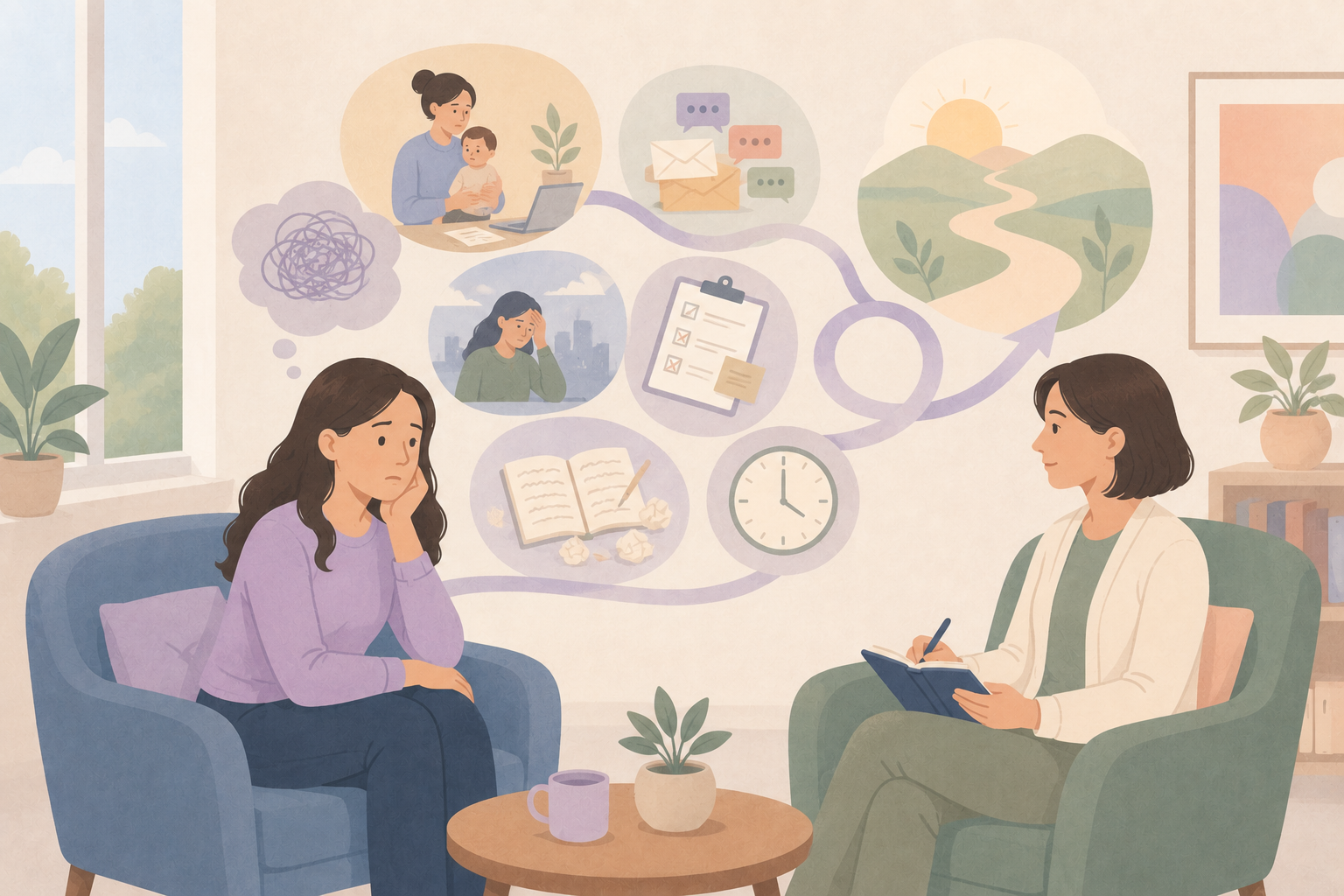
Harvard Health explains that the autonomic nervous system, which governs the fight-or-flight response, can generate physical symptoms. This includes headaches, nausea, and shortness of breath, during both acute anxiety and chronic anxiety, and especially in anxiety disorders.
Psychological and environmental factors, such as learned fear responses, financial strain, and relationship difficulties, can also worsen anxiety, keeping the nervous system in a cyclical state of alert that's hard to escape.
It’s also important to set realistic expectations. For some people, “better” doesn’t look like a full elimination of anxiety. It may be a meaningful reduction in symptoms that allows someone to live their daily life with improved function and less distress.
Common Reasons Anxiety Treatment May Not Be Working
Sometimes treatments don’t work as the patient hopes because other factors may be at play. Anxiety disorders frequently co-occur with major depression, alcohol and other substance-use disorders, and personality disorders. Rule out physical conditions like thyroid, cardiac, or respiratory, as well as substance use or withdrawal, since these can mimic or worsen anxiety symptoms.
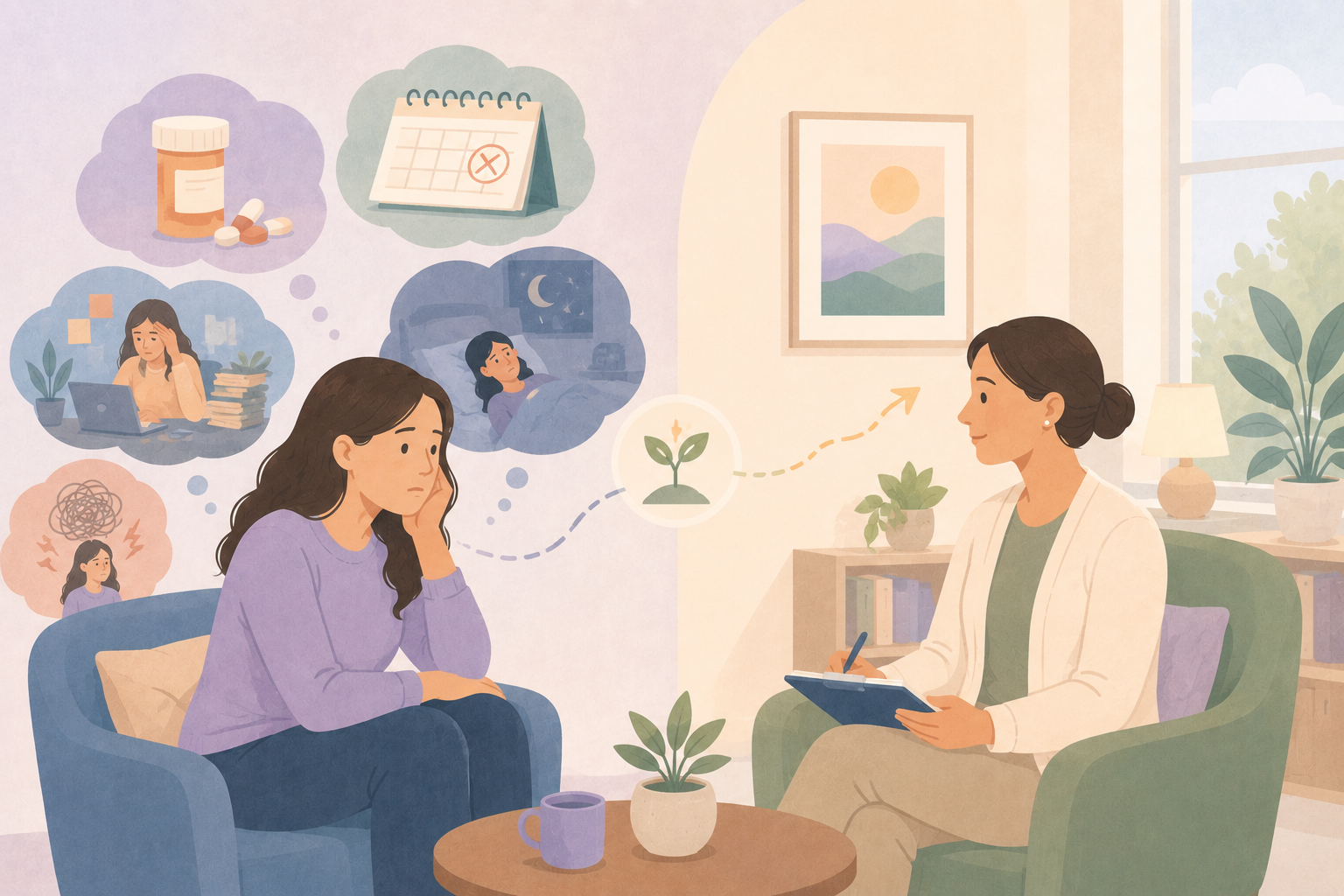
Mayo Clinic recommends having a doctor rule out physical causes before assuming it’s anxiety. Treating the wrong problem means treating symptoms that won’t go away.
Chronic stress can also alter how the nervous system responds, making it harder to return to the calm baseline, even when the original stressor is gone. Unresolved trauma is another common driver, as standard anxiety treatments don’t always reach it. Beyond diagnosis, it could also come down to medication mismatch, a poor therapist fit, inconsistent attendance or practice, sleep deprivation, and alcohol or drug dependency, which may limit how much progress is possible.
Signs Anxiety May Be Becoming Treatment-Resistant
A 2024 Delphi-method consensus published in World Psychiatry established the first internationally agreed operational criteria: TR-AD is defined by failure to respond to at least one adequate trial of a first-line pharmacological treatment (SSRI or SNRI) and/or one evidence-based psychotherapeutic intervention (such as CBT), at an adequate dose and duration, with anxiety severity remaining above a clinically meaningful threshold. The panel also outlined a staging model to reflect degrees of resistance. This allows professionals to recognize this pattern and use those criteria as a framework for stepping up care.
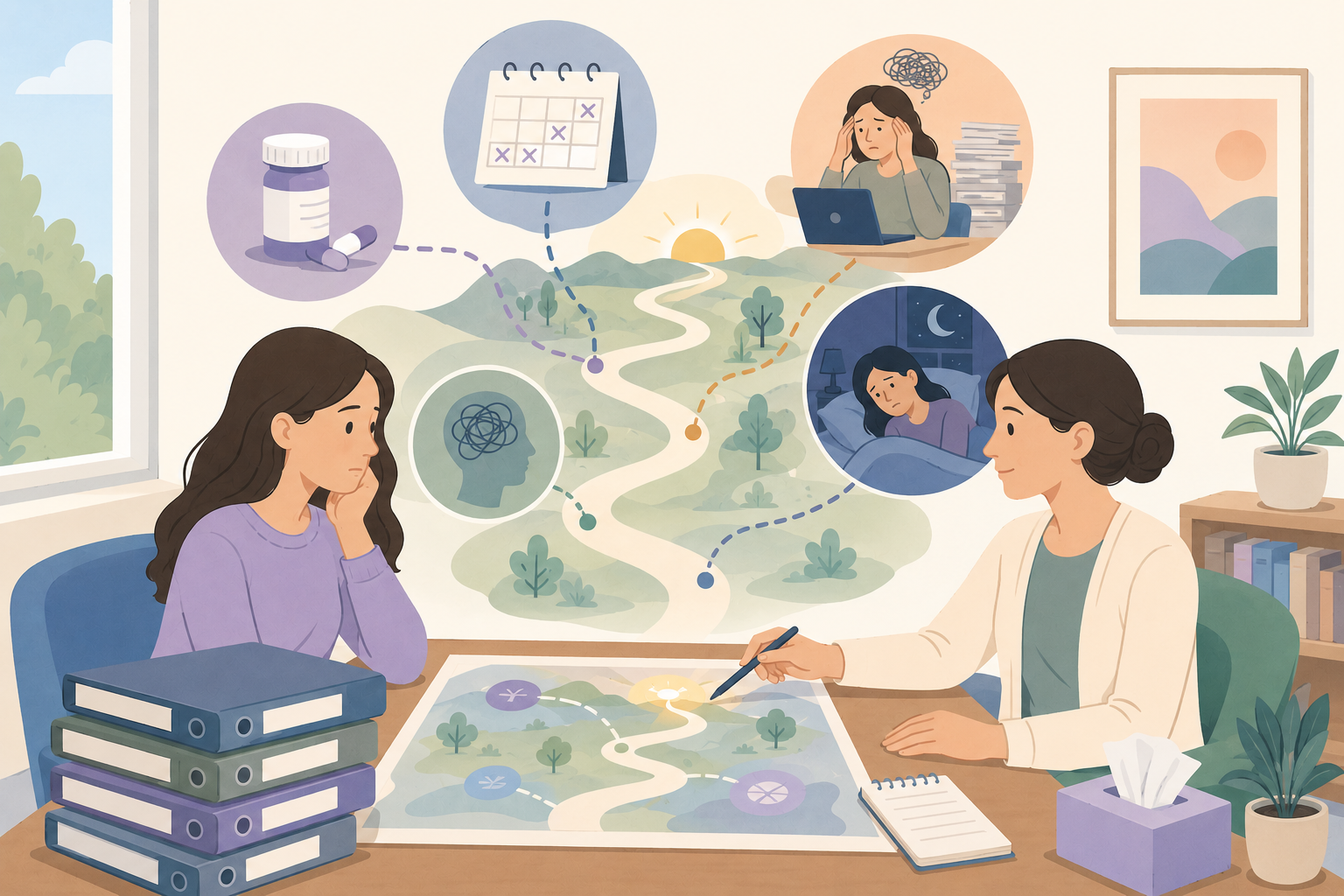
Anxiety may be considered treatment-resistant when symptoms remain at a clinically significant level despite at least one adequate trial each of a first-line medication and a first-line psychotherapy (e.g., 8+ weeks at an effective dose, or a full course of CBT), rather than simply "symptoms haven't gone away."
Signs worth flagging for further evaluation include:
- No meaningful improvement after completing adequate trials of two or more first-line treatments (medication and/or therapy), not just brief or low-dose attempts
- Symptom severity stays above a clinically significant threshold despite consistent adherence to treatment
- Widening avoidance or functional impairment despite treatment, rather than the expected gradual improvement
- A pattern of switching treatments before any given one has run its full course
Research suggests that clinical trials for anxiety disorders show remission rates of only 25 to 35 percent*, meaning that even with adequate treatment, a proportion of people don't achieve full relief.
*These figures include OCD and PTSD, which have since been reclassified as separate diagnostic categories in DSM-5. They're still relevant here because both conditions share significant anxiety symptoms and were treated as anxiety disorders in the research this estimate draws on, but their inclusion means remission rates may vary depending on which specific disorders are examined.
Why Researchers Are Exploring Psychedelics for Anxiety
One of the more significant shifts in mental health research over the past two decades has been a renewed scientific interest in psychedelic-assisted therapy. Institutions, including the Johns Hopkins Center for Psychedelic and Consciousness Research, have been conducting rigorous clinical trials examining whether certain compounds, in carefully controlled therapeutic settings, may offer relief for conditions where existing therapies often fall short. This research is still in its early stages
Psilocybin
Psilocybin has been the most studied compound in this context. In a randomized double-blind trial at Johns Hopkins, Griffiths and colleagues found that high-dose psilocybin with psychological support produced substantial and sustained decreases in anxiety and depression in cancer patients with life-threatening diagnoses. Roughly 70 to 80 percent of participants maintained clinically significant improvements at six months.
A parallel trial by Ross, Bossis, and colleagues at NYU found similarly rapid and sustained symptom reduction in a study in which participants received both the treatment and a placebo, in random order. These were patients with existential distress tied to terminal illness, not generalized anxiety.
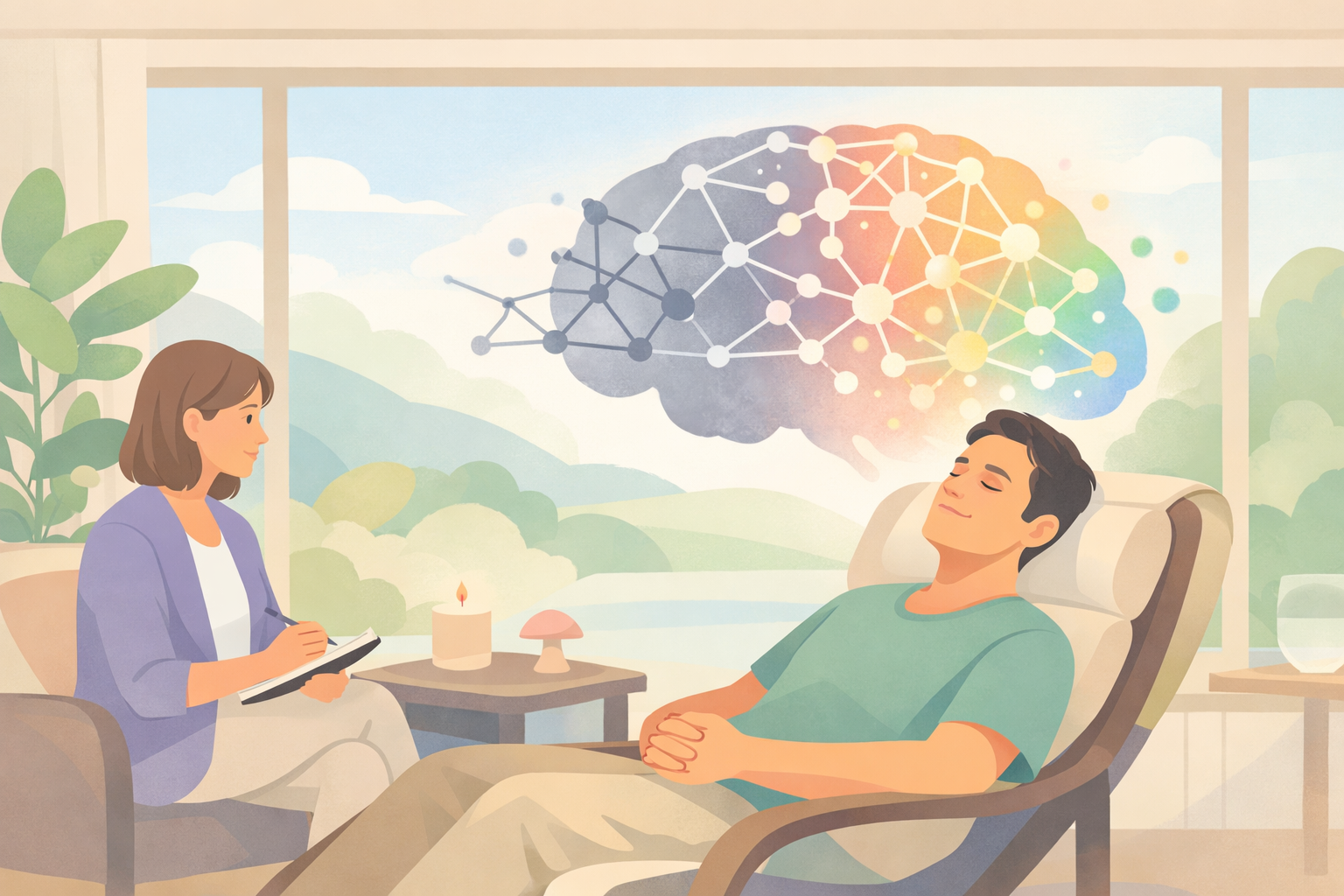
Neuroimaging research suggests that psilocybin may modulate the brain's default mode network, which is associated with rumination and negative mood loops. Some researchers hypothesize that this could support a form of emotional flexibility that is difficult to achieve through conventional therapy alone, though the underlying mechanism remains poorly understood.
Johns Hopkins Medicine has reported improvements in quality of life, sense of meaning, optimism, and acceptance of death among participants in its studies. These findings are notable but preliminary and are based on small samples and still require replication before broader conclusions can be drawn.
MDMA
MDMA (3,4-Methylenedioxymethamphetamine) has been investigated for PTSD-related anxiety through two Phase 3 trials, which found significant reductions in PTSD symptoms compared to placebo with therapy. In the first trial, 67 percent of participants in the MDMA group no longer met diagnostic criteria for PTSD after three sessions, compared with 32 percent of the placebo group.
The proposed mechanism differs from psilocybin's in that MDMA is thought to enhance fear extinction and modulate fear memory reconsolidation through its combined effects. Researchers hypothesize this creates a window of reduced fear and increased psychological openness that allows patients to engage more fully with trauma-focused therapy.
Ketamine
Ketamine and its derivative, esketamine, are the only compounds in this category that are currently FDA-cleared, though their clearance is specifically for treatment-resistant depression rather than anxiety. SPRAVATO® (prescription nasal spray esketamine) was first approved in 2019 for adults with treatment-resistant depression who had not responded to at least two other antidepressants; in January 2025, the FDA expanded that approval to allow it as a standalone treatment.
Ketamine's antidepressant effects are thought to be mediated by a glutamate surge that initiates a cascade leading to synaptogenesis and reversal of stress-related synaptic loss, particularly in the prefrontal cortex. Research has noted that ketamine’s anti-depressant effects can kick in as soon as four hours after an intravenous dose is administered.
Where This Leaves You
Anxiety that persists despite treatment is usually a signal to take a closer look at what can be done. That means ruling out physical causes, checking for co-occurring conditions like depression or substance use, confirming medications and boses are adequate, and asking whether the therapy modality fits your needs.
Psilocybin, MDMA, and ketamine are in an active area of research and may be a potential path to treatment for those who suffer from treatment-resistant depression, PTSD, and existential distress. Anyone considering these routes should pursue them through a licensed clinical trial or legally sanctioned treatment setting.
Frequently Asked Questions
Sources
- Abdallah, Chadi G., et al. "Ketamine's Mechanism of Action: A Path to Rapid-Acting Antidepressants." Depression and Anxiety, vol. 33, no. 8, 2016, pp. 689–697, doi:10.1002/da.22501. PMC4961540.
- Craske, Michelle G., and Murray B. Stein. "Anxiety." The Lancet, vol. 388, no. 10063, 2016, pp. 3048–3059, doi:10.1016/S0140-6736(16)30381-6.
- Craske, Michelle G., et al. "Anxiety Disorders." Nature Reviews Disease Primers, vol. 3, 2017, article 17024, doi:10.1038/nrdp.2017.24. PMC5573220.
- Deyama, Satoshi, and Ronald S. Duman. "Neurotrophic Mechanisms Underlying the Rapid and Sustained Antidepressant Actions of Ketamine." Pharmacology Biochemistry and Behavior, vol. 188, 2020, article 172837, doi:10.1016/j.pbb.2019.172837. PMC6997025.
- Domschke, Katharina, et al. "The Definition of Treatment Resistance in Anxiety Disorders: A Delphi Method-Based Consensus Guideline." World Psychiatry, vol. 23, no. 1, 2024, pp. 113–123, doi:10.1002/wps.21177.
- Gattuso, James J., et al. "Default Mode Network Modulation by Psychedelics: A Systematic Review." International Journal of Neuropsychopharmacology, vol. 26, no. 3, 2023, pp. 155–188, doi:10.1093/ijnp/pyac074.
- Griffiths, Roland R., et al. "Psilocybin Produces Substantial and Sustained Decreases in Depression and Anxiety in Patients with Life-Threatening Cancer: A Randomized Double-Blind Trial." Journal of Psychopharmacology, vol. 30, no. 12, 2016, pp. 1181–1197, doi:10.1177/0269881116675513.
- Johns Hopkins Medicine. "Psychedelics Research and Psilocybin Therapy." Johns Hopkins Medicine, www.hopkinsmedicine.org/psychiatry/research/psychedelics-research.
- LeWine, Howard E. "Recognizing and Easing the Physical Symptoms of Anxiety." Harvard Health Publishing, Harvard Medical School, 29 July 2024, www.health.harvard.edu/mind-and-mood/recognizing-and-easing-the-physical-symptoms-of-anxiety.
- Mayo Clinic Staff. "Anxiety Disorders: Diagnosis and Treatment." Mayo Clinic, Mayo Foundation for Medical Education and Research, 29 July 2025, www.mayoclinic.org/diseases-conditions/anxiety/diagnosis-treatment/drc-20350967.
- McEwen, Bruce S. "Neurobiological and Systemic Effects of Chronic Stress." Chronic Stress, vol. 1, 2017, doi:10.1177/2470547017692328.
- Mitchell, Jennifer M., et al. "MDMA-Assisted Therapy for Severe PTSD: A Randomized, Double-Blind, Placebo-Controlled Phase 3 Study." Nature Medicine, vol. 27, no. 6, 2021, pp. 1025–1033, doi:10.1038/s41591-021-01336-3.
- Multidisciplinary Association for Psychedelic Studies (MAPS). "MAPS' Phase 3 Trial of MDMA-Assisted Therapy for PTSD Achieves Successful Results for Patients with Severe, Chronic PTSD." MAPS, 3 May 2021, maps.org/2021/05/03/maps-phase-3-trial-of-mdma-assisted-therapy-for-ptsd-achieves-successful-results-for-patients-with-severe-chronic-ptsd/.
- National Institute of Mental Health. "Anxiety Disorders." National Institute of Mental Health (NIMH), U.S. Department of Health and Human Services, Dec. 2024, www.nimh.nih.gov/health/topics/anxiety-disorders.
- Rajkumar, Ravi Philip. "Editorial: Case Reports in Anxiety and Stress." Frontiers in Psychiatry, vol. 14, 2023, PMC10562692.
- Riaz, Sahar, et al. "Functional Connectivity in the Default Mode Network During Rumination in Depression: A Systematic Review." BJPsych Open, vol. 11, suppl. 1, 2025, pp. S62–S63, doi:10.1192/bjo.2025.10214. PMC12241886.
- Ross, Stephen, et al. "Rapid and Sustained Symptom Reduction Following Psilocybin Treatment for Anxiety and Depression in Patients with Life-Threatening Cancer: A Randomized Controlled Trial." Journal of Psychopharmacology, vol. 30, no. 12, 2016, pp. 1165–1180, doi:10.1177/0269881116675512.
- Roy-Byrne, Peter. "Treatment-Refractory Anxiety: Definition, Risk Factors, and Treatment Challenges." Dialogues in Clinical Neuroscience, vol. 17, no. 2, 2015, pp. 191–206, doi:10.31887/DCNS.2015.17.2/proybyrne.
- Schneiderman, Neil, et al. "Stress and Health: Psychological, Behavioral, and Biological Determinants." Annual Review of Clinical Psychology, vol. 1, 2005, pp. 607–628, doi:10.1146/annurev.clinpsy.1.102803.144141.
Before you apply
Beckley runs legal, guided psilocybin retreats in Jamaica and psilocybin retreats in the Netherlands: four weeks of preparation, two guided sessions on retreat, six weeks of integration, online and at your own pace, one to two hours a week. Plain answers to the questions people ask first:
What a psilocybin retreat costs · What happens, day by day · Jamaica or the Netherlands · Who should not attend · Apply