-2-1.png)


Here’s the bad news: Mental health disorders are on the rise. In 2025, the World Health Organization called for an “urgent scale-up” in services and treatment for conditions like depression, anxiety, and post-traumatic stress disorder.
The good news? Science is uncovering new ways to treat those conditions - even if, in some ways, it’s playing catch-up. Psychedelic therapy with psilocybin mushrooms represents a novel clinical approach for those who need more than, or have struck out with, standard treatment.
Psilocybin mushrooms are less than a cure-all, but more than a mere mystical mirage. Here’s everything you need to know about the scientific basis, legality, and experience of undergoing psilocybin therapy for mental health.
What Is Psilocybin Therapy?
Treating mental health is a multifaceted and, at times, frustrating pursuit. Studies tell us that up to a third of individuals suffering major depressive disorder are resistant to typical interventions such as SSRI antidepressants and various forms of therapy.
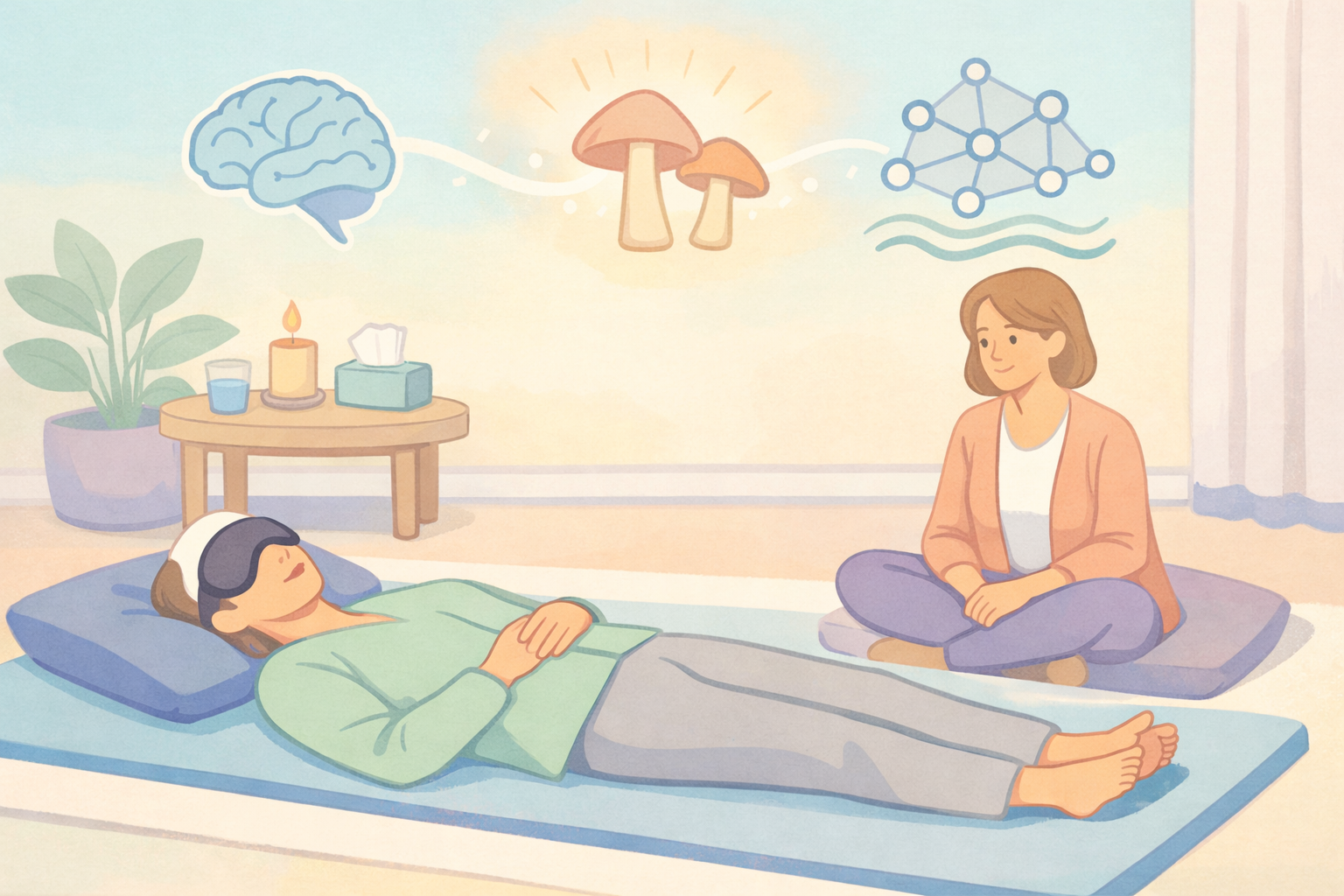
But contemporary science is finally taking a good look at the potency of combining standard mental health therapeutic treatments with the mind-expanding effects of psychedelics. Psilocybin-assisted therapy is a therapeutic modality that incorporates high doses of psychedelic mushrooms alongside a therapeutic protocol (which can take on a number of forms, partly dependent on what is being treated).
In short, the premise is that these substances act on your brain differently than prescription drugs, creating neural workarounds. Think of taking an escalator rather than the stairs - both get you over the hill, but only one feels like an uphill battle.
Differences Between Recreational vs. Clinical Psilocybin Therapy
An essential distinction: Clinical psilocybin therapy is different from habitual mushroom usage, both in dosage (macro vs. micro) and intent (therapeutic effect vs. holistic wellness).
- Some survey data show that over 10 million American adults microdose psilocybin regularly, mostly for relaxation, productivity, and general mood.
- By contrast, targeted doses of psilocybin (25mg is the standard) are administered alongside psychotherapy as a way of stimulating acute mental breakthroughs and subsequent improvements, which may be sustained.
The Science: How Magic Mushrooms Rewire the Brain
When it comes to psilocybin therapy, what’s actually happening under the hood? Emerging data on the brain-related effects of psychedelics are bolstering their popularity, and for good reason.
Meeting the 5-HT2A Receptor
As a psychoactive drug, psilocybin is not all that distinct from its pharmaceutical cousins. The mechanism of action at play here involves your body’s conversion of psilocybin into psilocin.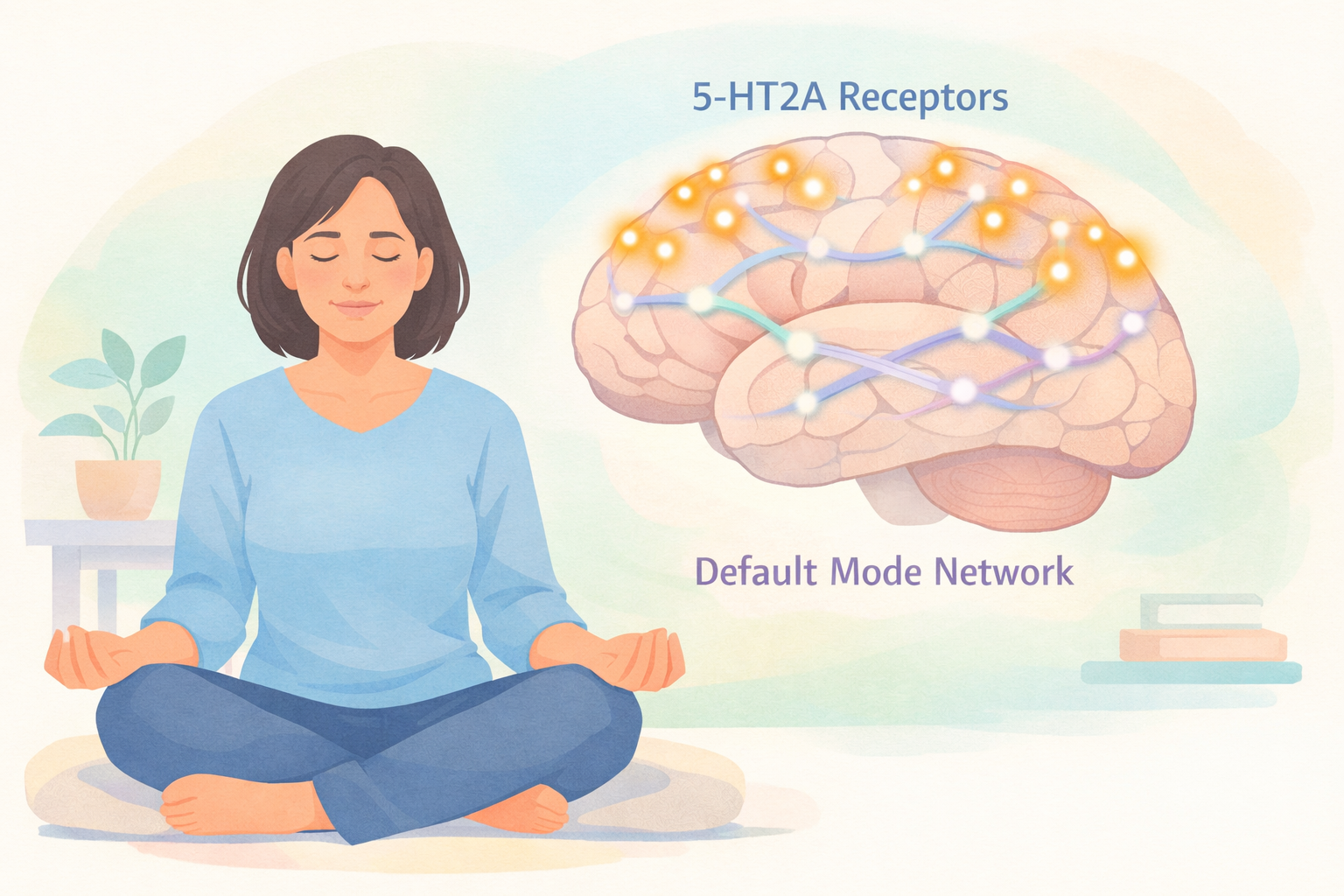
Psilocin takes hold in your brain by interacting with serotonin receptors (similar to SSRIs). But where SSRIs increase levels of serotonin (your “happy hormone”) in the brain by blocking the reabsorption of this neurotransmitter into nerve cells, psilocin binds directly to 5-HT2A serotonin receptors. That link elicits strong, acute, mind-altering effects.
Going Offline: Quieting the Default Mode Network
Elsewhere in your brain, psilocybin acts on your Default Mode Network, or DMN. Think of the DMN as your brain’s bubble of safety - this network relies on what’s called top-down processing, which establishes safe and predictable patterns, but limits new pathways and perspectives.
Science tells us that psilocybin suppresses activity in the DMN, helping to “facilitate transformative experiences,” when coupled with proper integration, by opening new neural avenues and closing rigid, depressive loops.
What Conditions Can Psychedelic Therapy Mushrooms Treat?
Although psychedelic mushrooms can be microdosed daily, when it comes to mental health, you shouldn’t think of them as a vitamin. Nor are they a band-aid solution, despite being acutely potent.
While studies on the benefits of daily microdosing are sparse and inconsistent, one double-blind, placebo-controlled study found no benefits of psilocybin microdosing on mood, attention, or well-being compared to placebo.
Proper utilization of psilocybin requires careful preparation, qualified oversight, and a specific goal.
Treatment-Resistant Depression
The most compelling use case for psilocybin therapy seems to center around treatment-resistant depression, based on the aggregate data we have available. Patients with TRD are those who have tried at least two other interventions with mixed or no results.
A landmark study in 2022 provided a single 25-milligram dose of psilocybin to patients suffering from TRD. While adverse effects were reported, the authors noted “significant improvements” in depression markers compared to daily microdosing.
Newer data have produced similar findings. A 2024 randomized clinical trial observed “significant, sustained results” in managing depression symptoms among frontline healthcare workers.
PTSD & Trauma
Post-traumatic stress disorder can be debilitatingly disruptive - and difficult to treat. However, a 2025 trial of 25mg psilocybin on PTSD sufferers revealed “clinically meaningful” changes that lasted up to 12 weeks.
Elsewhere, participants with trauma were evaluated for a two-year period while utilizing psilocybin therapy for mental health. From the authors:
“Unlike standard treatments requiring direct confrontation with trauma memories, psilocybin appears to enable a broader, indirect engagement with traumatic material…” said Modlin et al., “...via a range of affective, somatic and self-transcendent experiences.”
Anxiety & Palliative Care
For the elderly and health-anxious alike, anxiety can rear its head in deep and disruptive ways. Psilocybin-based interventions have shown promise in palliative care as well. One trial conducted in 2025 examined how psilocybin affects patient reporting on several mental health scales. Compared to a placebo, 25mg of psilocybin reduced patient scores on the
- Hospital Anxiety & Depression Scale (HADS)
- Beck Depression Inventory-II Scale (BDI-II)
- State-Trait Anxiety Inventory (STA-S)
In their findings, the authors noted that psilocybin led to significantly greater reductions on all three among depressed adults with life-threatening illnesses. Crucially, these improvements held for 26 weeks after the intervention. Other research suggests that these improvements can hold for much longer, even two to four-and-a-half years after initially taking 25mg of psilocybin.
What Happens During a Psychedelic Therapy Mushroom Session?
Now that we understand the mechanisms behind psilocybin therapy treatments for mental health, and have looked at some of the available evidence, it’s time to get practical. Here’s what the process actually looks like.

While psilocybin therapies are usually all-day affairs, you won’t be in an altered state of consciousness for all of it, nor will you engage directly with a facilitator the entire time.
Preparation
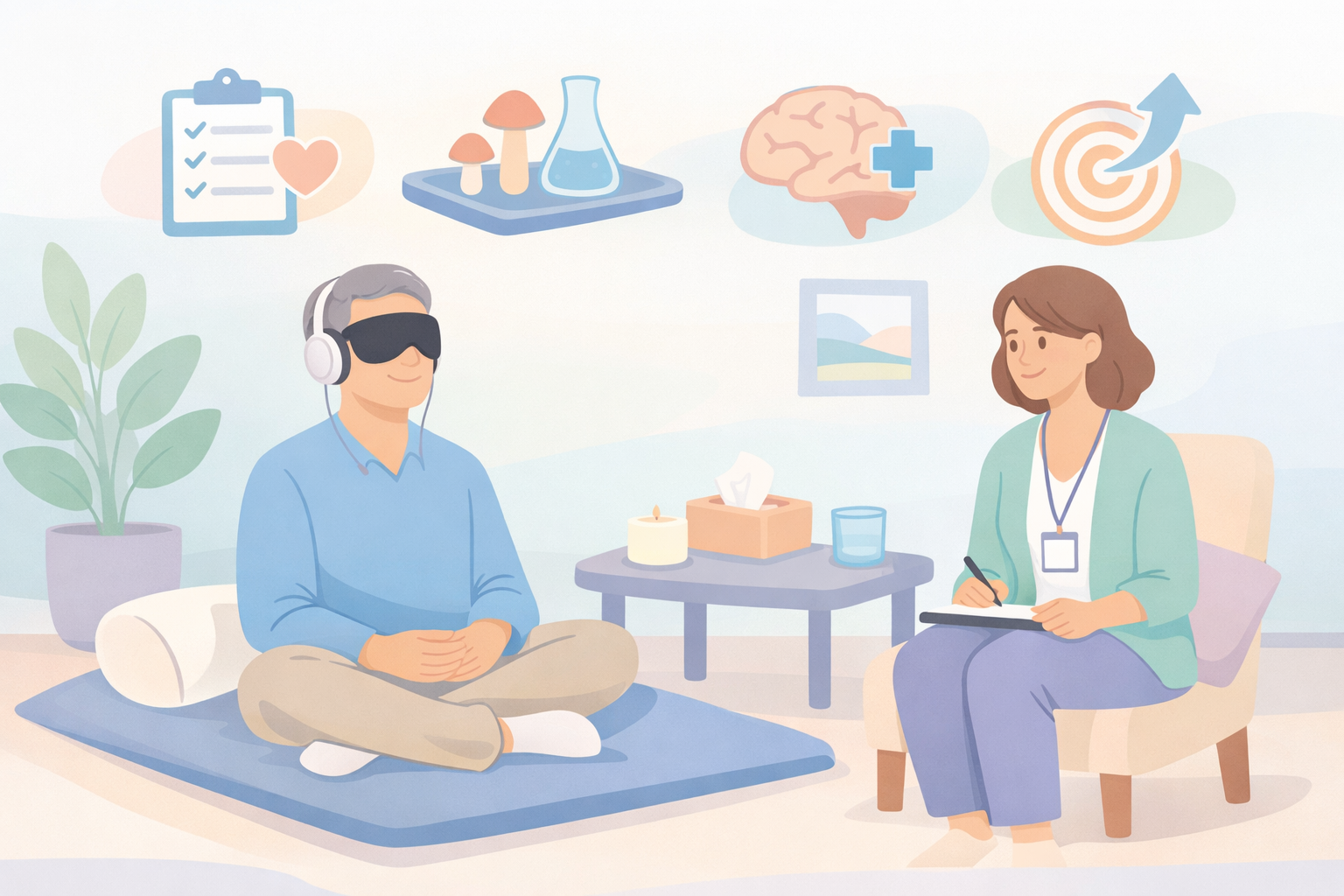
Preparation is the first phase of any psychedelic treatment. This is where you lay the groundwork and check your boxes. Clinics and retreats will require some pre-intake paperwork to assess compatibility and flag any issues with your medical history.
Prior to administration, you’ll also be guided through set & setting practices. In psychedelics, set refers to your mindset - your perspective on the journey, your goals, and your emotional status as well.
Setting describes the physical space used for the trip. For psychedelic-assisted therapy, this usually entails a serene, low-stimulus environment, with distractions kept to a minimum. You may have calming, low-key music, and mild sensory deprivation like eye shades.
During the Trip
Therapeutic doses of psilocybin can create trips that last four to six hours, including a ramp-up and cool-down. While tripping, you can expect
- Sensory distortion / Perceptual changes
- Altered perception of time
- Physical relaxation
- Emotional openness
- Out-of-body or mystical experiences
Is it all peachy-keen? Not necessarily, but it's helpful and realistic not to look at trips in black and white terms, such as “good” or “bad”. A trip is merely an experience you embark on, and sometimes those experiences can be challenging. Difficult trips, though, can still have net-positive outcomes. It’s also why you need professional support; a qualified sitter or therapist helps you stay on course.
Integration
In psychedelic sciences, integration is where the magic happens. Psilocybin has profound acute effects, but what separates it from other mental health treatments is the positive downstream effects from proper integration.
Integration describes everything that comes after the trip. This includes stewardship “back to yourself,” in which you regain regular consciousness, as well as techniques to organize all of the raw emotional material you uncovered on your journey.

Talk therapy, journaling, and meditation are all common forms of psychedelic integration. Proper clinicians will incorporate more than one. If you want to reap long-term benefits from a psilocybin treatment, you need to “do your homework.”
Is Psilocybin Therapy Legal?: 2026 Status Report
Psychedelics have a complicated legal history. Although shunned for most of the 20th century, we’re starting to see laxity in the laws concerning psychedelics like psilocybin due to their emergent medicinal value.
In the United States
Psilocybin is categorized as a Schedule I controlled substance by the United States Drug Enforcement Administration, making it illegal at the federal level. The reasoning involves its purported (and non-existent) addictive potential and it having “no currently accepted medical use.” However, there are exceptions in the U.S. at the state level.
The Oregon & Colorado Models
In 2020, Oregon codified Measure 109 to allow supervised administration of psilocybin as an acute mental health intervention. Two years later, Colorado put forth legislation loosening restrictions on “natural medicine,” psilocybin mushrooms included, partially due to its cultural relevance among native communities.
International Retreats
Beyond the boundaries of the U.S., psilocybin mushroom therapy has received a warmer welcome. Psilocybin is fully legal in the Netherlands (in the form of truffles/sclerotia, not mushrooms), Jamaica, and several countries in Central America.
Use elsewhere has caveats - recreational vs. clinical, mainly - but you can receive psilocybin treatment at clinics in many different countries. Your best bet is to check local laws where you live, or refer directly to the retreat’s resources.
Frequently Asked Questions
Sources
1. Sipan Haikazian, David C.J. Chen-Li, Danica E. Johnson, Farhan Fancy, Anastasia Levinta, M. Ishrat Husain, Rodrigo B. Mansur, Roger S. McIntyre, Joshua D. Rosenblat, Psilocybin-assisted therapy for depression: A systematic review and meta-analysis, Psychiatry Research, Volume 329, 2023, 115531, ISSN 0165-1781.
2. MacCallum CA, Lo LA, Pistawka CA and Deol JK (2022) Therapeutic use of psilocybin: Practical considerations for dosing and administration. Front. Psychiatry 13:1040217. doi: 10.3389/fpsyt.2022.1040217
3. Andreas B. Wulff, Charles D. Nichols, Scott M. Thompson, Preclinical perspectives on the mechanisms underlying the therapeutic actions of psilocybin in psychiatric disorders, Neuropharmacology,Volume 231, 2023, 109504, ISSN 0028-3908
4. Lukasz Smigielski, Milan Scheidegger, Michael Kometer, Franz X. Vollenweider, Psilocybin-assisted mindfulness training modulates self-consciousness and brain default mode network connectivity with lasting effects, NeuroImage, Volume 196, 2019, Pages 207-215, ISSN 1053-8119
5. Goodwin GM, Aaronson ST, Alvarez O, Arden PC, Baker A, Bennett JC, Bird C, Blom RE, Brennan C, Brusch D, Burke L, Campbell-Coker K, Carhart-Harris R, Cattell J, Daniel A, DeBattista C, Dunlop BW, Eisen K, Feifel D, Forbes M, Haumann HM, Hellerstein DJ, Hoppe AI, Husain MI, Jelen LA, Kamphuis J, Kawasaki J, Kelly JR, Key RE, Kishon R, Knatz Peck S, Knight G, Koolen MHB, Lean M, Licht RW, Maples-Keller JL, Mars J, Marwood L, McElhiney MC, Miller TL, Mirow A, Mistry S, Mletzko-Crowe T, Modlin LN, Nielsen RE, Nielson EM, Offerhaus SR, O'Keane V, Páleníček T, Printz D, Rademaker MC, van Reemst A, Reinholdt F, Repantis D, Rucker J, Rudow S, Ruffell S, Rush AJ, Schoevers RA, Seynaeve M, Shao S, Soares JC, Somers M, Stansfield SC, Sterling D, Strockis A, Tsai J, Visser L, Wahba M, Williams S, Young AH, Ywema P, Zisook S, Malievskaia E. Single-Dose Psilocybin for a Treatment-Resistant Episode of Major Depression. N Engl J Med. 2022 Nov 3;387(18):1637-1648. doi: 10.1056/NEJMoa2206443. PMID: 36322843.
6. Back AL, Freeman-Young TK, Morgan L, et al. Psilocybin Therapy for Clinicians With Symptoms of Depression From Frontline Care During the COVID-19 Pandemic: A Randomized Clinical Trial. JAMA Netw Open. 2024;7(12):e2449026. doi:10.1001/jamanetworkopen.2024.49026
7. McGowan NM, Rucker JJ, Yehuda R, et al. Investigating the safety and tolerability of single-dose psilocybin for post-traumatic stress disorder: A nonrandomized open-label clinical trial. Journal of Psychopharmacology. 2025;0(0). doi:10.1177/02698811251362390
8. Modlin NL, Williamson V, Goodwin GM, Malievskaia E, Atli M, Elek Z, Gaillard A, Koelpin D, Cleare A, Agrawal M, Yehuda R, Kirlic N, Rucker J. Investigational psilocybin treatment for post-traumatic stress disorder: a qualitative study of participant experience, trauma engagement, and differences from standard treatment. EClinicalMedicine. 2025 Dec 5;90:103692. doi: 10.1016/j.eclinm.2025.103692. PMID: 41497513; PMCID: PMC12766423.
9. Ross ML, Iyer R, Williams ML, Boughey M, O'Callaghan C, Hiscock R, Dwyer J. Psilocybin-assisted psychotherapy for depression and anxiety associated with life threatening illness: A phase 2b randomized controlled trial. Gen Hosp Psychiatry. 2025 Sep-Oct;96:322-331. doi: 10.1016/j.genhosppsych.2025.08.001. Epub 2025 Aug 12. PMID: 40858059.
Before you apply
Beckley runs legal, guided psilocybin retreats in Jamaica and psilocybin retreats in the Netherlands: four weeks of preparation, two guided sessions on retreat, six weeks of integration, online and at your own pace, one to two hours a week. Plain answers to the questions people ask first:
What a psilocybin retreat costs · What happens, day by day · Jamaica or the Netherlands · Who should not attend · Apply