
-2-1.png)



Up to 20% of adults across the globe live with some form of chronic pain disorder, which can have a huge impact on well-being and quality of life.
Traditional treatment options for chronic pain consist of painkiller medications, surgery, physiotherapy and psychotherapy. However, some people do not respond to conventional treatments, and medications may come with unwanted side effects such as addiction.
Now, increasing studies suggest that psychedelic medicines - such as psilocybin - could potentially offer an alternative therapy route for those who have exhausted current options and failed to find relief.
Understanding Chronic Pain
Chronic pain is defined as lasting for three to six months or more, and can be caused by a number of different health conditions, such as fibromyalgia, endometriosis, migraines, neuropathic pain, and inflammatory and degenerative joint diseases.
Both physical and psychological issues can stem from chronic pain. These can include muscle and joint stiffness, numbness, tingling, chronic fatigue, brain fog, and physical stress responses such as increased heart rate and cortisol levels.

These symptoms can hugely impact quality of life, disrupting day-to-day activities, sleep, and relationships, and can potentially lead to a decreased ability to exercise, less productivity at work or job loss, social isolation, and physical health problems.
Living with chronic pain and its associated symptoms for a long time can also lead to the development of mental health conditions.
Research shows that:
- 45% of people with chronic pain experience depression.
- One-fourth of primary care patients with chronic pain meet the criteria for major depression.
- There is overlap between the brain circuits involved in both chronic pain and major depression.
- The relationship between physical and mental symptoms of chronic pain can be bidirectional.
Further mental health complications from chronic pain can include emotional distress, anxiety, post-traumatic stress disorder (PTSD), fear of movement and feelings of grief over the loss of identity, independence or physical abilities.
Why Researchers Are Exploring Psychedelics for Pain
While many people are able to manage symptoms with traditional treatments, chronic pain therapies and medications can often be limited in their effectiveness.
Increasing research is now exploring alternative and emerging treatments including gene therapy, neuromodulation, and therapies that address perception and cognition, such as psychedelics.
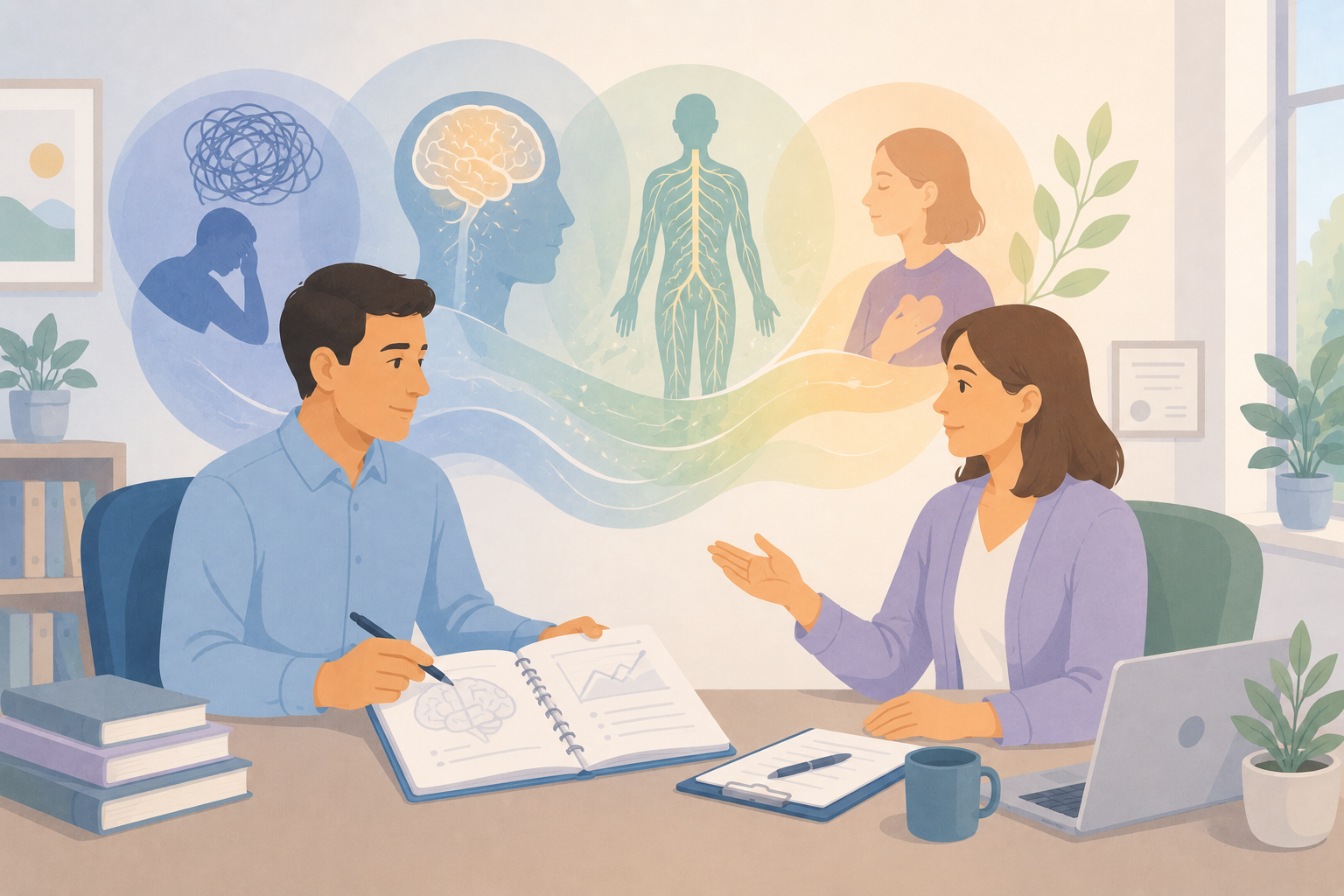
Psychedelics were studied through the 50s and 60s for mental health until the 1971 UN Convention on Psychotropic Substances brought research to a halt. In recent years, however, psychedelic research has demonstrated their potential as innovative treatments for conditions that overlap with chronic pain such as depression, anxiety and PTSD.
Research shows:
- 40% of people do not respond to analgesics such as non-steroidal anti-inflammatory drugs (NSAIDs)
- 12% of people who use opioids end up dependent.
- 30% of individuals with depression do not respond to traditional antidepressants.
When medications fail, non-pharmacological interventions for chronic pain, such as physical therapy and psychological care, are often used as alternative treatment options.
However, while studies show that 77% of people report success with physical therapy for treating pain symptoms, over 20% fail to find relief. Further, more than half of depression patients do not respond to psychotherapy.
Given these rates of failure, there is an urgent need for innovative and alternative, non-addictive treatment options in chronic pain management.
What the Research Says So Far
Research shows that psilocybin improves mental health symptoms by inducing network-level brain changes. The compound has been found to increase Brain-Derived Neurotrophic Factor (BDNF) and induce neuroplasticity and neurogenesis, which work together to alleviate symptoms of depression by enabling the growth of new neural pathways and neurons in the brain.
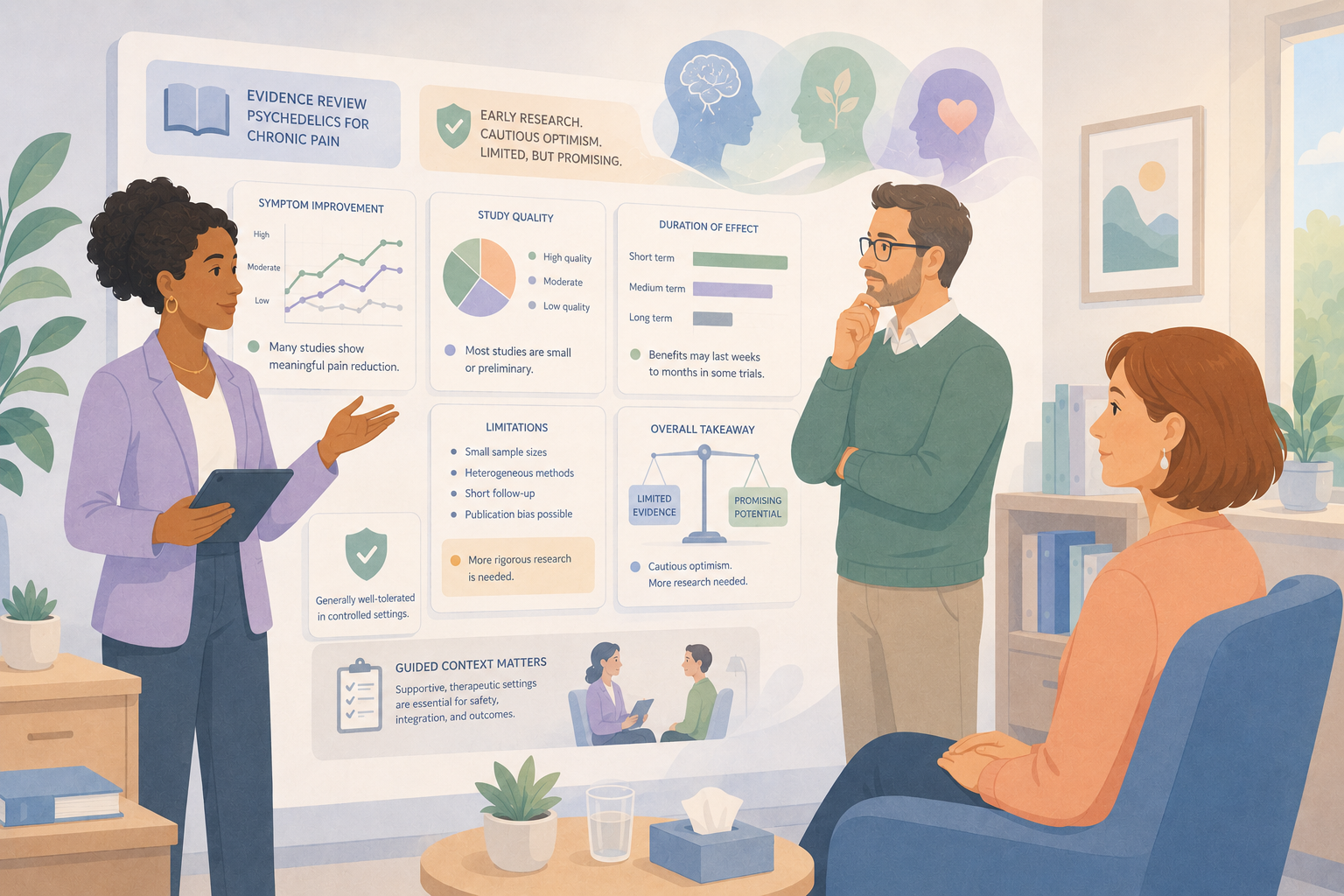
Due to the overlapping of brain networks affecting depression and chronic pain, and as psilocybin is similar to serotonin - a neurotransmitter that helps modulate mood and pain - studies and early-stage clinical trials are now investigating psilocybin for the management of chronic pain conditions such as headaches, cancer-related pain and phantom limb pain.
Studies show:
- 91% of participants with headache disorders across five studies reported extended breaks between headaches when psilocybin was taken during a remission period.
- 26% of cancer patients in a phase 2, open‐label trial treated with psilocybin reported reduced pain severity.
- 79% of amputees that took part in a controlled clinical trial saw a reduction in residual phantom limb pain two-weeks following psilocybin treatment.
- Psilocybin treatment for psychological distress in cancer patients saw improvements in symptoms of pain, depression, anxiety symptoms, demoralization, disability and psycho-social-spiritual wellbeing in a systematic review and meta-analysis of clinical trials.
Currently, an ongoing clinical trial led by the University of Alabama, Birmingham, is investigating the effectiveness of psilocybin for fibromyalgia, a condition that causes widespread chronic pain throughout the body. In the trial, researchers will assess psilocybin’s efficacy for pain, fatigue and other fibromyalgia symptoms, as well as quality of life - currently hypothesizing that psilocybin will significantly reduce symptom severity.
How Psychedelics May Affect Pain Perception
Psychedelics may help to improve symptoms of chronic pain by affecting pain perception and helping individuals to reframe their relationship with pain.
In an Exploration of Neuroscience article, researchers suggest that the altered states induced by psychedelics “may lead to profound shifts in perception, cognition, and emotional processing” enabling patients to “perceive their pain differently, potentially reducing its intensity or emotional impact”.
They suggest this may work through the activation of serotonin receptors, the exertion of anti-inflammatory effects, enhancing descending inhibition, opening a window of neuroplasticity, and facilitating synaptic remodeling. Studies show this neuroplasticity disrupts dysfunctional connectivity related to pain processing to “reset” pain-related brain networks.
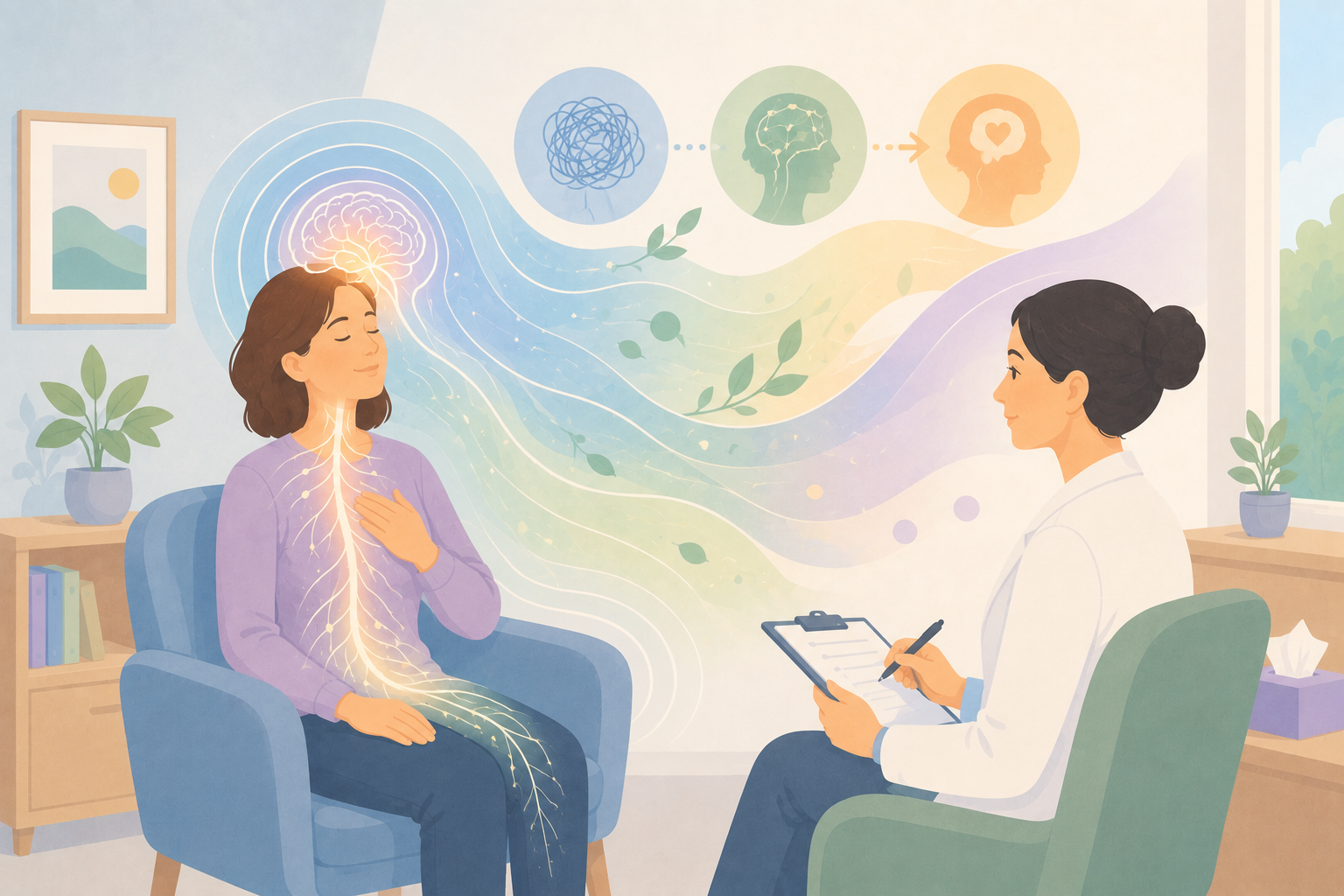
Plasticity is also thought to contribute to psilocybin’s ability to improve mental health symptoms, enabling maladaptive neural pathways to be replaced with new neurons and pathways that create healthier patterns of thinking and behavior.
Additionally, psilocybin works on the 5-HT2A receptor, which induces altered states of consciousness that are associated with deep emotional insights and processing that predict long-term mental health outcomes.
This psychological flexibility has been suggested to help reduce distress in people living with chronic pain, as well as supporting with reframing personal narratives surrounding trauma or pain.
What We Still Don’t Know
Emerging studies on psychedelics for chronic pain suggest that the compounds could hold promise for the treatment and management of related symptoms, but more research is needed to fully understand their safety and effectiveness.
Experts say that while psilocybin shows promise as a “multidimensional therapy” for chronic pain that could address both “sensory and affective components”, robust randomized controlled trials should be carried out to confirm efficacy and guide clinical translation.
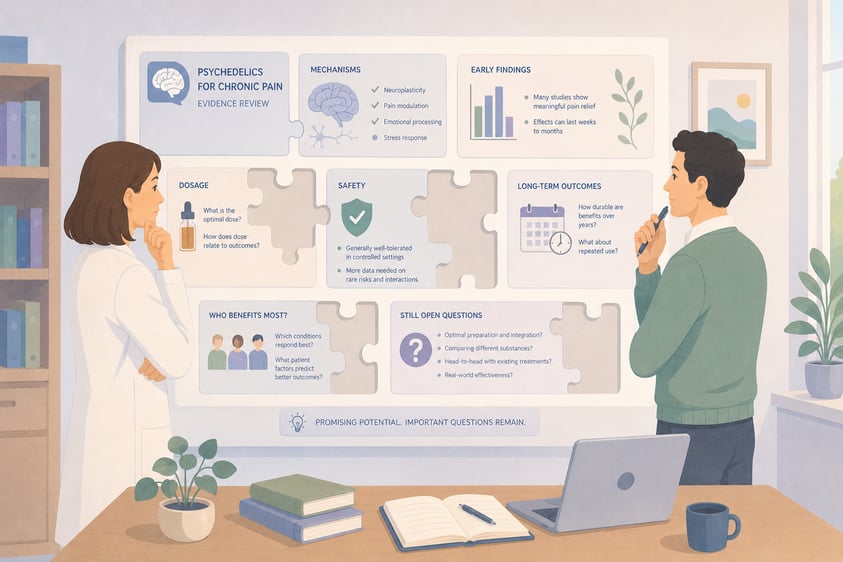
Additionally, more research will be needed to fully understand other properties of psychedelic compounds that could target chronic pain. For example, some studies suggest that psilocybin may have anti-inflammatory properties, signaling a potential to address inflammation-related diseases such as arthritis that can cause chronic pain.
Importantly, psychedelics, including psilocybin, remain largely illegal across the globe.
While there are a small number of exceptions to this, an increasing number of countries such as Canada, the US, and Australia, are now beginning to enable select patient access to these therapies under specialized access schemes for specific conditions.
As psychedelics are placed in the highest scheduling category, regulatory reforms will be needed to enable large-scale healthcare access to psychedelic therapies.
Frequently Asked Questions
Sources
- Goldberg, Daniel S, and Summer J McGee. “Pain as a Global Public Health Priority.” BMC Public Health, vol. 11, no. 1, 6 Oct. 2011, www.ncbi.nlm.nih.gov/pmc/articles/PMC3201926/.
- Askey, Tate, et al. “Psilocybin as a Novel Treatment for Chronic Pain.” British Journal of Pharmacology, 29 Nov. 2024, https://doi.org/10.1111/bph.17420.
- Johnston, Keira J. A., and Laura M Huckins. “Chronic Pain and Psychiatric Conditions.” Complex Psychiatry, vol. 9, no. 1-4, 15 Sept. 2022, https://doi.org/10.1159/000527041.
- Vadivelu, Nalini , et al. “Pain and Psychology—a Reciprocal Relationship.” The Ochsner Journal, vol. 17, no. 2, 2017, p. 173, pmc.ncbi.nlm.nih.gov/articles/PMC5472077/.
- Poleshuck, Ellen L., et al. “Interpersonal Psychotherapy for Co-Occurring Depression and Chronic Pain.” Professional Psychology: Research and Practice, vol. 41, no. 4, 2010, pp. 312–318, www.ncbi.nlm.nih.gov/pmc/articles/PMC3010371/, https://doi.org/10.1037/a0019924.
- Sheng, Jiyao, et al. “The Link between Depression and Chronic Pain: Neural Mechanisms in the Brain.” Neural Plasticity, vol. 2017, no. 9724371, 2017, p. 9724371, www.ncbi.nlm.nih.gov/pmc/articles/PMC5494581/, https://doi.org/10.1155/2017/9724371.
- Yao, Chongjie, et al. “Exploring the Bidirectional Relationship between Pain and Mental Disorders: A Comprehensive Mendelian Randomization Study.” Journal of Headache and Pain, vol. 24, no. 1, 7 July 2023, https://doi.org/10.1186/s10194-023-01612-2.
- Barcenas, Guillermo. FINAL ACT of the UNITED NATIONS CONFERENCE for the ADOPTION of a PROTOCOL on PSYCHOTROPIC SUBSTANCES. 2003.
- NICE. “Non-Steroidal Anti-Inflammatory Drugs.” NICE, 2023, bnf.nice.org.uk/treatment-summaries/non-steroidal-anti-inflammatory-drugs/.
- Vowles, Kevin E., et al. “Rates of Opioid Misuse, Abuse, and Addiction in Chronic Pain.” PAIN, vol. 156, no. 4, Apr. 2015, pp. 569–576, journals.lww.com/pain/Abstract/2015/04000/Rates_of_opioid_misuse,_abuse,_and_addiction_in.3.aspx, https://doi.org/10.1097/01.j.pain.0000460357.01998.f1.
- Durmaz, Berrin, et al. “Satisfaction Levels of Patients with Musculoskeletal Problems Treated with Physical Therapy Modalities: A Multi-Center Study.” Turkish Journal of Physical Medicine and Rehabilitation, vol. 71, no. 3, 22 Aug. 2025, pp. 342–350, www.ftrdergisi.com/uploads/pdf/pdf_4601.pdf, https://doi.org/10.5606/tftrd.2025.14331.
- McIntyre, Roger S, et al. “Treatment‐Resistant Depression: Definition, Prevalence, Detection, Management, and Investigational Interventions.” World Psychiatry, vol. 22, no. 3, 15 Sept. 2023, pp. 394–412, pmc.ncbi.nlm.nih.gov/articles/PMC10503923/, https://doi.org/10.1002/wps.21120.
- Cuijpers, Pim, et al. “The Effects of Psychotherapies for Depression on Response, Remission, Reliable Change, and Deterioration: A Meta‐Analysis.” Acta Psychiatrica Scandinavica, vol. 144, no. 3, 4 July 2021, pp. 288–299, https://doi.org/10.1111/acps.13335.
- Johnson. “How Psychedelics Came to Be Placed under the Strictest International Control.” Drug Science, 9 Apr. 2026, www.drugscience.org.uk/how-psychedelics-came-to-be-placed-under-the-strictest-international-control.
- Jacobs, Andrew. “The Psychedelic Revolution Is Coming. Psychiatry May Never Be the Same.” The New York Times, 9 May 2021, www.nytimes.com/2021/05/09/health/psychedelics-mdma-psilocybin-molly-mental-health.html.
- Lyons, T., et al. “Human Brain Changes after First Psilocybin Use.” Nature Communications, vol. 17, no. 1, 5 May 2026, www.nature.com/articles/s41467-026-71962-3, https://doi.org/10.1038/s41467-026-71962-3.
- de Vos, Cato M. H., et al. “Psychedelics and Neuroplasticity: A Systematic Review Unraveling the Biological Underpinnings of Psychedelics.” Frontiers in Psychiatry, vol. 12, no. 12, 10 Sept. 2021, https://doi.org/10.3389/fpsyt.2021.724606.
- Bhanot, S, et al. “A Systematic Review to Assess the Use of Psilocybin in the Treatment of Headaches.” European Psychiatry, vol. 66, no. S1, 1 Mar. 2023, pp. S617–S618, www.cambridge.org/core/journals/european-psychiatry/article/systematic-review-to-assess-the-use-of-psilocybin-in-the-treatment-of-headaches/9727E4E78BD3AC43D9C28114518CE00E, https://doi.org/10.1192/j.eurpsy.2023.1286.
- Belitzky, Erika, et al. “Psychedelics for Cancer Pain and Associated Psychological Distress: A Narrative Review of a Potential Strategy.” Cancer Medicine, vol. 14, no. 5, Mar. 2025, https://doi.org/10.1002/cam4.70586.
- Agrawal, Manish, et al. “Psilocybin‐Assisted Group Therapy in Patients with Cancer Diagnosed with a Major Depressive Disorder.” Cancer, 18 Dec. 2023, https://doi.org/10.1002/cncr.35010.
- Kargbo, Robert B. “Targeting Phantom Pain with Psilocybin: Toward Integration with Adaptive Sensory Technologies.” ACS Medicinal Chemistry Letters, 10 Apr. 2025, https://doi.org/10.1021/acsmedchemlett.5c00182.
- Moshfeghinia, Reza, et al. “The Effects of Psilocybin on Psychological Distress in Cancer Patients: A Systematic Review and Meta-Analysis.” BMC Psychology, 2 Jan. 2026, https://doi.org/10.1186/s40359-025-03935-y.
- Yasin, Bushra, et al. “Psychedelics as Novel Therapeutic Agents for Chronic Pain: Mechanisms and Future Perspectives.” Exploration of Neuroscience, vol. 3, no. 5, 24 Sept. 2024, pp. 418–433, https://doi.org/10.37349/en.2024.00058.
- Clinicaltrials.gov, 2025, clinicaltrials.gov/study/NCT05068791.
- Yap, Maxine Min Chien, et al. “Psychedelics; an Untapped Therapeutic Niche: A Narrative Review in the Future of Cancer Pain Management.” Medicine in Drug Discovery, vol. 30, May 2026, p. 100256, www.sciencedirect.com/science/article/pii/S2590098626000102, https://doi.org/10.1016/j.medidd.2026.100256.
- Adeyinka, Dotun, et al. “Neurobiology of Psilocybin: A Comprehensive Overview and Comparative Analysis of Experimental Models.” PubMed, vol. 19, 1 Jan. 2025, pp. 1585367–1585367, https://doi.org/10.3389/fnsys.2025.1585367.
- Cherup, Nicholas P., and Patrick H. Finan. “Psilocybin as a Psychophysical Adaptogen in Chronic Pain Rehabilitation.” The Journal of Pain, vol. 34, 21 July 2025, p. 105507, www.sciencedirect.com/science/article/abs/pii/S1526590025007345, https://doi.org/10.1016/j.jpain.2025.105507.
- Yasin, Bushra, et al. “Psychedelics as Novel Therapeutic Agents for Chronic Pain: Mechanisms and Future Perspectives.” Exploration of Neuroscience, vol. 3, no. 5, 24 Sept. 2024, pp. 418–433, https://doi.org/10.37349/en.2024.00058.
- Flanagan, Thomas W., and Charles D. Nichols. “Psychedelics as Anti-Inflammatory Agents.” International Review of Psychiatry, vol. 30, no. 4, 4 July 2018, pp. 363–375, https://doi.org/10.1080/09540261.2018.1481827.
- Natoli, Silvia, et al. “Psilocybin and Chronic Pain: A New Perspective for Future Pain Therapists?” Medical Sciences, vol. 13, no. 4, 20 Nov. 2025, p. 277, www.mdpi.com/2076-3271/13/4/277#, https://doi.org/10.3390/medsci13040277.
Before you apply
Beckley runs legal, guided psilocybin retreats in Jamaica and psilocybin retreats in the Netherlands: four weeks of preparation, two guided sessions on retreat, six weeks of integration, online and at your own pace, one to two hours a week. Plain answers to the questions people ask first:
What a psilocybin retreat costs · What happens, day by day · Jamaica or the Netherlands · Who should not attend · Apply