
-2-1.png)


Here’s what nobody tells you about your first-time psychedelic journey: Not all benefits happen during the trip. Those with experience using psychedelics properly will, however, tell you that what you do in the hours before and weeks after can make all the difference.
Sure, the trip itself can be exhilarating - and illuminating - on its own. But if you’re thinking about taking the plunge on your first psychedelic experience, it pays to know what to expect before, during, and after - and how to protect yourself from harm. Class is in session; we’re unpacking the science behind proper psychedelic safety for beginners.
What Is a Psychedelic Journey?
Culturally, psychedelic usage dates back centuries. Spiritual leaders like shamans used organic forms of classic psychedelics to seek meaning beyond the physical.
More recently, psychedelic studies have finally begun to shed their trappings as woo-woo alternative medicine or a vice for drug seekers. Clinical psychedelic therapies are showing real promise in treating some mental health ailments like depression, anxiety, or PTSD.
Psychedelics, of course, are still used for relaxation, meditation, and self-exploration. No matter the “why” behind your first-time psychedelic journey, the basic principles remain the same.
The Four Pillars
When it comes to using psychedelics, there are four “pillars” that support safe and productive ingestion.
- Substance: What, and how much, you’re taking.
- Set: The mindset and goals you curate before consuming a psychedelic, as well as the preparation you undergo prior (medical screening, goal mapping, etc.)
- Setting: Your physical environment during the trip, including the company you keep - your first psychedelic experience should never be a solo journey!
- Integration: How you turn your experiences and insights from the trip into tangible changes to your mood or lifestyle.
Experienced hobbyists have a sense of how to manage these psychedelic pillars. If you’re new to it all, strongly consider joining a professional therapeutic retreat or seeking out a verified medical clinic if they’re operational in your area.

Professional psychedelic guides, called facilitators, typically have the educational background and clinical hours to ensure your first psychedelic journey is safe and productive. However, it’s always a good idea to vet anyone you’re working with for your first psychedelic journey to make sure their credentials check out.
Common Beginner Psychedelics
Here’s the deal: Psychedelics are generally low-risk if you take an appropriate dosage and don’t have pre-existing contraindications (health issues which may negatively interact with the effects of a drug).
Common beginner psychedelics for those on first-time journeys include:
- Psilocybin
- LSD (Lysergic acid diethylamide)
- DMT (Dimethyltryptamine)
- Ayahuasca
There are also options adjacent to “classic” psychedelics, like ketamine, which produce similar effects but are compositionally distinct enough to not be lumped into the same group.
Preparing for Your First-Time Psychedelic Journey
Properly preparing for your first psychedelic journey is crucial if you want to stay safe and come out the other end of your trip rejuvenated and fulfilled - and it all starts in the mind.
Physical & Emotional Readiness
A successful psychedelic journey starts days before you actually take it. Set and setting establish a landscape conducive to exploration and illumination, provided you lay the foundation correctly. Experts from UC Berkeley’s Center for the Science of Psychedelics emphasize the importance of set & setting for first-time psychedelic journeys:
“Use whatever practices [yoga, journaling, making art] feel best for you to cultivate a calm state of mind leading up to your journey,” says certified psychedelic facilitator Hanifa Nayo Washington. “It’s also important to have an open mind. You can have a clear intention, but then the medicine takes you somewhere different.”
Gathering Knowledge & Building Confidence
Few things are as anxiety-inducing as uncertainty. It’s perfectly normal to have some apprehension about your first psychedelic journey, even if you’re in the care of professionals. Insights into first-time LSD users reveal that over 60% experience excitement - or “mild fear.”

More importantly, their testimonials confirm that proper preparation and a positive mindset are protective factors when taking psychedelics. In short, you can set yourself up for success if you approach your first trip informed and welcoming.
What To Expect During Your First Psychedelic Journey
Psychedelics impact your mind and body alike. Before we dive into what to expect during your first trip, let’s cover the mental mechanics at play - how psychedelics affect your brain. Many classic psychedelics affect your brain’s Default Mode Network - a protective “neural software” that encourages self-referential thinking (or, if overactive, spiraling) and pattern development.
Research tells us that some psychedelics suppress the DMN. It is believed that this mechanism allows for greater neuroplasticity, or your brain’s ability to reconfigure and create new synapses. Free from the rigidity of the DMN, psychedelic journeyers can see things from new perspectives, glean existential insights, and change their perspective on deep-rooted issues.
More practically, here’s how your first-time psychedelic journey will feel physically and emotionally.
Physical Effects
Psychedelic experiences primarily impact sensory perception. Depending on what you take, during your first psychedelic journey you can broadly expect to feel or experience:
- A relaxed, dreamlike state
- Spatial disorientation
- Loss of sense of time
- Mild perceptual distortions
- Delusions or paranoia, in some cases
Understand that these are not blanket effects. Dosage plays a role, but so does your mindset, intentions, and environment.
There are some physical risks associated with psychedelics. While “serious adverse reactions” are rare (and likely dose-dependent), some data indicate psychedelics may not be suitable for people with certain heart conditions.
Emotional Effects
Psychedelics can be emotionally cathartic. Elation, euphoria, or achieving a “zen state” are common while tripping. However, you should be cognizant of the variability in emotional response - people experience psychedelics differently, even if they follow the same set & setting protocols.
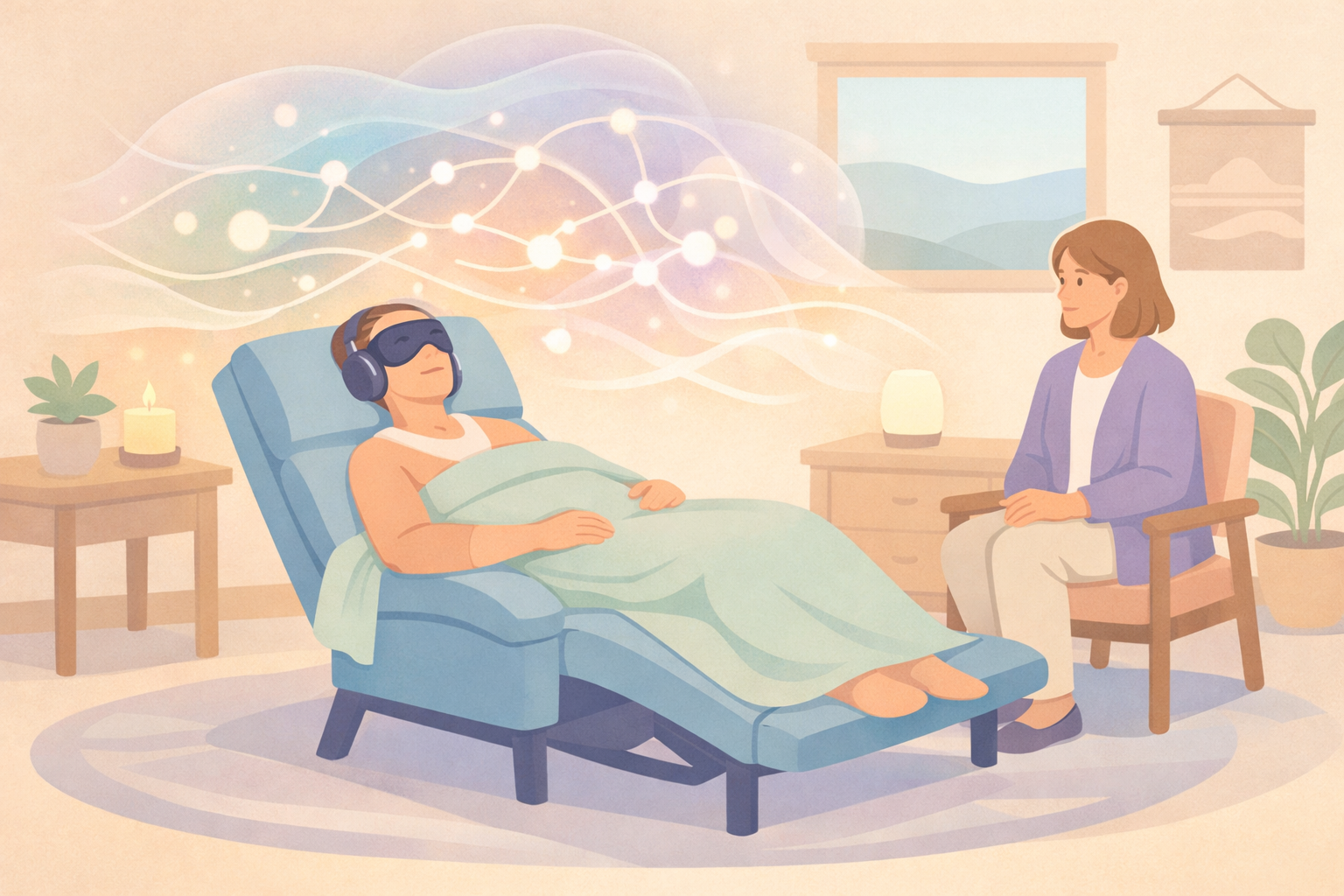
Self-compassion may play a crucial role in the outcome, too. An optimistic mindset can not only reduce the risk of something going wrong, but also appears to elevate the mood-enhancing effects of psychedelics.
Some drugs, like LSD, may temporarily “elicit psychosis-like symptoms,” even when long-term improvements occur. Provided you adhere to proper post-trip integration, residual negative emotions often dissolve on their own.
Integration: What Comes After
Psychedelic trips can last from minutes to hours, depending on what you take. But that hardly means you’ve finished your first psychedelic journey. Integration, or post-trip practices aimed at emotional regulation, is what makes the juice worth the squeeze.
Why Integration Matters
Your mind is ripe for change in the hours following a psychedelic journey. But this cultivation doesn’t just happen on its own. Experts from UC Berkeley’s Psychedelic Facilitation Training Program note that psychedelic substances are “powerful,” but “the real work begins after the journey.”

Integration isn’t just homework. Like applying setting spray to charcoal art, integration can help fasten the changes you made into place so you can reap the benefits long-term.
Practical Psychedelic Integration Techniques
So, what does integration actually look like? New research published in Frontiers in Psychology offers one of the first scholarly discussions on psychedelic integration. Bathje et al. examined existing research on 10 integration protocols. What were the common threads?
- Incorporation of “indigenous knowledge and practices”
- A focus on relationships and community, lifestyle, and the natural world
“Integration is about more than processing the psychedelic experience … [it’s about] bringing balance and alignment to one’s whole existence. Integration is the core project of our lives,” the authors say.
During psychedelic integration, you’ll often utilize one or more of the following:
- Talk therapy
- Journaling
- Meditation
- Yoga
- Art-making
- Immersion in nature
It’s worth mentioning that most of the scholarly work on integrative practices has been observational. Bathje and other researchers urge caution and have called for more research; “...the great majority of writings we identified on the topic of integration were brief and did not correspond to a theory or model…”
First-Time Psychedelic Journey: The Big Picture
Psychedelics have had cultural reverence for centuries. But modern science still has its work cut out - there’s a lot left to learn, both for clinicians and users. As interest in psychedelic therapies expands, we’re seeing a much clearer picture about the illuminating and restorative potential of these substances.
If you’re preparing for your first-time psychedelic journey, remember that psychedelics are not painkillers. There’s work to do before and after your trip that can make the difference between having a fun, spacey afternoon and changing your outlook on life for the better, and potentially, for always.
Frequently Asked Questions
Sources
- Watford T, Masood N. Psilocybin, an Effective Treatment for Major Depressive Disorder in Adults - A Systematic Review. Clin Psychopharmacol Neurosci. 2024 Feb 29;22(1):2-12. doi: 10.9758/cpn.23.1120. Epub 2023 Oct 16. PMID: 38247407; PMCID: PMC10811389.
- Roseman L, Nutt DJ and Carhart-Harris RL (2018) Quality of Acute Psychedelic Experience Predicts Therapeutic Efficacy of Psilocybin for Treatment-Resistant Depression. Front. Pharmacol. 8:974. doi: 10.3389/fphar.2017.00974
- Johnson MW, Hendricks PS, Barrett FS, Griffiths RR. Classic psychedelics: An integrative review of epidemiology, therapeutics, mystical experience, and brain network function. Pharmacol Ther. 2019 May;197:83-102. doi: 10.1016/j.pharmthera.2018.11.010. Epub 2018 Dec 4. PMID: 30521880.
- Krupitsky EM, Grinenko AY. Ketamine psychedelic therapy (KPT): a review of the results of ten years of research. J Psychoactive Drugs. 1997 Apr-Jun;29(2):165-83. doi: 10.1080/02791072.1997.10400185. PMID: 9250944.
- Baxter L, Puljević C, Piatkowski T, Ferris J, Davies EL, Barratt MJ, Winstock A. Tripping into the unknown: Exploring the experiences of first-time LSD users through global drug survey insights. J Psychopharmacol. 2024 Aug;38(8):735-748. doi: 10.1177/02698811241254837. Epub 2024 May 28. PMID: 38804544; PMCID: PMC11311902.
- Carhart-Harris RL, Leech R, Erritzoe D, Williams TM, Stone JM, Evans J, Sharp DJ, Feilding A, Wise RG, Nutt DJ. Functional connectivity measures after psilocybin inform a novel hypothesis of early psychosis. Schizophr Bull. 2013 Nov;39(6):1343-51. doi: 10.1093/schbul/sbs117. Epub 2012 Oct 8. PMID: 23044373; PMCID: PMC3796071.
- Straumann I, Holze F, Becker AM, Ley L, Halter N, Liechti ME. Safety pharmacology of acute psilocybin administration in healthy participants. Neurosci Appl. 2024 Mar 16;3:104060. doi: 10.1016/j.nsa.2024.104060. PMID: 40656108; PMCID: PMC12244205.
- Xu T, Wong S, Le GH, Dri CE, Teopiz KM, Lu A, Lee S, Rhee TG, Yin L, Bargiota S, Ho R, McIntyre RS. Cardiac Consequences Associated with Psychedelic Use: A Systematic Review of Lysergic Acid Diethylamide, 3,4-Methylenedioxymethamphetamine, and 5-Hydroxytryptamine 2B-Mediated Valvular Heart Disease. Pharmacopsychiatry. 2026 Mar;59(2):74-87. doi: 10.1055/a-2794-6487. Epub 2026 Feb 5. PMID: 41643722.
- Zeifman R, Danias G, Agin-Liebes G, Pagni B, Kettner H, Bhat V, Ross S, Erritzoe D, Carhart-Harris R. Psychedelic Therapy, Positive Emotional Experiences, and the Central Role of Self-Compassion. Res Sq [Preprint]. 2025 Aug 22:rs.3.rs-7420529. doi: 10.21203/rs.3.rs-7420529/v1. PMID: 40894046; PMCID: PMC12393679.
- Carhart-Harris RL, Kaelen M, Bolstridge M, Williams TM, Williams LT, Underwood R, Feilding A, Nutt DJ. The paradoxical psychological effects of lysergic acid diethylamide (LSD). Psychol Med. 2016 May;46(7):1379-90. doi: 10.1017/S0033291715002901. Epub 2016 Feb 5. PMID: 26847689.
- Bathje GJ, Majeski E and Kudowor M (2022) Psychedelic integration: An analysis of the concept and its practice. Front. Psychol. 13:824077. doi: 10.3389/fpsyg.2022.824077
Before you apply
Beckley runs legal, guided psilocybin retreats in Jamaica and psilocybin retreats in the Netherlands: four weeks of preparation, two guided sessions on retreat, six weeks of integration, online and at your own pace, one to two hours a week. Plain answers to the questions people ask first:
What a psilocybin retreat costs · What happens, day by day · Jamaica or the Netherlands · Who should not attend · Apply