
-2-1.png)


Insights from Imperial College, Columbia University, and the Enamory Institute on why psilocybin might be the “anti-roommate” medicine.
Love is life’s great puzzle. And like a jigsaw puzzle, your romantic journey can come to a frustrating standstill when it feels like none of the pieces fit together – even when you know there’s supposed to be a beautiful picture on the other side.
If you’re partnered, think of the arguments you’ve had with your loved one: Fights about sex, about money, about time, work, or fights about the other fights you’ve had. Traditional interventions like couples therapy can help, but emerging research indicates psychedelic therapies are changing the conversation.
Experts and spiritual authorities alike are utilizing psychedelics to disrupt harmful patterns at the source, helping couples reignite intimacy that’s rooted in emotional openness so they can put the puzzle back together as a team.
The “Roommate Epidemic”
The data doesn’t lie: According to the Pew Research Center, around 33% of marriages fail. Sometimes, the decision to split is a practical one. Other times, it’s a slow erosion that eventually becomes unbearable.
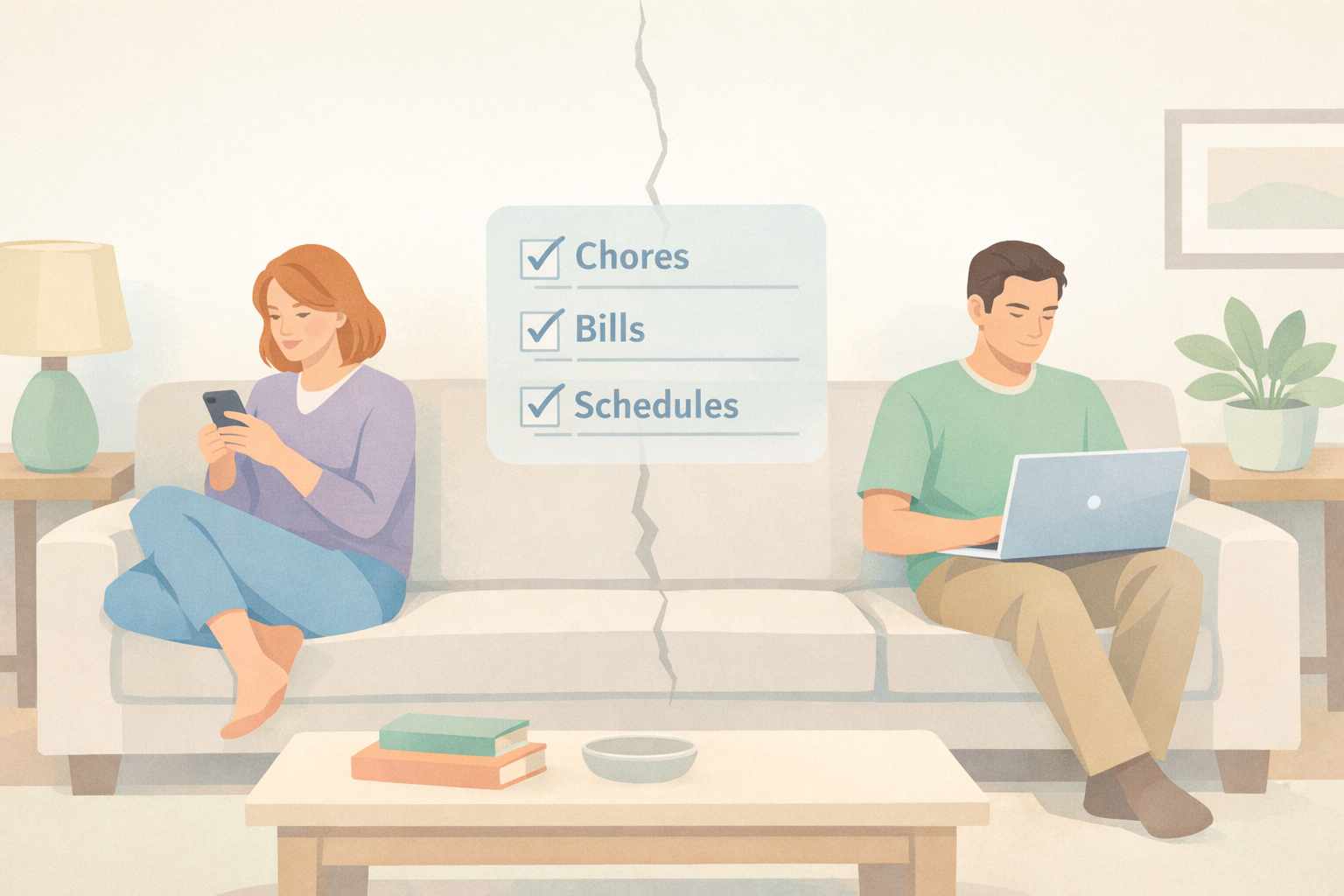
Before the cracks in the relationship become a chasm, intimacy and connection wither away. Studies tell us that more than 10% of long-term partnerships experience sexual droughts lasting a year or longer.
That’s the so-called “roommate phase” rearing its head; you share a space (and a bed) with your partner, but there’s no love in the air. Interactions are sterile. Neither partner paws at, or pines for, the other – even as they passionately deny having fallen out of love.
The Science of Love and Sex
At the most basic level, love is a series of chemical reactions in your brain. In reality, we know it is far more complex and nuanced than that. But before we can delve into the potential of psychedelics in mending wounded relationships, it’s helpful to recognize the scientific bedrock upon which these interactions are built.
The DMN: Your Brain’s “Bubble of Safety”
The Default Mode Network, or DMN, is a neural network that comes online when your brain lacks external stimuli – think of it like a rotating screensaver which pops up on an idle computer screen.
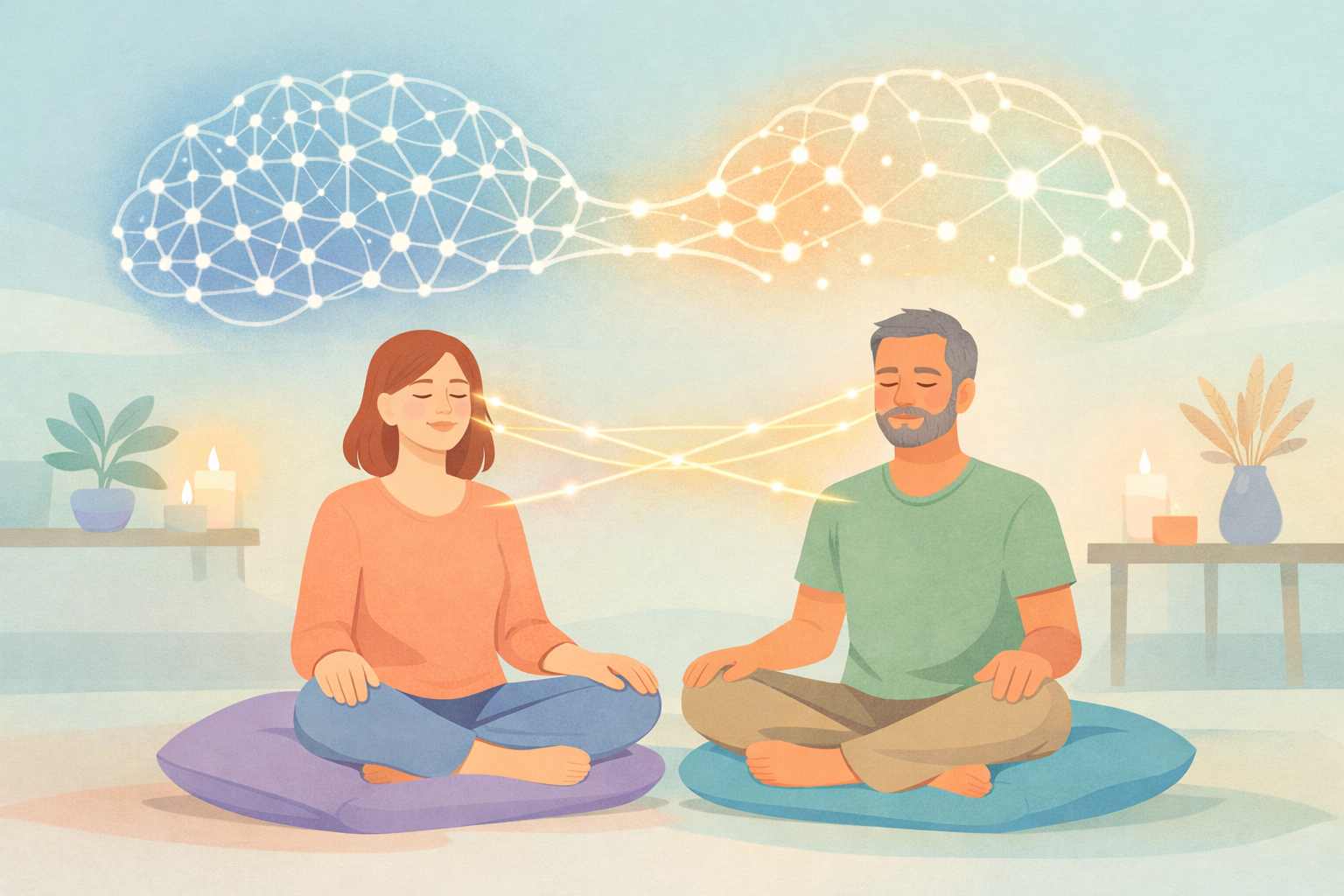
In addition to non-linear thinking and day-dreaming, activation of the DMN also encourages self-referential, ego-centric thinking and mental narrative-building. When things are going well in a relationship, the DMN’s feedback loop enhances a positive outlook.
But when conflict is present, the DMN can fuel misunderstanding and resentment by generating harmful narratives about the relationship.
The discovery of the DMN two decades ago revolutionized neuroscience. Experts now recognize that the DMN’s top-down processing, which flattens and approximates your partner rather than experiencing them in real time as they are, can calcify relationships.
You begin to see your partner as a data point or caricature – not as an individual. More and more, we’re seeing psychedelic therapies shatter that mirage and revitalize the relationship.
How Psychedelics Outwit the Mind & Transform Relationships
Leading experts are making one thing clear – psychedelics have tremendous utility in bridging the gap between disconnected partners. Works by individual scholars and longstanding institutions alike are shedding new light on the mechanisms by which psychedelics help organize the disparate puzzle pieces of a fractured relationship.
How Psilocybin Changes the Narrative
Dr. Tommaso Barba conducts pioneering research out of Imperial College London. His work centers around the utility of psilocybin in mending what he’s dubbed “relational dysfunction”.
What does relational dysfunction look like? Ahead of a big trip together, your partner might say something like, “Hey, did you remember to lock down a rental car like I asked?” But what you hear is, “Hey, I can’t trust you, so I need to nag you to make sure you’re holding up your end.”
Not exactly a recipe for a relaxing vacation.
Psilocybin binds to serotonin receptors – that’s one of your brain’s “feel-good” hormones – in your brain. When ingested, psilocybin seems to disrupt the integrity of the DMN, encouraging your brain to undergo “bottom-up processing” instead.
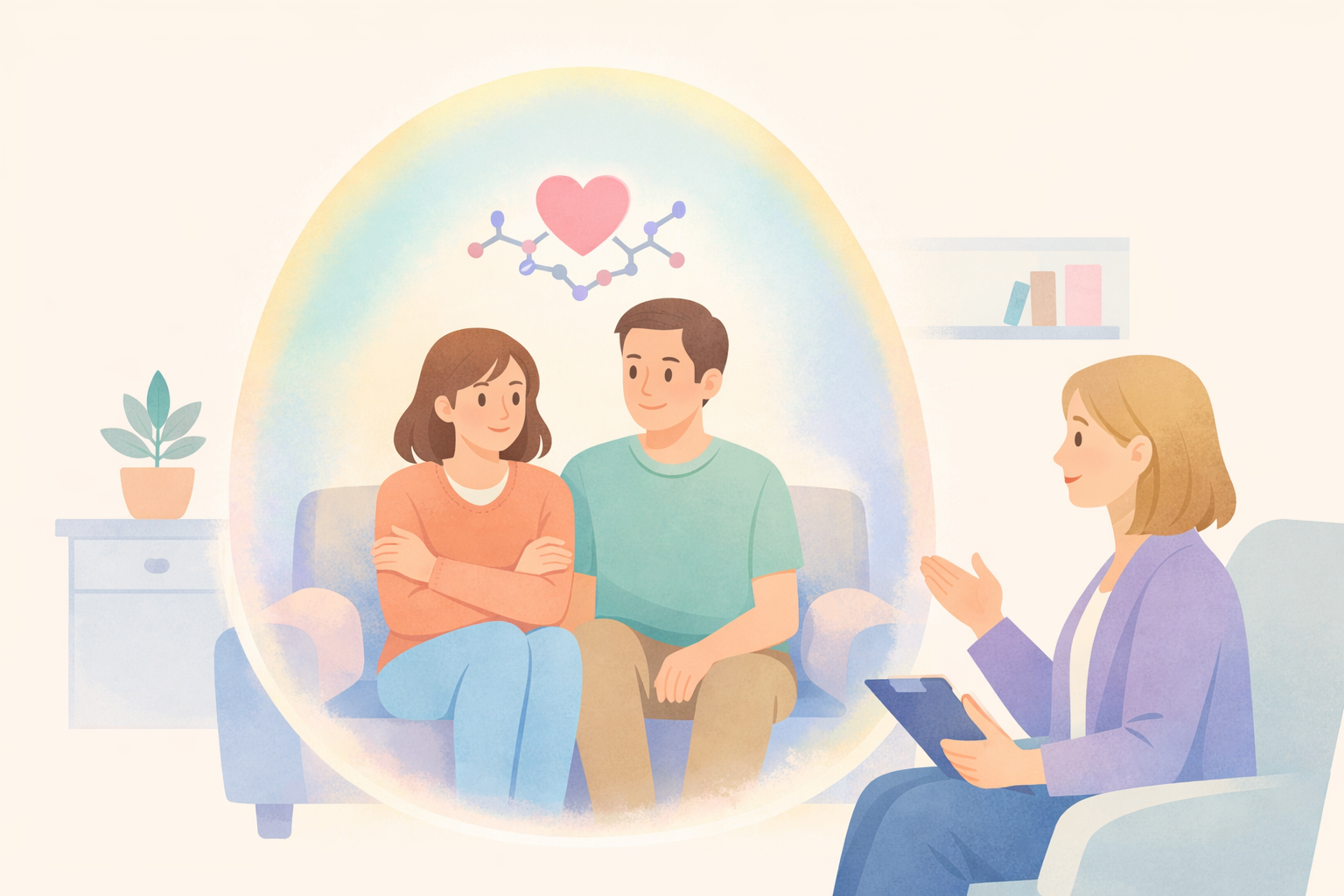
With the DMN quieted under the effects of psilocybin, one may perceive their partner and relationship with authentic clarity, rather than letting insecurity or ego cloud things. And this new perception allows you to essentially shift your internal narrative from criticism and concealment to communication and openness.
According to Barba’s research, participants using psilocybin as a relational intervention reported significantly higher satisfaction than those relying on prescription SSRIs. By the conclusion of the trial period, those who had utilized psilocybin…
- Had significantly higher rates of reduction in relational dysfunction
- Reported “significant improvement” in sexual interest and satisfaction with sex
- Improved their communication skills
These breakthroughs showcase how psilocybin isn’t a placebo or a stopgap solution. In Barba’s words, improvements are directly linked to “how we think about our own bodies,” provided the couple is diligent about fostering their newfound connection.
Of course, sexual connection is just one piece of the puzzle. Barba’s thesis is that, provided both partners put in the work, newfound connections aren’t confined to the bedroom.
“Love is a skill, not a feeling,” Barba says.
MDMA, Oxytocin, & the Emotional Climate
Research exploring how compounds like MDMA can positively influence relational dynamics have found that trauma, if left to fester within a relationship, can create a negative feedback loop:
-
-
PTSD symptoms like avoidance, hyperarousal, and emotional numbing reinforce a divide between partners
- This relational gap unintentionally reinforces the PTSD symptoms that caused it in the first place
-
One study has shown that MDMA’s potential to calm the amygdala - a portion of your brain responsible for emotional processing - and “facilitate systems-level interpersonal healing.” The angle? By treating the relationship itself as the primary patient, not the humans that make up the dyad.
In that trial, the researchers incorporated MDMA into sessions of cognitive-behavioral conjoint therapy (CBCT). The couple underwent joint therapy sessions during and after a guided experience with MDMA. Here’s what they found:
-
-
Both partners reported significant improvements in relationship satisfaction.
-
Partners with PTSD may be able to “maximize recovery from trauma” by utilizing MDMA-assisted therapy
-
By following appropriate integration practices under the guidance of a qualified counselor, the dyads had largely maintained their progress at the 6-month follow-up.
Ketamine & Creating Helpful Distance
For some couples, one or both partners may struggle to push their ego aside and directly address relationship issues.
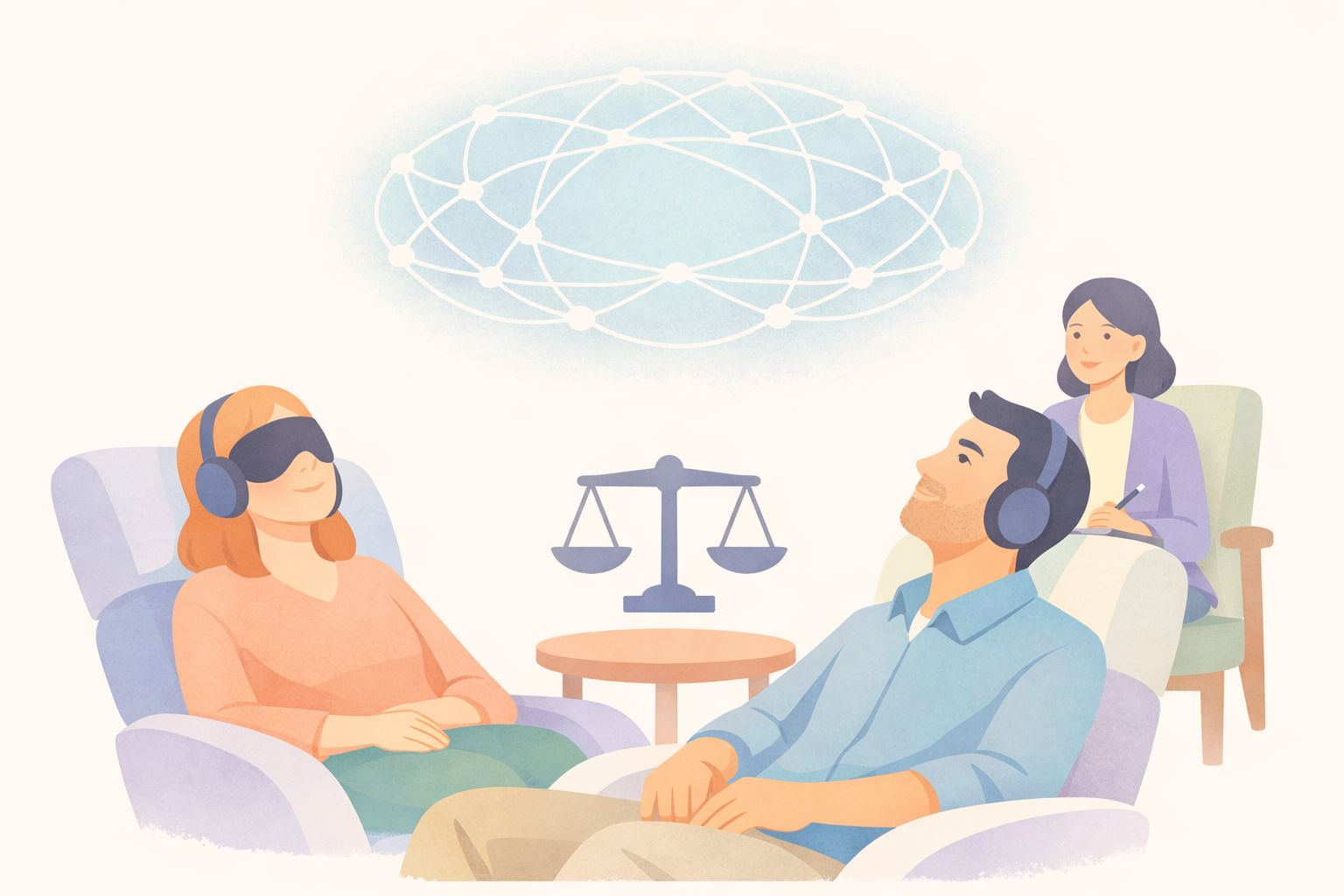
This isn’t to say it’s a matter of pride – according to the works of the Enamory Institute, founded by clinical psychologists Chandra Khalifan and Kayla Knopp, psychedelics can help couples get out of their own way by creating “helpful distance.”
The Institute focuses on two interventions: ketamine-assisted couple therapy (KAP) and oxytocin-augmented therapy.
- Ketamine, through quieting the DMN and binding to glutamate receptors in the brain, induces a dissociative state; a bird’s eye perspective not fastened to or dependent on the user’s ego.
- Intranasal oxytocin, according to emerging research, seems to have the potential to make partners more open to cooperative, collaborative behavior, especially when sexual attractions are involved.
Enamory has synthesized the clinical and the emotional into a certification program that addresses the unique risks of dyadic work when psychedelics are involved. The program is three-pronged. First, therapists complete instructional training, which is then applied to supervised clinical sessions with couples. Afterward, clinicians are certified and provided with resources to utilize ketamine-assisted therapies in their own practices.
Essentially, Enamory provides mental health professionals with the tools and acumen they need to incorporate psychedelics into couples therapy. With expert supervision and a bit of supportive infrastructure, couples locked in ego-based relational conflicts can finally take the necessary space to restructure the narrative of the relationship.
The “Puzzle Pieces” of Integration
While psychedelics have demonstrated incredible clinical potential in improving relational intimacy, they aren’t magic. “People confuse psychedelics as being stage experiences, when they’re states,” says Annie Lalla, a relationship coach and counselor with an Honors Science degree in Biology & Philosophy. Lalla has spoken as part of various panels hosted by the Multidisciplinary Association of Psychedelic Sciences (MAPS).
- In psychedelic therapies, state experiences are the emotions, perspectives, and epiphanies that occur while under the active effects of a substance.
- Stage experiences refer to the new emotional baseline you achieve through therapy, provided you integrate your psychedelic experience properly. “You have to come back to your life and do the work,” Lalla adds.
Think back to the jigsaw puzzle; psychedelic interventions are like looking at the completed picture on the box the puzzle came in. It shows you the scenic destination, but you still need to do the work of putting the pieces together.
Why Integration Is Essential
Baya Voce hosts The Art of Connection web series. As a collaborative voice alongside MAPS, Voce educates on the art of psychedelic integration – the post-trip interventions that set your progress in place.
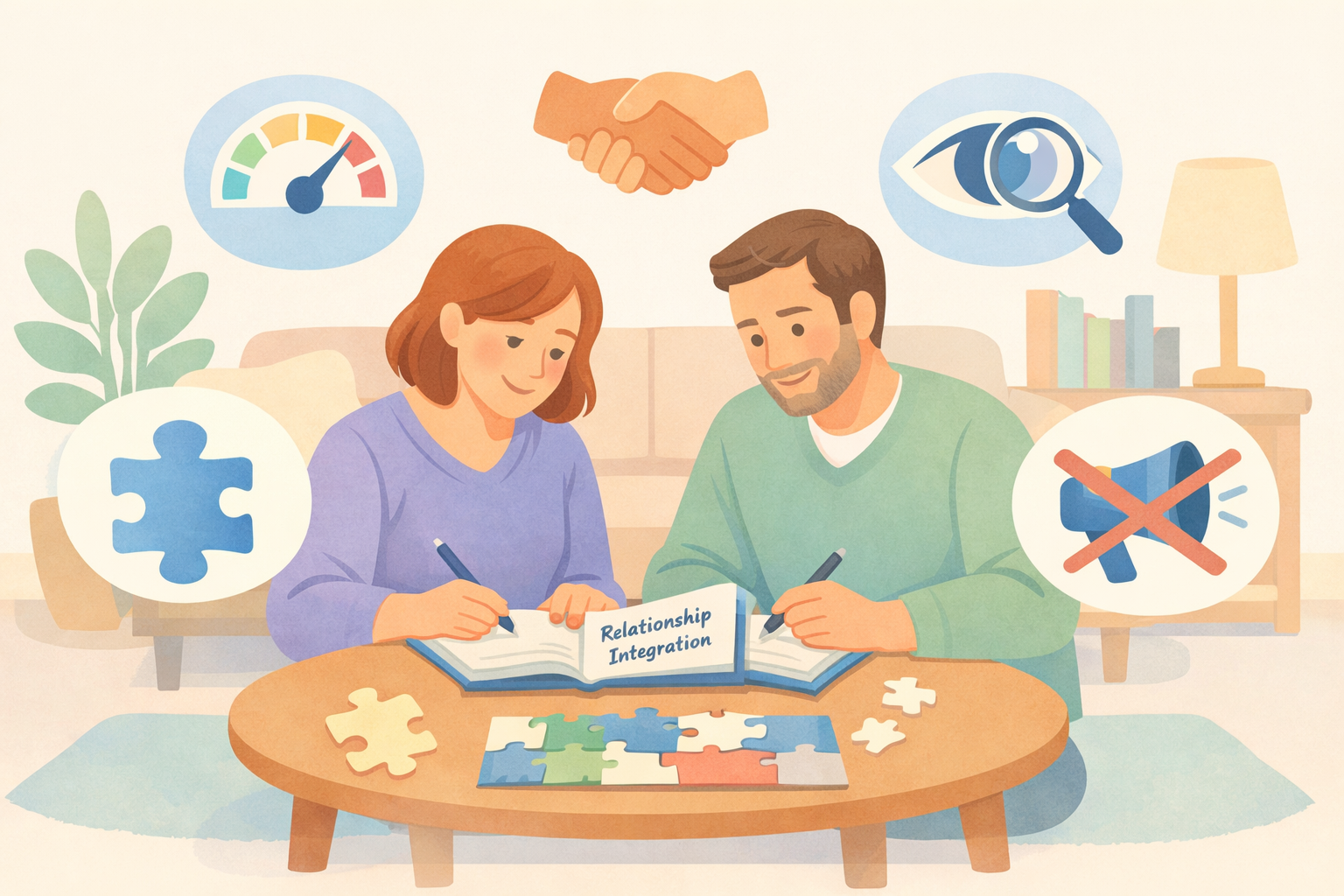
Voce’s approach to effective integration is three-pronged: repair, nostalgia, and relating. To Voce, repairing relational wounds isn’t a one-time thing – it requires consistent effort. “Long-term functionality in relationships takes a very specific skillset,” she says.
Her five rules serve as a practical toolkit for integration:
- Regulate: You must exhale and turn down the temperature on the relationship before cognitive resolution can occur.
- Responsibility: Both partners must accept responsibility for the rupture and find common ground.
- Curiosity: Partners must approach each other’s words with curiosity and receptiveness.
- Singularity: Issues or past grievances must be tackled one at a time; avoid “kitchen-sinking” or abrupt pivots.
- Silence: Both partners must be willing to end dialogues peacefully and avoid hammering the same issue past the point of usefulness.
Voce’s framework isn’t just applicable to messy relationships. Individual psychedelic-assisted therapies help you confront your fears or insecurities from a new angle and reframe your perspective.
But for partners looking to make meaningful, long-lasting changes, effective integration is an absolute must. Jigsaw puzzles don’t assemble themselves.
A New Definition of Couples’ Therapy
Psychedelics are powerful. In the right contexts, they can be game-changing interventions for a relationship that has grown stale, tired, or is rife with conflict. However, they aren’t a panacea.
“Love is the most powerful psychedelic known to mankind,” says Lalla. Psilocybin or ketamine pale in comparison – that said, it’s becoming increasingly clear that psychedelics are good for much more than a spicy evening in an otherwise mild relationship.
It’s time to move the conversation past couples counseling. Thanks to emerging clinical works by leaders like Barba and Wagner to the applied and practical interventions of Voce and Enamory, the path forward is clear: Psychedelics facilitate much more than a good time. They open the door to restoring real, textured intimacy in shattered partnerships.
Love can’t be engineered – but we can absolutely grease the wheels.
Sources
- Kim JH, Tam WS, Muennig P. Sociodemographic Correlates of Sexlessness Among American Adults and Associations with Self-Reported Happiness Levels: Evidence from the U.S. General Social Survey. Arch Sex Behav. 2017 Nov;46(8):2403-2415. doi: 10.1007/s10508-017-0968-7. Epub 2017 Mar 8. PMID: 28275930; PMCID: PMC5889124.
- Vinod Menon, 20 years of the default mode network: A review and synthesis, Neuron, Volume 111, Issue 16, 2023, Pages 2469-2487, ISSN 0896-6273.
- Barba T, Kettner H, Radu C, Peill JM, Roseman L, Nutt DJ, Erritzoe D, Carhart-Harris R, Giribaldi B. Psychedelics and sexual functioning: a mixed-methods study. Sci Rep. 2024 Feb 7;14(1):2181. doi: 10.1038/s41598-023-49817-4. PMID: 38326446; PMCID: PMC10850066.
- Wagner AC. Couple Therapy With MDMA-Proposed Pathways of Action. Front Psychol. 2021 Nov 11;12:733456. doi: 10.3389/fpsyg.2021.733456. PMID: 34858270; PMCID: PMC8631777.
- Zanos P, Gould TD. Mechanisms of ketamine action as an antidepressant. Mol Psychiatry. 2018 Apr;23(4):801-811. doi: 10.1038/mp.2017.255. Epub 2018 Mar 13. PMID: 29532791; PMCID: PMC5999402.
- Gonçalo Cosme, Marta Patrocínio, Carlotta Cogoni, Maciej Kosilo, Diana Prata, Intranasal oxytocin increases cooperation of heterosexual men with women, Psychoneuroendocrinology, Volume 179, 2025, 107519, ISSN 0306-4530.
Before you apply
Beckley runs legal, guided psilocybin retreats in Jamaica and psilocybin retreats in the Netherlands: four weeks of preparation, two guided sessions on retreat, six weeks of integration, online and at your own pace, one to two hours a week. Plain answers to the questions people ask first:
What a psilocybin retreat costs · What happens, day by day · Jamaica or the Netherlands · Who should not attend · Apply