-2-1.png)


Bicycle Day is celebrated each April 19th and marks the anniversary of the first intentional LSD trip, taken by Swiss chemist, Albert Hofmann. Over eight decades after that initial experience when Hofmann took a bicycle ride of a lifetime, people have been coming together to celebrate the monumental trip that is now an iconic moment.
What started as an accidental exposure turned into a catalyst for history. It opened a door to important psychiatric research on LSD, helped make it a staple in the counterculture movement, and it is still a prominent recreational drug despite its legal status.
What is Bicycle Day?
Bicycle Day is the celebration of the first intentional psychedelic trip on lysergic acid diethylamide, better known as LSD. 37-year-old Swiss chemist, Albert Hofmann, had originally synthesized LSD five years prior, but following a “peculiar presentiment" that there was more to the substance than had yet been revealed, he decided to resynthesize a batch. While doing this on April 16th, 1943, Hofmann described a change of consciousness, shifting into a “not unpleasant intoxicated-like condition” with heightened imagination. He suspected the LSD may have been responsible. On April 19th, Hofmann decided to experiment and took the first intentional trip, cautiously ingesting what he felt would likely be a minuscule dosage of 250 micrograms of the substance - but which turned out to be anything but.

Every April 19th, a subset of enthusiasts gets together to celebrate the discovery of LSD and the consequential accident that brought it to life. The name itself dates to 1985, when Thomas B. Roberts, a professor at Northern Illinois University in DeKalb, Illinois, coined the term and set April 19th as the official day of celebration.
The Discovery of LSD
Albert Hofmann joined Sandoz Laboratories in 1929 as a coworker of Arthur Stoll, the pharmaceutical department’s founder and director. Hofmann’s research into ergot fungi derivatives led him to first synthesize lysergic acid diethylamide (LSD) on November 16, 1938, with the original aim of developing a respiratory and circulatory stimulant. The compound was shelved and sat largely untested for five years.
Then, on April 16th, 1943, Hofmann returned to LSD-25, driven by what he described in his book, LSD: My Problem Child, as a “peculiar presentiment” that pulled him back specifically to that compound. While handling it, he was unintentionally exposed to it, made his way home, and experienced what he would later call an “uninterrupted stream of fantastic pictures.” The accidental exposure brought restlessness and dizziness along with the visuals, leaving Hofmann convinced this compound was worth exploring further in a deliberate and controlled manner.
Albert Hofmann’s Famous Bicycle Ride
Three days after the accidental exposure, on April 19th at 4:20 PM, Hofmann ingested 0.25 milligrams of LSD, marking the first intentional trip. By 5:00 PM, he was restless, anxious, and struggling to speak clearly. He also expressed seeing “demonic transformations of the outer world” and the changing perception of self. He wanted to get home, but wartime restrictions in his home city of Basel during World War II prohibited private car use, so Hofmann and his laboratory assistant, Susi Ramstein, set off by bicycle.
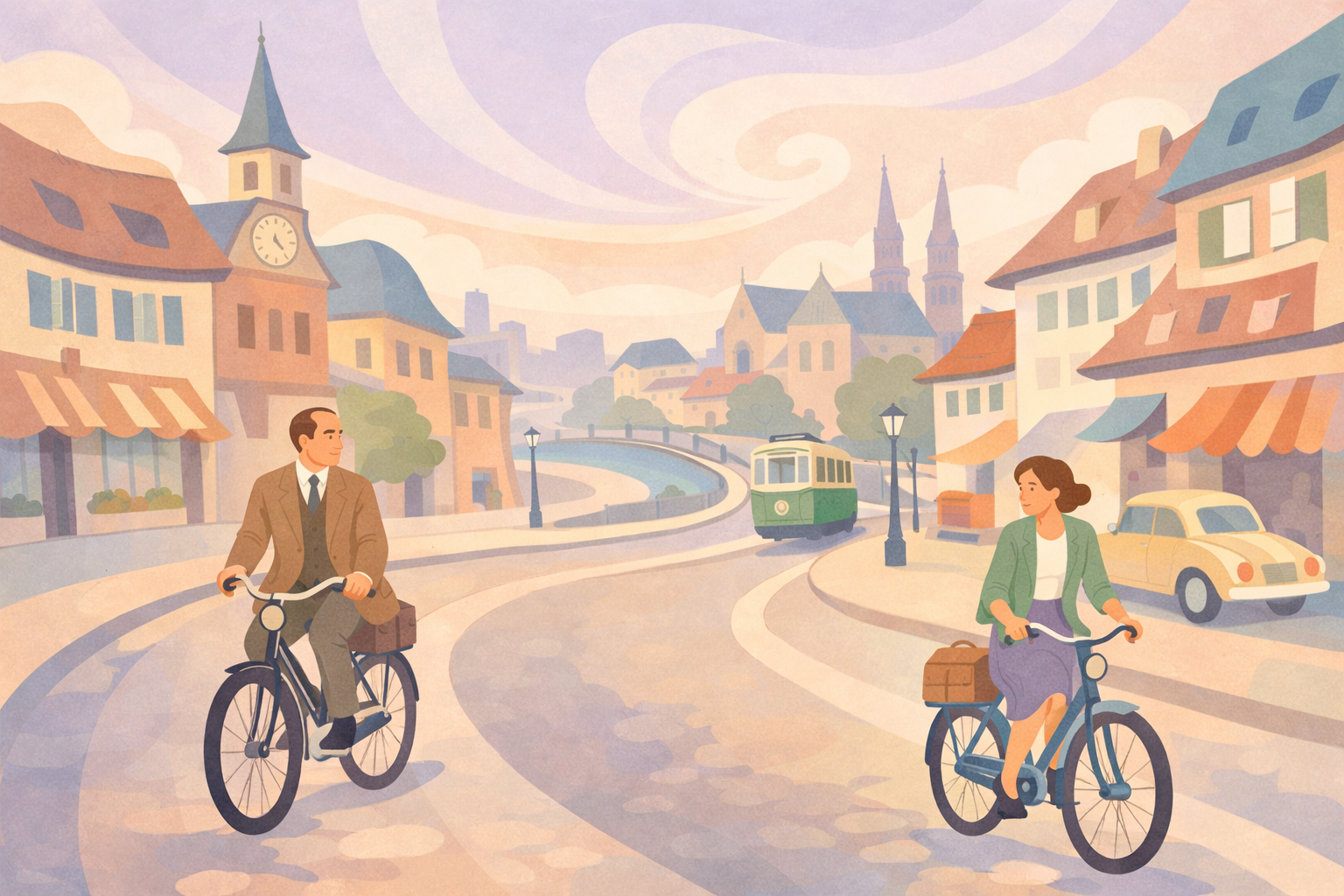
From Hofmann’s personal account in LSD: My Problem Child, the ride was frightening, and he was sure he was facing death or losing his sanity. His assistant, sober and overseeing, confirmed they had been cycling at a considerable speed, which contradicted Hofmann’s perception that they were barely moving. He also experienced intense visual distortions, as if everything were being seen in a curved mirror. Once home, a neighbor came to check on him, and Hofmann saw her as a witch, and these moments became the first documented description of a deliberate LSD experience.
By the following morning, the fear had lifted, and as Hofmann described it, the terror gave way to something more resolved and peaceful. He felt a shift and began to view the potential benefits of LSD through a very different lens, feeling that the substance could hold psychiatric potential.
LSD and the Rise of Psychedelic Research
Hofmann and Sandoz director Arthur Stoll first reported LSD in scientific literature in 1943, and Stoll’s son, psychiatrist Werner Stoll, later published a milestone paper on hallucinogenic effects in 1947. That same year, Sandoz began making it available to qualified researchers under the trade name Delysid. By 1949, American psychiatrists Max Rinkel and Nick Bercel had personally brought Sandoz’s LSD into the United States to begin testing it.
The 1950s brought a flood of interest in psychiatry. By 1960, researchers had reportedly tried LSD across nearly every category of mental disorder. In his comprehensive review in Pharmacological Reviews, pharmacologist David E. Nichols documents how LSD’s activity at serotonin 5-HT2A receptors made it a pivotal tool for probing the neurochemistry of perception, mood, and cognition during this period. The scale of research between 1950 and 1965 was striking, and more than 40,000 patients received prescriptions for LSD to treat conditions such as neurosis, autism, and psychopathy.
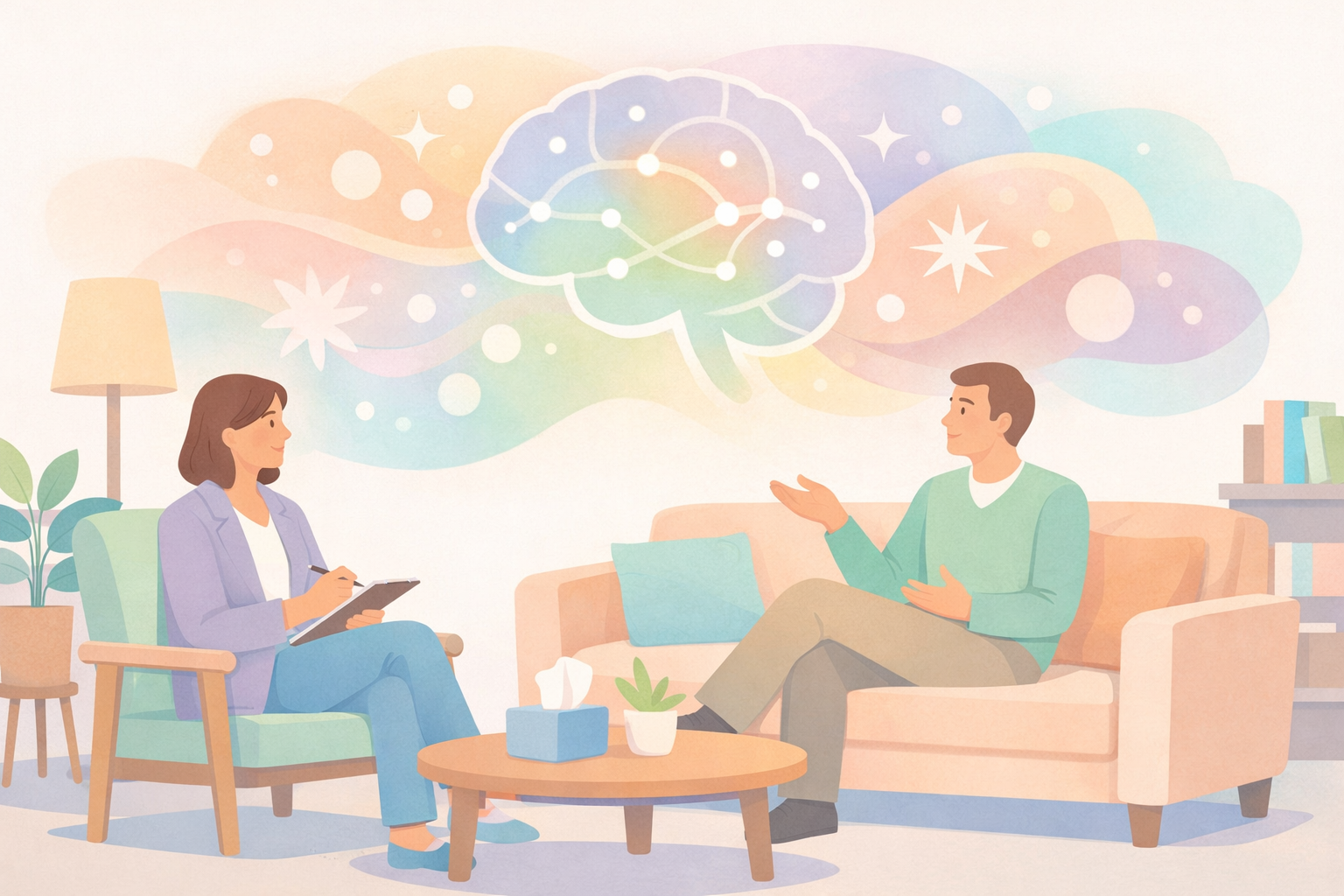
Among the researchers driving that work was psychiatrist Humphry Osmond, who coined the term “psychedelic,” meaning “mind-manifesting,” and was a leading voice for LSD as a treatment for alcoholism during this time.
Outside academia, the U.S. Army and the CIA were running their own experiments, specifically exploring the compound's potential use as a truth serum. Historian Erika Dyck, in Psychedelic Psychiatry: LSD from Clinic to Campus, traces how the compound migrated out of controlled clinical settings and onto university campuses, and by the mid-1960s, into the broader counterculture. This reshaped the public perception and helped drive the regulatory response that followed. The U.S. government classified it as a Schedule I drug in 1970, and it remains there to this day under the Controlled Substances Act, signed by Nixon.
Why Bicycle Day Still Matters
Today, Bicycle Day is observed internationally as a hybrid of education, community, and cultural celebration. San Francisco has become one of the more visible celebratory places, hosting events like Discovery Sessions SF, which has brought together researchers, journalists, and chemists. Elsewhere, celebrations take the form of group bicycle rides, lectures, symposia, and other events.

Hofmann’s body of work wasn’t limited to LSD, and his experience on 4/19 was just the tip of the iceberg of his important legacy. He also isolated, named, and synthesized psilocybin and psilocin (principal compounds in psychedelic mushrooms) and their analog, psilacetin or 4-AcO-DMT. Hofmann lived to be 102 and passed away on April 29, 2008. On his 100th birthday, speaking about his relationship with LSD, he said: “It gave me an inner joy, an open-mindedness, a gratefulness, open eyes and an internal sensitivity for the miracles of creation.”
In his writings, he referred to LSD as “medicine for the soul”, a framing rooted in spiritual and psychological potential, not for recreational use. He viewed the recreational use of LSD to be ‘the problem child,’ hence, the title of his book.
The Trip That Opened the Doorway
April 19th, 1943, stands as the first intentional LSD trip. It’s a day that opened the field to decades’ worth of experiences, growth, research, and spiritual contemplation. Albert Hofmann stated in LSD: My Problem Child, “I believe that if people would learn to use LSD’s vision-inducing capability more wisely, under suitable conditions, in medical practice and in conjunction with meditation, then in the future this problem child could become a wonder child.”
While LSD still remains a classified Schedule I drug, there are many who still partake in the experience and who celebrate Albert Hofmann and the famous bicycle ride on April 19th.
Frequently Asked Questions
Sources
- Abplanalp, Andrej. "Albert Hofmann's High-Speed Bicycle Trip." Blog of the Swiss National Museum, Apr. 2017, blog.nationalmuseum.ch/en/2017/04/albert-hofmanns-high-speed-bicycle-trip/.
- Belouin, Sean J., and Jack E. Henningfield. "Psychedelics: Where We Are Now, Why We Got Here, What We Must Do." Neuropharmacology, vol. 142, Nov. 2018, pp. 7–19. ScienceDirect, www.sciencedirect.com/science/article/pii/S0028390818300753.
- Dyck, Erika. Psychedelic Psychiatry: LSD from Clinic to Campus. Johns Hopkins University Press, 2008.
- Grinspoon, L., & Bakalar, J. B. (1981). Psychedelic Drugs Reconsidered. Basic Books.
- Hofmann, Albert. LSD: My Problem Child. Translated by Jonathan Ott, McGraw-Hill, 1980. MAPS, maps.org/images/pdf/books/lsdmyproblemchild.pdf.
- Margolin, Madison. "Where to Celebrate Bicycle Day Around the World." GreenState, 18 Apr. 2024, www.greenstate.com/psychedelics/bicycle-day-events/.
- Nichols, David E. "Psychedelics." Pharmacological Reviews, vol. 68, no. 2, Apr. 2016, pp. 264–355.
- Pallardy, Richard. "Albert Hofmann." Encyclopædia Britannica, 6 Apr. 2026, www.britannica.com/biography/Albert-Hofmann.
- Stoll, W. A. "Lysergsäure-diäthylamid, ein Phantastikum aus der Mutterkorngruppe." Schweizer Archiv für Neurologie und Psychiatrie, no. 60, 1947. Stanislav Grof Papers, MSP 1, Series 3, Sub-Series 2, File 18, Item 98, Box 10, Folder 6, Purdue University Archives and Special Collections, archives.lib.purdue.edu/repositories/2/archival_objects/26027. Accessed 17 Apr. 2026.
- "Thomas B. Roberts: 'Psychedelic Directions, Where Does Your Mind Alight?'" Psychedelic Alpha, 19 Apr. 2021, psychedelicalpha.com/news/thomas-b-roberts-psychedelic-directions-where-does-your-mind-alight/.
- United States, Drug Enforcement Administration. "Drug Scheduling." DEA.gov, www.dea.gov/drug-information/drug-scheduling. Accessed 17 Apr. 2026.
Before you apply
Beckley runs legal, guided psilocybin retreats in Jamaica and psilocybin retreats in the Netherlands: four weeks of preparation, two guided sessions on retreat, six weeks of integration, online and at your own pace, one to two hours a week. Plain answers to the questions people ask first:
What a psilocybin retreat costs · What happens, day by day · Jamaica or the Netherlands · Who should not attend · Apply