
Is Ketamine a Horse Tranquilizer? Debunking the Myth
In 1998’s summer blockbuster Armageddon, there’s a scene in which Bruce Willis’ ragtag group of oil rig workers are medically evaluated – and then summarily disqualified – for space travel. Among the disqualifications was a toxicology report showing recreational ketamine use.
“Sedatives are used all the time, doctor,” Willis’ character remarks.
“This one’s used on horses,” the NASA examiner replies.
That throwaway joke was the first time a lot of people had heard about ketamine in a mainstream setting…as a horse tranquilizer. Is Armageddon responsible for the “myth”?
Certainly not. Ketamine is not a horse tranquilizer. At least, not only, and not anymore. Thanks to its ability to help ease some mental health disorders (in conjunction with ketamine-assisted therapy), reputable clinics provide ketamine therapies to human patients to great effect.
The History of Ketamine
Ketamine has existed for over half a century. It was originally developed in 1962 by researchers Corssen and Domino, who were searching for alternative viable anesthetics.
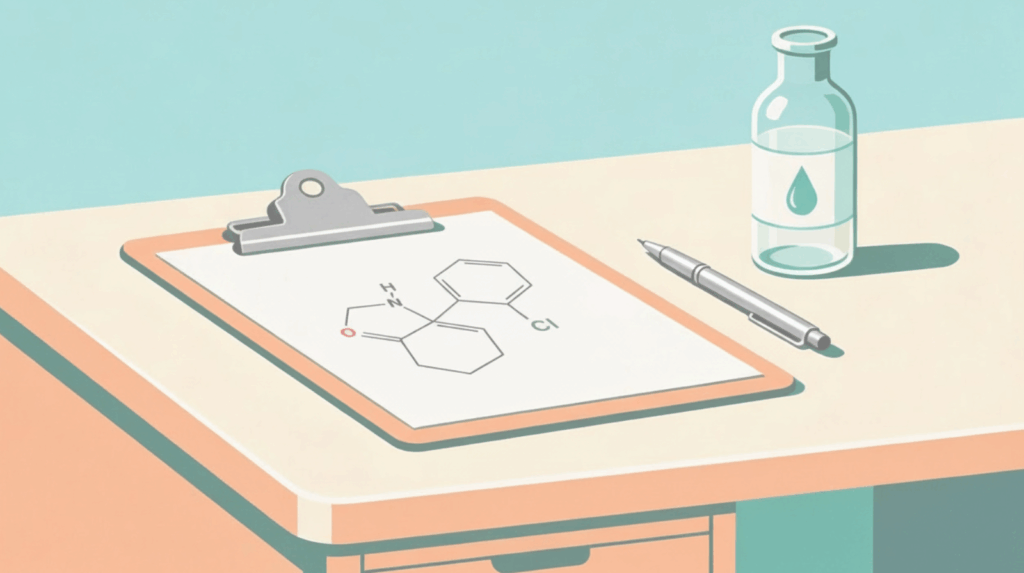
Crucially, ketamine – created to be a safer, shorter-acting anesthetic – doesn’t suppress respiration. It also disconnects sensory input and increases pulse and blood pressure (whereas most anesthetics supress one’s pulse and blood pressure). As such, it shines in situations where intubation is impractical. This led to its adoption in two crucial contexts:
- Veterinary medicine for “exotic species”, horses included
- As a “buddy drug” for soldiers providing each other with triage care in the Vietnam War
In addition to its analgesic properties and relative lack of side effects compared to other sedatives of the era, ketamine induces what Domino’s wife dubbed “dissociative anesthesia.” Users experience dreamlike sedation, detachment, and may hallucinate while the drug is active.
Today, ketamine is considered a mild psychedelic. It is classified as Schedule III by the U.S. Drug Enforcement Agency, which allows it to be used for medical purposes.
Its potential to help the brain form new neural pathways, altering how we perceive ourselves and our circumstances, is why ketamine clinics and guided therapy practices have become widespread.
Is Ketamine a Horse Tranquilizer?
So, to address the elephant horse in the room: Is ketamine a horse tranquilizer? Technically, yes, since it is still used in animal sedation. But calling ketamine a horse tranquilizer is a bit like saying minoxidil is a medicine for hypertension. Nowadays, it sees much more prolific and applied usage as a treatment for hair loss.
Ketamine is far from a “sketchy animal drug”. Emerging research and testing have shown its potential as a versatile mental health treatment, especially for sufferers of depression, anxiety, acute suicidal ideation, and PTSD. Ketamine’s safety profile, however, is bound to its clinical use. Recreational use can lead to habit-forming behavior and even inflammation to the urinary system.
How Ketamine Works for Mental Health
At low doses, ketamine produces beneficial effects on neuroplasticity – it allows your brain to “rewire” by binding to different receptors across the glutamate system. Severing old pathways and forming new ones reconfigures your brain’s neuronal infrastructure. This augmentation to what’s called the Brain-Derived Neurotrophic Factor, or BDNF, is at the heart of ketamine’s anti-depressive properties.
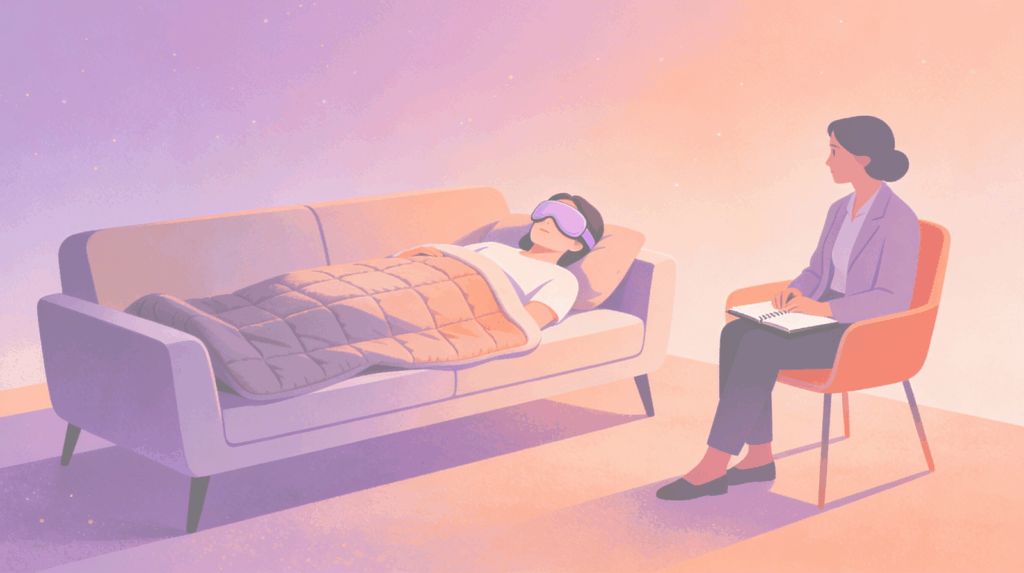
Clinicians at Yale Medicine have regarded ketamine’s FDA approval in 2019 as a “game changer” – an “anti-medication medication” that encourages the brain to repair on its own, rather than the brain being under the ‘hypnosis’ created by drugs like SSRIs.
Other Therapeutic Applications of Ketamine
While ketamine has been thoroughly vetted for mental health applications, emerging research has also begun to highlight some of its other potential utility. Some studies have shown ketamine to be potentially beneficial for treating seizure disorders and even asthma.
Should You Try Ketamine?
Calling ketamine a “horse tranquilizer” is misleading and off-putting, even if that is a legitimate use of the drug. Nowadays, folks from all walks of life are finding relief from years of battling their mental health woes by undergoing guided ketamine therapies.
This isn’t alternative medicine, homeopathy, or shamanism. It’s a new avenue for anyone who has suffered and toiled through endless consultations, screenings, and one prescription refill after another.
Whether you’re looking to finally quell the storm raging in your head and heart, or simply want to have your perspective on life expanded, ketamine experiences might be able to help.
Frequency Asked Questions
Is ketamine safe for humans?
Yes, ketamine is safe for humans. It was designed for human use and is FDA-approved for anesthesia and depression.
Why do people call ketamine a horse tranquilizer?
Ketamine has a reputation as a horse tranquilizer because it is commonly used in veterinary medicine due to its high safety profile. There’s also a bit of novelty in the phrase itself, helping the stigma catch on.
Is ketamine addictive?
Yes, if abused. Ketamine has the potential for addiction among recreational users not under supervision by a clinician, but therapeutic dependence is extremely rare if taken under qualified medical supervision.
What is the difference between “Special K” and medical ketamine?
Special K is the street name for the drug. It differs in purity, in the precisely measured dosages used, and the presence of medical supervision.
Is ketamine legal?
Yes. According to the U.S. Drug Enforcement Agency, ketamine is categorized as a Schedule III drug, legal for medical purposes in the United States. It also sees wide recreational use in other parts of the world, such as the UK and Scandinavia.
Sources
- Li L, Vlisides PE. Ketamine: 50 Years of Modulating the Mind. Front Hum Neurosci. 2016 Nov 29;10:612. doi: 10.3389/fnhum.2016.00612. PMID: 27965560; PMCID: PMC5126726.
- Stunkard JA, Miller JC. An outline guide to general anesthesia in exotic species. Vet Med Small Anim Clin. 1974 Sep;69(9):1181-6. PMID: 4604091.
- Nutt DJ, Morgan C, Erritzoe D, Greenway KT, Young AH. A long, strange trip: Ketamine treatment in psychiatry. J Psychopharmacol. 2025 Oct;39(10):1039-1044. doi: 10.1177/02698811251379393. Epub 2025 Oct 27. PMID: 41146516; PMCID: PMC12572351.
- Mion G, Villevieille T. Ketamine pharmacology: an update (pharmacodynamics and molecular aspects, recent findings). CNS Neurosci Ther. 2013 Jun;19(6):370-80. doi: 10.1111/cns.12099. Epub 2013 Apr 10. PMID: 23575437; PMCID: PMC6493357.
- Sanacora G, Frye MA, McDonald W, Mathew SJ, Turner MS, Schatzberg AF, Summergrad P, Nemeroff CB; American Psychiatric Association (APA) Council of Research Task Force on Novel Biomarkers and Treatments. A Consensus Statement on the Use of Ketamine in the Treatment of Mood Disorders. JAMA Psychiatry. 2017 Apr 1;74(4):399-405. doi: 10.1001/jamapsychiatry.2017.0080. PMID: 28249076.
- Rosati A, De Masi S, Guerrini R. Ketamine for Refractory Status Epilepticus: A Systematic Review. CNS Drugs. 2018 Nov;32(11):997-1009. doi: 10.1007/s40263-018-0569-6. PMID: 30232735.
- Jat KR, Chawla D. Ketamine for management of acute exacerbations of asthma in children. Cochrane Database Syst Rev. 2012 Nov 14;11(11):CD009293. doi: 10.1002/14651858.CD009293.pub2. PMID: 23152273; PMCID: PMC6483733.