-2-1.png)



A ketamine flashback is a brief feeling that reminds you of a ketamine session when you’re not actively taking ketamine. It can feel like a sudden wave of emotion, a moment of dissociation, or a vivid memory popping up out of nowhere, and it usually passes quickly.
If that sounds unsettling, you’re not alone – and it doesn’t automatically mean something is wrong. Below, we’ll break down what ketamine flashbacks are (and aren’t), why they can happen, when they’re worth flagging, and how to handle them safely.
What is a “Ketamine Flashback”?
A “ketamine flashback” is a casual term people use for a brief, unexpected return of sensations that remind them of a ketamine session when they’re not actively taking ketamine. It’s worth noting that these flashbacks are considered very rare.
They can manifest as a sudden wave of emotion, a moment of feeling detached from your body, or a vivid memory popping up without warning. Some people also describe short-lived visual oddities (like shimmering or intensified colors), but for some, it’s more emotional or memory-based than “trippy.”
How These Differ From HPPD
Hallucinogen Persisting Perception Disorder (HPPD) is the clinical term for persisting and recurring perceptual symptoms, usually visual, after hallucinogen use. Think visual snow, halos, trailing, afterimages – stuff that keeps showing up beyond the session. The line isn’t “it happened later,” rather, it keeps happening, and, for some, it can make life difficult to manage (though not everyone feels this way). It’s worth noting that although some researchers report that HPPD can include visual snow, the DSM-5 (Diagnostic and Statistical Manual of Mental Disorders) guidelines don’t currently include it as a symptom.

If it’s occasional, brief, and fades with time – especially if it’s mostly emotion or memory-based – people often lump that under “flashbacks,” not HPPD. If it’s primarily visual and persistent, or interferes with driving, work, sleep, or your mental health, bring it to a clinician.
How Ketamine Works: A Quick Explainer
Although it’s a bit of a grey area, it’s believed that ketamine blocks NMDA receptors, part of the brain’s glutamate system, which helps regulate learning, memory, and how strongly emotions “stick” to experiences. When NMDA signaling is disrupted, the brain can temporarily shift into a looser, more flexible state. A person’s perception changes, their usual thoughts quiet down, and they may even feel detached from their body or environment. That dissociation can feel strange, but it’s also one reason ketamine can interrupt rigid loops of thought and emotion.
A major benefit of ketamine is how quickly it works. A large meta-analysis of randomized trials in major depression found that ketamine produces rapid symptom improvement, with ongoing treatment courses designed to sustain those gains over time. The key nuance is that “rapid” doesn’t mean “simple”: dose, setting, screening, and follow-up can shape both safety and outcomes.
Are These Flashbacks Dangerous?
Usually not. It should be emphasised that such experiences are rare and tend to be fleeting.
Ketamine has been used for decades as an anesthetic, and in newer settings it’s also used (oftentimes under medical supervision) for conditions like treatment-resistant depression, and it’s being actively studied for PTSD and related symptoms. It’s generally considered manageable and monitorable, but the short-term effects can still feel intense: dissociation, nausea, dizziness, and temporary changes in perception are common themes. A recent overview of safety and risk mitigation highlights the importance of screening, dosing protocols, and monitoring, even when outcomes are favorable.
Ketamine can feel like a lot, and that’s not the same thing as being unsafe. In a randomized controlled trial in chronic PTSD, repeated ketamine infusions were generally well tolerated and outperformed an active placebo for symptom relief. Translation: intensity can be part of the experience, but with proper dosing and monitoring, it’s usually a managed intensity. T
Still, flashback-like experiences can carry a real emotional toll, even when they’re not physically dangerous. People can feel rattled – anxious, edgy, or briefly detached from reality -especially if they’re sleep-deprived, stressed, or already carrying trauma. And while most people won’t experience anything close to psychosis, ketamine can produce short-lived “psychotomimetic” symptoms (think: perceptual disturbances or paranoia-like feelings).
Accounts of ketamine flashbacks in the medical literature are rare, but there are a few documented cases. In these cases, symptoms resolved on their own or with the administration of benzodiazepines. One case report details an 11-year-old boy reporting perceptual disturbances five days after receiving ketamine for anaesthesia (with a previous session not having such an effect). In this case, administration of diazepam (valium) resolved symptoms. Another case report details an alcoholic with previous problematic ketamine use describing “K-hole experiences” following cessation of their ketamine use when highly intoxicated with alcohol (with symptoms diminishing when he drank less). After seeking treatment for his alcoholism and ceasing drinking, But the symptoms declined with time, gradually subsiding after two weeks.
How to Handle a Ketamine Flashback
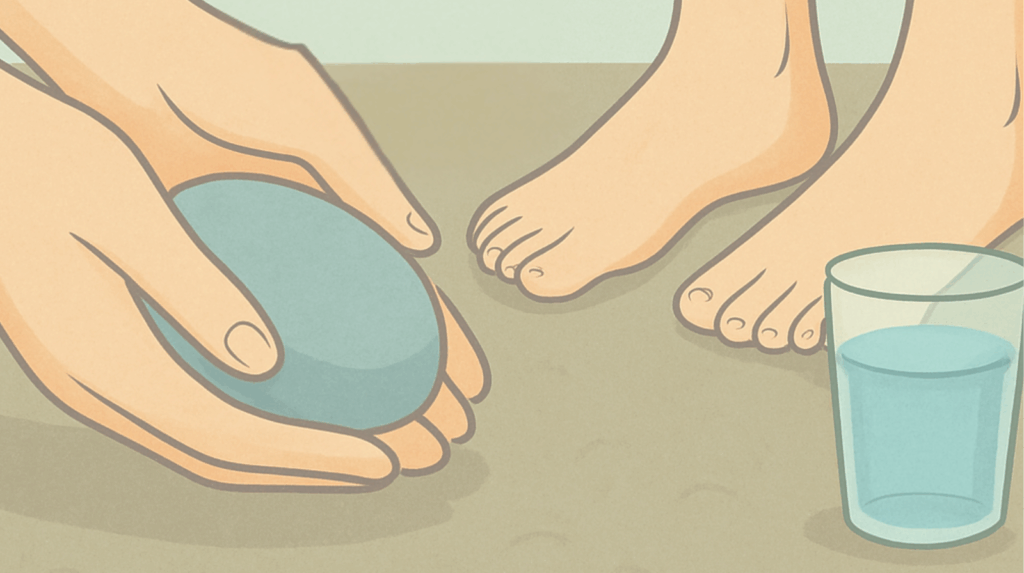
In the moment: Anchor yourself in the present before you do anything else. Name where you are, what year it is, and what’s actually happening right now, then use a physical reset – slow your breathing, press your feet into the floor, hold something textured, splash cold water on your face, or take a short walk. Try to remind yourself that the feeling(s) you’re experiencing are fleeting and that you’re safe.
In the days after: Write a debrief: what came up, what you felt in your body, what might have triggered it, and what helped it pass. Prioritize sleep, hydration, regular meals, time in nature, and lower-stimulation days so your nervous system can settle. Those basics help make it easier for your brain to integrate the experience, rather than getting stuck in a loop. Bring your notes to your clinician or integration coach so you can transmute the flashback into usable information.
When to reach out right away: Contact your clinician promptly if flashbacks are escalating instead of easing, if you can’t function at work or at home, if dissociation feels persistent, or if you’re having suicidal thoughts.
Bottom line
Ketamine flashbacks can feel intense, but they’re often brief and not automatically a sign of danger or “going backwards.” What matters is the pattern: if they’re occasional and fading, you focus on grounding and integration; if they’re persistent, escalating, or disrupting your life, you loop in a clinician. Treat ketamine like a structured therapy, not a one-off experience, and even the strange moments become something you can understand, work with, and move through.
Sources
- Feder, Adriana, et al. “A Randomized Controlled Trial of Repeated Ketamine Administration for Chronic Posttraumatic Stress Disorder.” American Journal of Psychiatry, vol. 178, no. 2, 2021, pp. 193–202. doi:10.1176/appi.ajp.2020.20050596.
- Ford, Hannah, et al. “Hallucinogenic Persisting Perception Disorder: A Case Series and Review of the Literature.” Frontiers in Neurology, vol. 13, 2022, article 878609. doi:10.3389/fneur.2022.878609.
- Nikolin, Stevan, et al. “Ketamine for the Treatment of Major Depression: A Systematic Review and Meta-Analysis.” eClinicalMedicine, vol. 62, 2023, article 102127. doi:10.1016/j.eclinm.2023.102127.
- Sayad, Reem, et al. “Safety Considerations and Risk Mitigation Strategies for Ketamine Use: A Comprehensive Review.” Annals of Medicine and Surgery, vol. 87, no. 5, 2025, pp. 2829–2837. doi:10.1097/MS9.0000000000003232.
- Zorumski, Charles F., Yukitoshi Izumi, and Steven Mennerick. “Ketamine: NMDA Receptors and Beyond.” The Journal of Neuroscience, vol. 36, no. 44, 2016, pp. 11158–11164. doi:10.1523/JNEUROSCI.1547-16.2016.
- Perel, A, and J T Davidson. “Recurrent hallucinations following ketamine.” Anaesthesia vol. 31,8 (1976): 1081-3. doi:10.1111/j.1365-2044.1976.tb11948.x
- Chang, Fong et al. “Alcohol Triggers Reemergence of Ketamine-Like Experience in a Ketamine Ex-User.” Journal of clinical psychopharmacology vol. 37,1 (2017): 110-112. doi:10.1097/JCP.0000000000000635