-2-1.png)



In recent years, a new path to healing has emerged for people dealing with depression, anxiety, trauma, or the desire for intense personal growth: mushroom therapy. Yes, we’re talking about magic mushrooms or psilocybin mushrooms, which elicit psychedelic experiences. However, in the correct dose, and guided by the right people, undergoing therapy while taking mushrooms is highly beneficial. In this article, we’re going to tell you how mushroom therapy works, what proper safety protocols are, and how to find the right program for you.
What Is Mushroom Therapy?
Also called psilocybin-assisted wellness, it’s essentially a structured and guided therapy session that you partake in while on psilocybin, which is the naturally occurring psychoactive compound in certain mushrooms.
The main distinction between recreational and therapeutic psilocybin use is in the approach. During a mushroom therapy session, you’ll always focus on three equally important phases: preparation, the guided experience itself, and integration support afterward. Research shows that the outcomes of a psilocybin experience are improved and longer-lasting when the session revolves around these three phases.
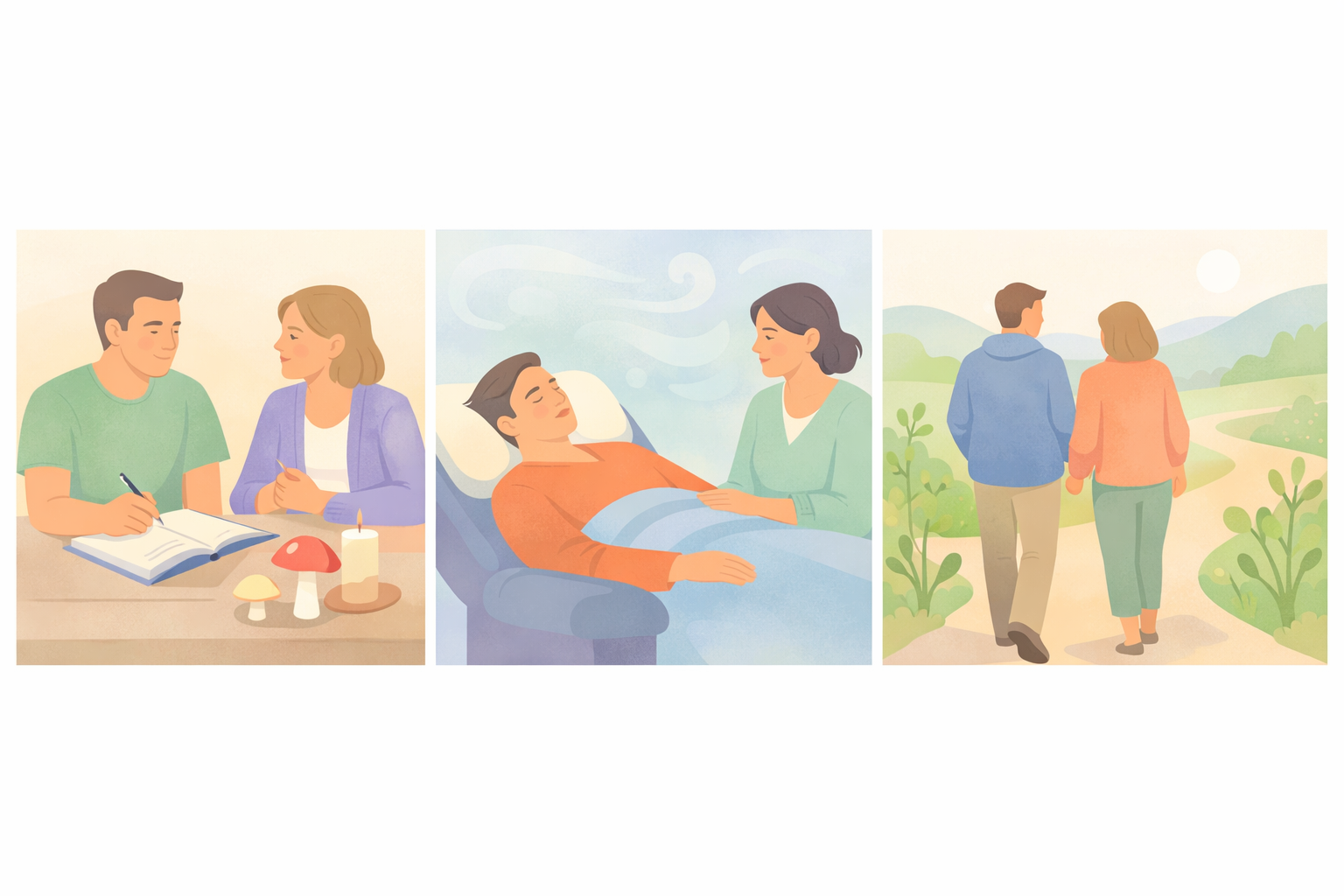
It’s important to note that mushroom therapy is not a quick fix. It offers participants a new perspective on existing problems,
The Science Behind Psilocybin
Psilocybin works by binding to serotonin receptors, specifically the 5-HT2A receptors, and altering the way different parts of the brain communicate with each other. One of the biggest shifts happens in the default mode network, a cluster of regions that drive self-talk, rumination, and social cognition. Research shows that psilocybin can help you turn down the volume of your internal chatter, and less noise means there’s more space for insight, emotional release, or simply seeing yourself a little more clearly.
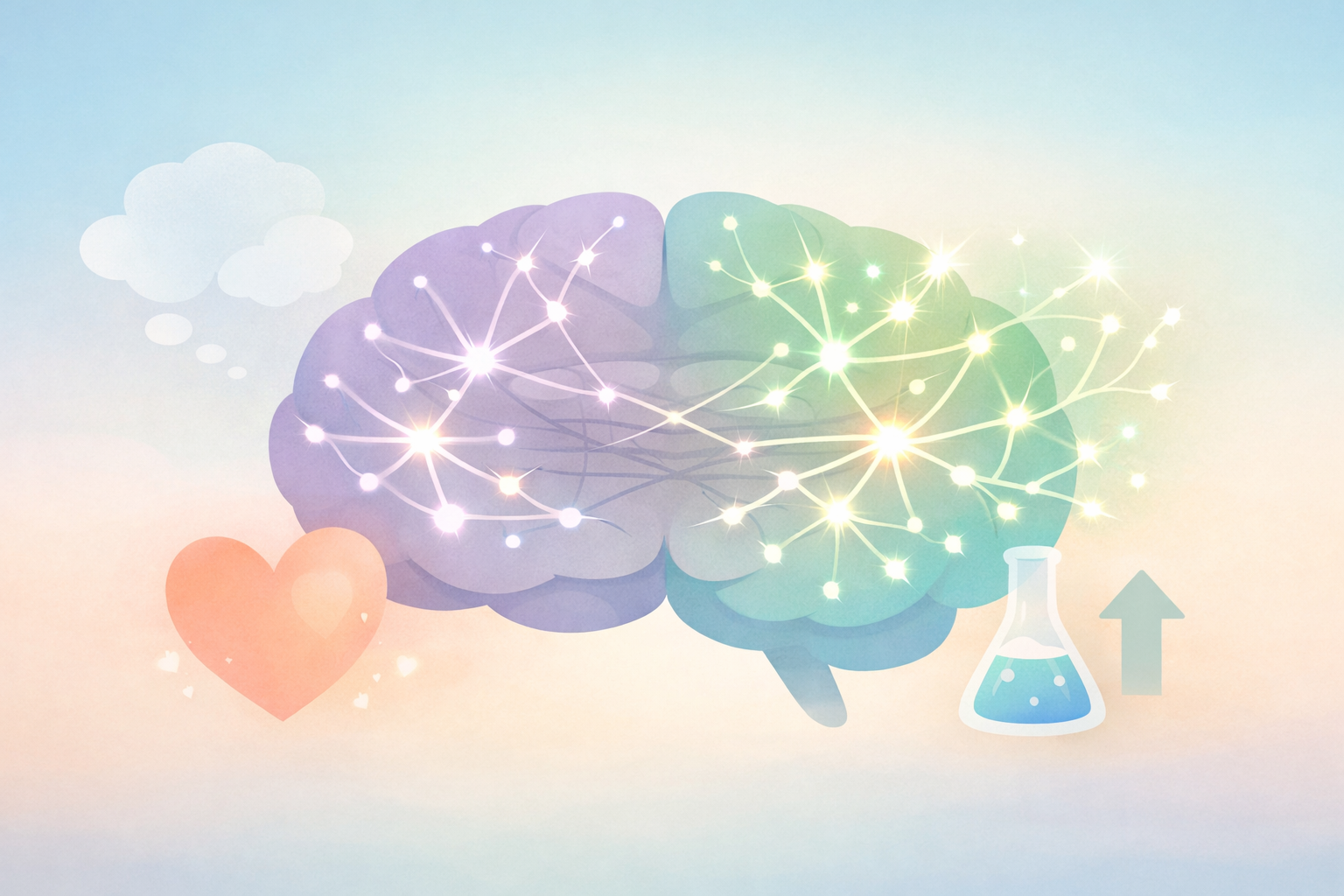
Some studies suggest that psilocybin also boosts neuroplasticity – that’s your brain’s ability to build new neural connections, essentially “re-wiring” itself – up to weeks after a session. And it’s this enhanced neuroplasticity that enables users to break free from old patterns.
On the clinical side, the research is moving fast. Johns Hopkins trials have repeatedly shown rapid, long-lasting reductions in depression symptoms, even among people who’ve tried everything else with little success. A 2021 randomized trial in JAMA Psychiatry backed this up, reporting significant improvements after just one or two guided sessions, with a larger 2023 study confirming the trend. Certain states within the U.S., like Oregon and Colorado, have launched clinical psilocybin wellness centers, which are also available in other countries.
That doesn’t mean psilocybin is a cure-all. More recent studies focus on depression, anxiety (especially end-of-life anxiety), PTSD, and addiction to alcohol or tobacco. Early results are encouraging, but this is still an emerging field. Anyone considering psychedelic therapy should talk with a qualified clinician and understand the risks, the legal landscape, and the importance of proper support.
What Happens Before, During, and After a Psilocybin Experience
There are three stages to a well-run mushroom therapy program: preparation, the guided experience, and integration work. Here’s a quick explainer of each phase of the process.
Preparation
The first step of preparing for a mushroom therapy session is to undergo medical and psychological screenings. These help facilitators identify any conditions or medications that make taking psilocybin usage, including personal or family history of psychosis, certain cardiovascular conditions, and medications like SSRIs or MAOIs.

Following that is intention-setting, which involves clarifying what you hope to explore or work through during the session. Your goal doesn’t have to be profound. Some people focus on a specific emotional pattern, while others focus on clarity or healing; however, having a clear anchor helps guide the experience. Legitimate programs will also give you prep materials ahead of time and walk you through grounding techniques like breathwork or meditation so you feel mentally and emotionally steady going in.
The Experience: A Supported Journey
A psilocybin session typically unfolds in a calm, comfortable space, often in nature, to help you feel grounded and open. Trained facilitators accompany you throughout the entire process, providing reassurance, emotional support, and practical guidance as needed. Their presence isn’t just symbolic; a facilitator’s skill and rapport have a significant influence on outcomes. The journey usually lasts four to six hours and may include curated music, guided meditation, and quiet periods of introspection. High-quality programs pair these traditional elements with modern safety protocols, including low participant-to-staff ratios and medical resources on standby.
Integration
What happens after the session is just as important as the experience itself. Integration is the process of unpacking insights and turning them into real, lasting change. Because psilocybin temporarily increases the brain’s receptivity to new patterns, intentional follow-up work helps prevent those insights from fading like a dream.
Most reputable programs offer several weeks of structured support – group discussions, reflection prompts, or one-on-one check-ins – to help you stay connected to what surfaced. Common integration practices include journaling, therapy with clinicians familiar with psychedelics, meditation, and making small lifestyle shifts. The goal isn’t passive reflection; it’s translating a powerful experience into meaningful next steps.
Safety Considerations
Psilocybin has a strong safety profile for most people, but the National Institute on Drug Abuse and leading clinical researchers stress that it isn’t appropriate for everyone. Contraindications include a personal or family history of psychosis or schizophrenia, bipolar I disorder, certain heart conditions, pregnancy or breastfeeding, and the use of medications that may interact with psychedelics, such as MAOIs, some SSRIs, and specific cardiac drugs.
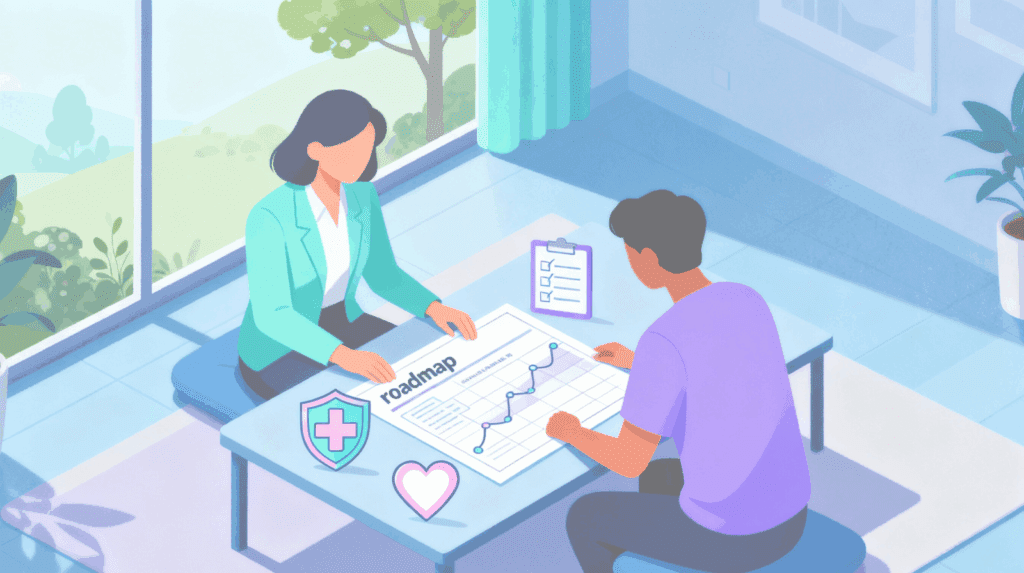
Some situations call for a more careful evaluation, including moderate cardiovascular issues, a history of seizures, severe anxiety disorders, or recent major surgery. Temporary effects like nausea, elevated heart rate, emotional intensity, or brief anxiety are common but typically manageable with proper screening and skilled facilitation. In high-quality programs, safety isn’t an afterthought; it’s built into the preparation, supervision, and integration that surround the experience.
Where Psilocybin Therapy Is Legal
Psilocybin is still a Schedule I substance under U.S. federal law, but a few states and cities have carved out legal pathways for supervised use. Oregon launched the first statewide framework for licensed psilocybin services in 2023, and Colorado followed with its own “healing centers,” which began opening in 2025. A handful of cities – including Denver, Oakland, and Seattle – have also decriminalized personal possession, reducing criminal penalties without creating regulated markets.

Internationally, the Netherlands permits the sale and use of psilocybin truffles, allowing retreat centers to operate openly. Jamaica has no prohibition on psilocybin mushrooms at all, making it another major destination for legal, facilitated programs. Together, these locations offer options for people seeking guided psychedelic experiences in legally recognized environments.
How to Choose a Safe, Quality Program
A great psilocybin experience starts with choosing the right program. Use this fast checklist to separate reputable providers from risky ones:
- Legal compliance: Operates in a jurisdiction where psilocybin is legally permitted.
- Medical screening: Includes thorough health and medication assessments.
- Experienced facilitators: Trauma-informed, well-trained, and present throughout the session.
- Safety protocols: Clear plans for medical or psychological emergencies.
- Strong integration: Offers structured aftercare—not just a single follow-up.
Quality programs blend evidence-based practices with compassionate, experienced care. Beckley Retreats, for example, has over 50 years of psychedelic research behind its program, providing an evidence-based practice with warmth and respect for all guests.
Retreat Costs and What to Expect
Psilocybin retreat costs vary widely based on location, program structure, and the level of support provided. In Oregon’s regulated system, licensed services typically run $1,200 to $3,000 for a full program that includes preparation, the ceremony, and integration. International retreats in countries where psilocybin is legal usually range from $2,500 to $6,000, depending on accommodations, group size, and facilitator expertise.
Luxury or extended-integration programs can exceed $10,000, but price alone doesn’t guarantee a better experience. Prioritize safety, skilled facilitators, and comprehensive support – those are the non-negotiables.
Frequently Asked Questions
Sources
- R.L. Carhart-Harris, D. Erritzoe, T. Williams, J.M. Stone, L.J. Reed, A. Colasanti, R.J. Tyacke, R. Leech, A.L. Malizia, K. Murphy, P. Hobden, J. Evans, A. Feilding, R.G. Wise, & D.J. Nutt, Neural correlates of the psychedelic state as determined by fMRI studies with psilocybin, Proc. Natl. Acad. Sci. U.S.A. 109 (6) 2138-2143, https://doi.org/10.1073/pnas.1119598109 (2012).
- Siegel, J. S., Subramanian, S., Perry, D., Kay, B. P., Gordon, E. M., Laumann, T. O., T. Rick Reneau, Metcalf, N. V., Chacko, R. V., Gratton, C., Horan, C., Krimmel, S. R., Shimony, J. S., Schweiger, J. A., Wong, D. F., Bender, D. A., Scheidter, K. M., Whiting, F. I., Padawer-Curry, J. A., & Shinohara, R. T. (2024). Psilocybin desynchronizes the human brain. Nature, 632. https://doi.org/10.1038/s41586-024-07624-5
- Davis AK, Barrett FS, May DG, et al. Effects of Psilocybin-Assisted Therapy on Major Depressive Disorder: A Randomized Clinical Trial. JAMA Psychiatry. 2021;78(5):481–489. doi:10.1001/jamapsychiatry.2020.3285
- Davis AK, Barrett FS, May DG, et al. Effects of Psilocybin-Assisted Therapy on Major Depressive Disorder: A Randomized Clinical Trial. JAMA Psychiatry. 2021;78(5):481–489. doi:10.1001/jamapsychiatry.2020.3285
- Goodwin, G. M., Aaronson, S. T., Alvarez, O., Arden, P. C., Baker, A., Bennett, J. C., Bird, C., Blom, R. E., Brennan, C., Brusch, D., Burke, L., Campbell-Coker, K., Carhart-Harris, R., Cattell, J., Daniel, A., DeBattista, C., Dunlop, B. W., Eisen, K., Feifel, D., & Forbes, M. (2022). Single-Dose Psilocybin for a Treatment-Resistant Episode of Major Depression. New England Journal of Medicine, 387(18), 1637–1648. https://doi.org/10.1056/nejmoa2206443
- Griffiths, R. R., Johnson, M. W., Carducci, M. A., Umbricht, A., Richards, W. A., Richards, B. D., Cosimano, M. P., & Klinedinst, M. A. (2016). Psilocybin produces substantial and sustained decreases in depression and anxiety in patients with life-threatening cancer: A randomized double-blind trial. Journal of Psychopharmacology, 30(12), 1181–1197. PubMed. https://doi.org/10.1177/0269881116675513
- Bogenschutz, M. P., Ross, S., Bhatt, S., Baron, T., Forcehimes, A. A., Laska, E., Mennenga, S. E., O’Donnell, K., Owens, L. T., Podrebarac, S., Rotrosen, J., Tonigan, J. S., & Worth, L. (2022). Percentage of heavy drinking days following psilocybin-assisted psychotherapy vs placebo in the treatment of adult patients with alcohol use disorder. JAMA Psychiatry, 79(10), 953–962. https://doi.org/10.1001/jamapsychiatry.2022.2096
- Johnson, M. W., Garcia-Romeu, A., Cosimano, M. P., & Griffiths, R. R. (2014). Pilot study of the 5-HT2AR agonist psilocybin in the treatment of tobacco addiction. Journal of Psychopharmacology, 28(11), 983–992. Sage Journals. https://doi.org/10.1177/0269881114548296