-2-1.png)



First synthesized in the 1960s, ketamine was approved as an anesthetic before it became recognized for its potential therapeutic effects on mood and spiritual well-being (1). Paradoxically, a medicine created to induce unconsciousness has revealed unexpected potential to expand a person’s consciousness. And while everyone’s experience with ketamine will vary, there are some common throughlines of spirituality and consciousness worth exploring.
How Does Ketamine Work?
Ketamine works by blocking NMDA receptors in the brain, which generally help keep our thoughts and sense of self organized and stable. Neural pathways are hardwired to keep us in a state of normalcy and predictability. But, like a wagon wheel wearing a groove into the same path, our neural circuits can get stuck in familiar ruts. Ketamine essentially loosens those tracks, giving the mind room to move differently, to see old patterns in a new light, make fresh connections, and feel mentally free again.
During ketamine treatment, people report sudden clarity, awe, or profound understanding. As the grip on habitual thought patterns softens and the sense of the physical body fades, people can achieve a new perspective about pre-existing issues.
Ketamine acutely can induce mystical and psychedelic effects … the acute ketamine experiences included … ‘meaningful, mystical and spiritual experiences’. (2)
Themes of a Spirtual Ketamine Experience
Ego Dissolution and the Feeling of Oneness
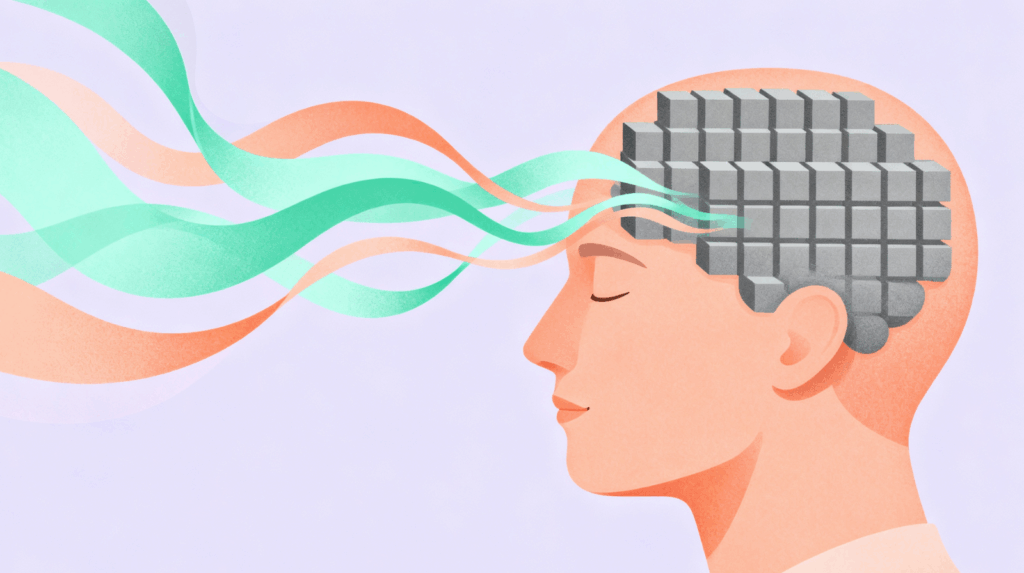
Ego dissolution, your usual sense of self falling away, is a commonly reported phenomenon during a ketamine journey. Your mind stops tracking reality, memory, and identity as it normally does, leaving a sense of pure presence. In this state, feelings of oneness with the world often arise, along with a profound sense of connection to all things.
Out-of-Body Experiences and Altered Perceptions of Self
Ketamine can temporarily loosen our attachment to the physical body, offering a unique perspective on the self. Just like repetitive thought patterns, our bodies hold postural and energetic patterns. As the usual boundaries of sensation and identity soften, people often report feeling lifted out of their bodies or perceiving themselves from a new vantage point.
Encounters with Archetypes and Universal Intelligence
Some people report encountering universal intelligence and archetypes defined as symbolic patterns and wisdom that feel external to the self. Carl Jung described such archetypes as “universal and inherited patterns which … constitute the structure of the unconscious.”(3)
Profound Insights and Shifts in Perspective
As the mind untangles throughout the journey and the mental noise dissipates, it leaves space to experience things from a new angle. Folks may come out of a journey clearer than ever before with new perspectives and deep insights that they are able to take away with them.
The “K-Hole” and Mystical States
The term K-hole refers to a deep dissociative state that can occur at high doses of ketamine (4). For some, being in a “K-hole” can be a profound experience, and for others it can be frightening, especially if the effects are unexpected or occur in an unsafe or unknown setting. In clinical ketamine-assisted psychotherapy (KAP), K-holes are not the desired outcome; the goal is safe cognitive and emotional exploration rather than complete dissociation.
Ketamine’s Spiritual Insights in a Therapeutic Context
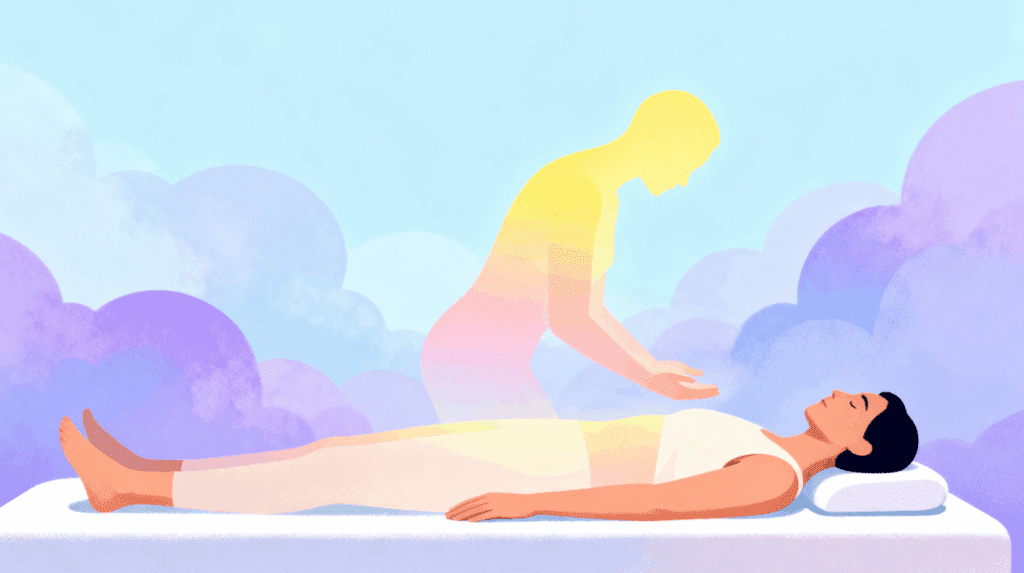
In a therapeutic context, a therapist is always present. The experience may feel like “floating” or “out-of-body,” but therapists structure it so that patients can communicate and safely navigate the session with a sense of safety by sharing clear expectations, creating a comfortable setting, offering their presence and support through the integration period.
Ketamine-Assisted Psychotherapy (KAP) and Meaning-Making
KAP provides a structured space for meaning-making and personal insight. A skilled therapist holds space to allow for your experience to unfold, unhindered by their input while gently supporting you through the experience and the meaning-making process. Allowing you to make sense of any new insights and translate them into lasting understanding, cognitive shifts, and behavioral change (4).
Healing Trauma Through Altered States
Trauma is not just a past event but an imprint on the mind, brain, and body (5). KAP can temporarily relieve the body’s trauma response, creating space for new perspectives and thought patterns. This allows individuals to process, reframe, and release trauma in ways that may have felt previously inaccessible.
Breaking Cycles: Depression, Anxiety, and Addiction
KAP produced sustained reductions in anxiety, depression, and PTSD, with symptom improvement lasting well beyond the duration of dosing and integration sessions (6).
Ketamine can help relieve clinical anxiety, depression, and addiction. With ongoing integration and supportive psychotherapy, ketamine has demonstrated meaningful improvements in mental health outcomes.
How Ketamine Differs from Classic Psychedelics
Both ketamine and what are considered “classic” psychedelics – think mushrooms and MDMA – are used for therapeutic purposes, but they differ in a few ways. Here’s a quick breakdown of the distinctions of ketamine versus other psychedelics:
The Effect on the Brain
To simplify the different neurological responses, classic psychedelics have been found to increase the amount of neural connections happening in the brain, whereas ketamine loosens existing structures.
Similarities and Differences in Mystical Phenomena
It’s nearly impossible to fully capture the similarities and differences between ketamine and classic psychedelics, given the deeply personal and often ineffable nature of these journeys.

At the risk of oversimplifying, psilocybin weaves a sort of spiritual web of connection, while ketamine can loosen one’s tethers, making one more self-aware. Both paths can lead to profound insights into being human, connecting with spirit, and encountering the mystical, but how this unfolds is ultimately undefinable.
How to Integrate After a Ketamine Experience
Lasting improvements from ketamine-assisted psychotherapy don’t come solely from the dissociative experience itself, but from the brain’s plasticity in the days afterward (6).
Making Sense of the Journey
One of the greatest benefits of KAP versus recreational ketamine use is the ability to work with a trusted practitioner who can guide all phases of the experience: preparation, the experience itself and integration.
Practical Steps for Post-Experience Growth
As you return to everyday life, move slowly and give yourself space before diving back into full schedules. Insights may continue to unfold in the days that follow, so leave room for reflection. Simple rituals like gentle movement, journaling, meditation, or time in nature can support integration, and connecting with others who understand your experience can deepen the process.
Frequently Asked Questions
Sources
- Dorandeu, F. (2013). Happy 50th anniversary ketamine. CNS Neuroscience & Therapeutics, 19(6), 369. https://doi.org/10.1111/cns.12074
- Mollaahmetoglu, O. M., Keeler, J., Ashbullby, K. J., Ketzitzidou‑Argyri, E., Grabski, M., & Morgan, C. J. A. (2021). “This is something that changed my life”: A qualitative study of patients’ experiences in a clinical trial of ketamine treatment for alcohol use disorders. Frontiers in Psychiatry, 12, 695335. https://doi.org/10.3389/fpsyt.2021.695335
- Jung, C. G. (1968). The archetypes and the collective unconscious (R. F. C. Hull, Trans.). Princeton University Press. (Original work published 1959)
- Muetzelfeldt, L., Egan, G., Ell, P., & O’Keane, V. (2008). Journey through the K‑hole: Phenomenological aspects of ketamine use. Drug and Alcohol Dependence, 95(3), 219–229. https://doi.org/10.1016/j.drugalcdep.2007.12.010
- Van der Kolk, B. A. (2014). The body keeps the score: Brain, mind, and body in the healing of trauma. Viking.
- Wilkinson, S. T., Ballard, E. D., Bloch, M. H., Mathew, S. J., Murrough, J. W., Feder, A., … Sanacora, G. (2017). The effect of a single dose of intravenous ketamine on suicidal ideation: A systematic review and individual participant data meta-analysis. American Journal of Psychiatry, 174(4), 405–414. https://doi.org/10.1176/appi.ajp.2016.16040572
- Miller, C., Lopes, B., & McCurdy, A. (2025). The collective lie in ketamine therapy: A call to realign clinical practice with neurobiology. Frontiers in Psychiatry, 16. https://doi.org/10.3389/fpsyt.2025.1610335
- Bathje, G. J., Majeski, E., & Kudowor, M. (2022). Psychedelic integration: An analysis of the concept and its practice. Frontiers in Psychology, 13.
- Dore, J., Turnipseed, B., Dwyer, S., Turnipseed, A., Ascani, G., Farmer, M., & et al. (2024). Ketamine‑Assisted Psychotherapy provides lasting and effective results: Sustained reductions in anxiety, depression, and PTSD [Retrospective effectiveness trial]. Journal of Psychedelic Medicine. https://doi.org/10.1089/psymed.2023.0021