
-2-1.png)


“High-functioning depression” is a commonly used phrase for when someone appears competent, successful, and engaged in daily life while privately experiencing persistent low mood, numbness, or hopelessness. Officially, it's defined as the experience of "depressive symptoms such as fatigue, anhedonia, poor concentration, guilt, restlessness, sleep disturbances, and appetite changes without experiencing a lack of functioning or significant distress." It’s not an official DSM-5 diagnosis, but clinically it often overlaps with persistent depressive disorder (dysthymia), partially managed major depressive episodes, or masked depression.
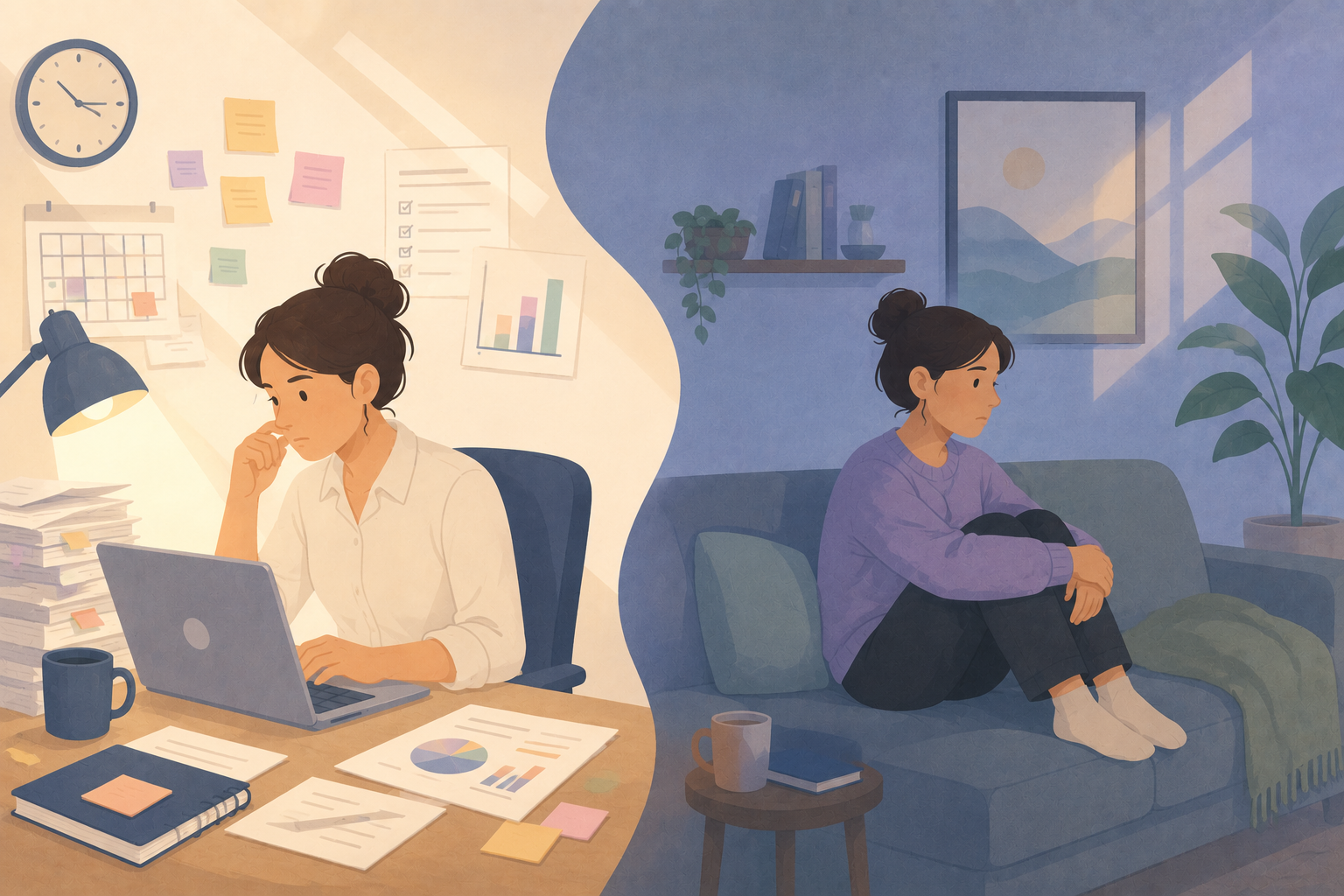
The paradox of high-functioning depression is that people keep jobs, run households, parent, socialize, and meet expectations while feeling emotionally blunted, chronically fatigued, or unable to enjoy things. Because outward performance is preserved, or because achievements are used to conceal inner distress, symptoms can be overlooked by colleagues, friends, and sometimes clinicians unless someone asks directly.
Common Signs People Overlook
The symptoms of high-functioning depression don’t usually present outwardly and dramatically, which makes them easy to miss. Persistent sadness, a dull numbness, or a hollow sense of emptiness may linger even when life looks fine from the outside. This low mood often exists alongside irritability and heightened anxiety; small frustrations feel overwhelming and emotional reserves run low, producing a steady sense of exhaustion. Another hallmark is the loss of pleasure: achievements, praise, and activities that should feel rewarding no longer bring satisfaction, leaving success feeling hollow rather than restorative.
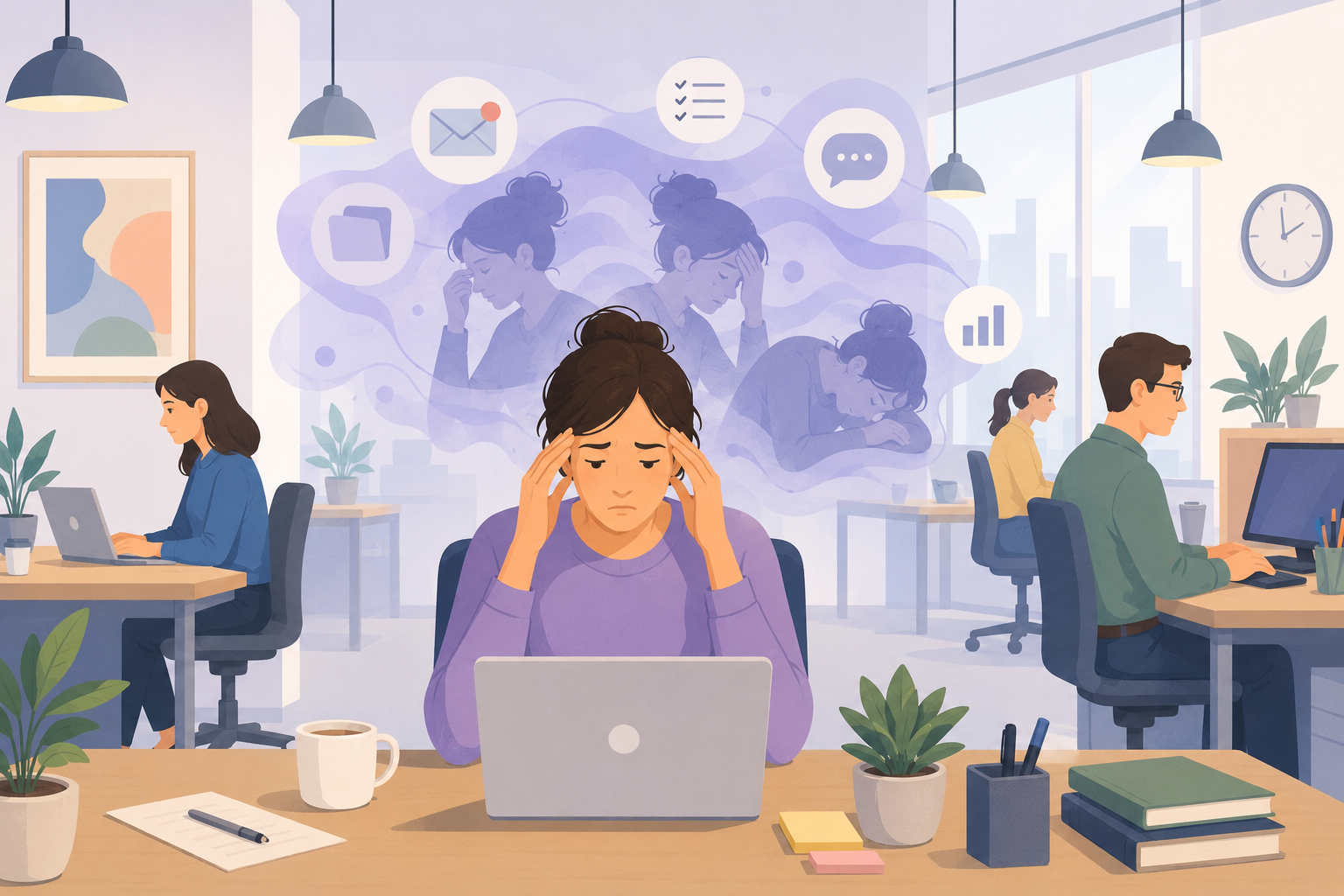
Cognitive signs can be subtle but meaningful. People often describe trouble concentrating, indecisiveness, or a sense of mental fog that reduces creativity and slows problem-solving. Persistent negative self-talk, such as feeling not good enough despite clear accomplishments, can degrade confidence. Behaviorally, some rely on overwork, perfectionism, or constant busyness to avoid uncomfortable feelings, while others withdraw socially in private to preserve the appearance of normalcy. Sleep or appetite changes and increased use of substances or comfort behaviors may also be present. These are the kinds of symptoms clinicians ask about when assessing depressive disorders.
Why High Achievers Often Miss the Signs
Several cultural and psychological dynamics make high-achieving people less likely to notice or seek help for depressive symptoms. When a person’s identity is tied to productivity - measured in grades, revenue, titles, or accolades - the pressure to keep performing can lead to downplaying emotional distress as mere tiredness, because admitting struggle feels like admitting weakness, while "hustle culture" itself is a valued cornerstone of the zeitgeist. Perfectionism reinforces a “fix it yourself” mentality and encourages compartmentalizing emotions to preserve functionality. Public accomplishments and polished personas can further mask internal pain: strong performance becomes proof to oneself and others that everything is fine, making persistent low mood easy to dismiss.
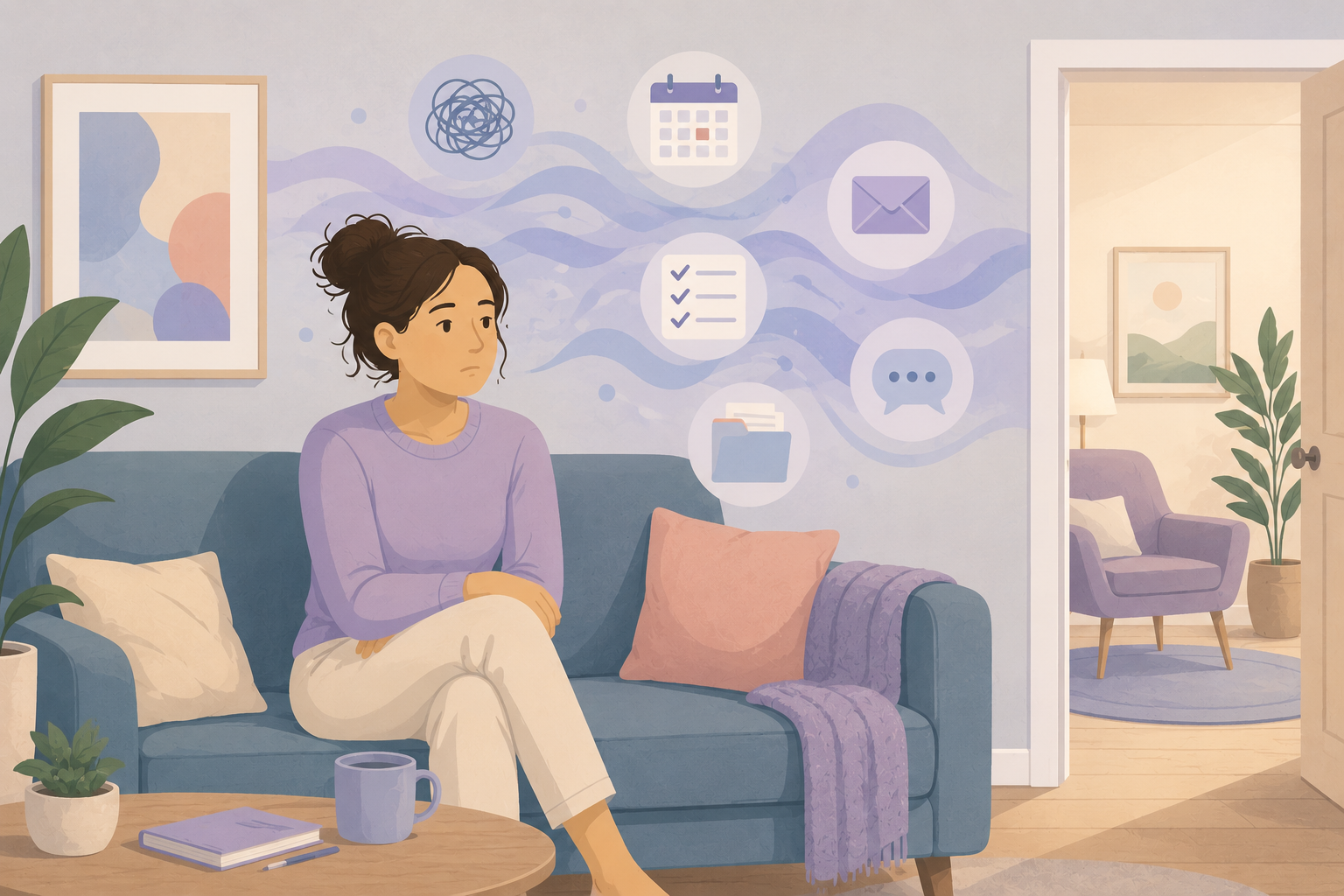
Stigma and practical risks also play a role. Concerns about career consequences, perceived competence, and job security discourage disclosure and help-seeking. For parents or caregivers, admitting distress may feel particularly threatening because of fears about child welfare or being judged as unreliable. Cultural expectations around success and resilience intensify these barriers, reducing the chance that those who most need support will ask for it.
When It’s More Than Burnout or Stress
Stress and burnout are common in demanding roles and can look a lot like depression: exhaustion, reduced productivity, and cynicism. However, it’s important to tell them apart because responses and treatments differ. Burnout or situational stress often eases when the stressor is removed or after rest. Often, burnout is related to a singular stimulus like one's job, whereas depression can be more holistic in origins. Depression, by contrast, typically persists for weeks or months and may continue even when external pressures are reduced. Depression tends to be more pervasive, affecting not only work but relationships, sleep, appetite, and self-esteem, whereas burnout is usually more narrowly tied to job-related feelings of inefficacy and detachment.

Severity and the presence of core mood symptoms provide additional clues. Depression brings persistent sadness or anhedonia (loss of pleasure) and may produce deeper cognitive shifts such as pervasive feelings of worthlessness or, in severe cases, suicidal thoughts, which are all features that go beyond simple tiredness. Biological and cognitive signs like disturbed sleep, issues concentrating, slowed thinking, or unexplained bodily symptoms often accompany clinical depression. When symptoms significantly impair relationships, sleep, motivation, or self-worth, or when cognitive changes persist, a clinical evaluation is warranted rather than assuming rest will fix the problem.
Treatment Options and Emerging Research
Traditional, evidence-based treatments remain the foundation of care for high-functioning depression. Psychotherapy, such as cognitive-behavioral therapy or interpersonal therapy, has robust evidence for reducing depressive symptoms, improving coping strategies, and addressing maladaptive beliefs tied to perfectionism and identity. Therapy can help reframe the connection between productivity and self-worth, increase emotional awareness, and build sustainable coping skills.

Medication is another tool. Antidepressants (SSRIs, SNRIs, bupropion, and others) can help, especially when symptoms include biological features such as disrupted sleep, appetite changes, or severe anhedonia. Medication choices are individualized and are often most effective when combined with psychotherapy. However, they are not a replacement for lifestyle interventions, such as consistent sleep, regular movement, balanced nutrition, structured routines, and social connection, which may also support mood regulation. Peer groups, workplace accommodations, and practical support for caregivers can make treatment more feasible and sustainable.
For people whose symptoms are "treatment-resistant," as in they don’t respond to multiple standard treatments, clinicians may consider psychedelic-assisted therapy. Controlled studies at institutions such as Johns Hopkins and Imperial College London have reported promising outcomes for psilocybin-assisted therapy in some people with treatment-resistant depression, including rapid and sometimes sustained reductions in symptoms for certain participants. Johns Hopkins found that two supervised doses of psilocybin, paired with prep and supportive therapy, led to big drops in depression for most participants that lasted up to a year. In one trial, for example, which enrolled 27 adults with long-standing major depression (most of whom had already tried antidepressants) and 24 finished both sessions and follow-ups. After a year, about 75% met response criteria, and roughly 58% were in remission, with average scores falling from moderate-to-severe to much lower levels.

High-functioning doesn’t mean invulnerable. People who appear successful and keep up responsibilities can still experience persistent sadness, numbness, irritability, anxiety, loss of pleasure, cognitive fog, and chronic exhaustion—symptoms that often get mistaken for stress, burnout, or just being “tired.”
Evidence-based treatments, including psychotherapy plus lifestyle supports, remain first-line and often help many people regain balance; for those whose symptoms persist despite these approaches, or carefully supervised specialty options exist. Emerging research, including controlled psilocybin-assisted therapy trials at major centers, shows real promise for some people with treatment-resistant depression, suggesting another potential path when standard care is insufficient. A clinical evaluation can clarify options, and with proper support and oversight, psilocybin-assisted therapy is emerging as an exciting, rigorously studied frontier that could redefine paths to lasting recovery.
Frequently Asked Questions
Sources
- Joseph, Judith F, et al. “Understanding High-Functioning Depression in Adults.” Cureus, vol. 17, no. 2, Dec. 2025, p. e78891, pubmed.ncbi.nlm.nih.gov/39963293/, https://doi.org/10.7759/cureus.78891.
- Mayo Clinic. “Persistent Depressive Disorder (Dysthymia) - Symptoms and Causes.” Mayo Clinic, Mayo clinic, 2 Dec. 2022, www.mayoclinic.org/diseases-conditions/persistent-depressive-disorder/symptoms-causes/syc-20350929.
- Sanford, Karla Marie. “Busy but Sad? You Might Have High-Functioning Depression.” Los Angeles Times, 8 Apr. 2025, www.latimes.com/lifestyle/story/2025-04-08/high-functioning-depression-judith-joseph-avoiding-your-problems-with-work.
- Richtel, Matt. “The Surgeon General’s New Mission: Adolescent Mental Health.” The New York Times, 21 Mar. 2023, www.nytimes.com/2023/03/21/health/surgeon-general-adolescents-mental-health.html.
- Baka, Łukasz, et al. “Burnout or Depression? Investigating Conceptual and Empirical Distinctions in a High-Stress Occupational Group.” Journal of Clinical Medicine, vol. 14, no. 12, 7 June 2025, pp. 4036–4036, https://doi.org/10.3390/jcm14124036.
- Martinez, Marisol. “Psilocybin Treatment for Major Depression Effective for up to a Year for Most Patients, Study Shows.” Johns Hopkins Medicine, 15 Feb. 2022, www.hopkinsmedicine.org/news/newsroom/news-releases/2022/02/psilocybin-treatment-for-major-depression-effective-for-up-to-a-year-for-most-patients-study-shows.
Before you apply
Beckley runs legal, guided psilocybin retreats in Jamaica and psilocybin retreats in the Netherlands: four weeks of preparation, two guided sessions on retreat, six weeks of integration, online and at your own pace, one to two hours a week. Plain answers to the questions people ask first:
What a psilocybin retreat costs · What happens, day by day · Jamaica or the Netherlands · Who should not attend · Apply