
-2-1.png)


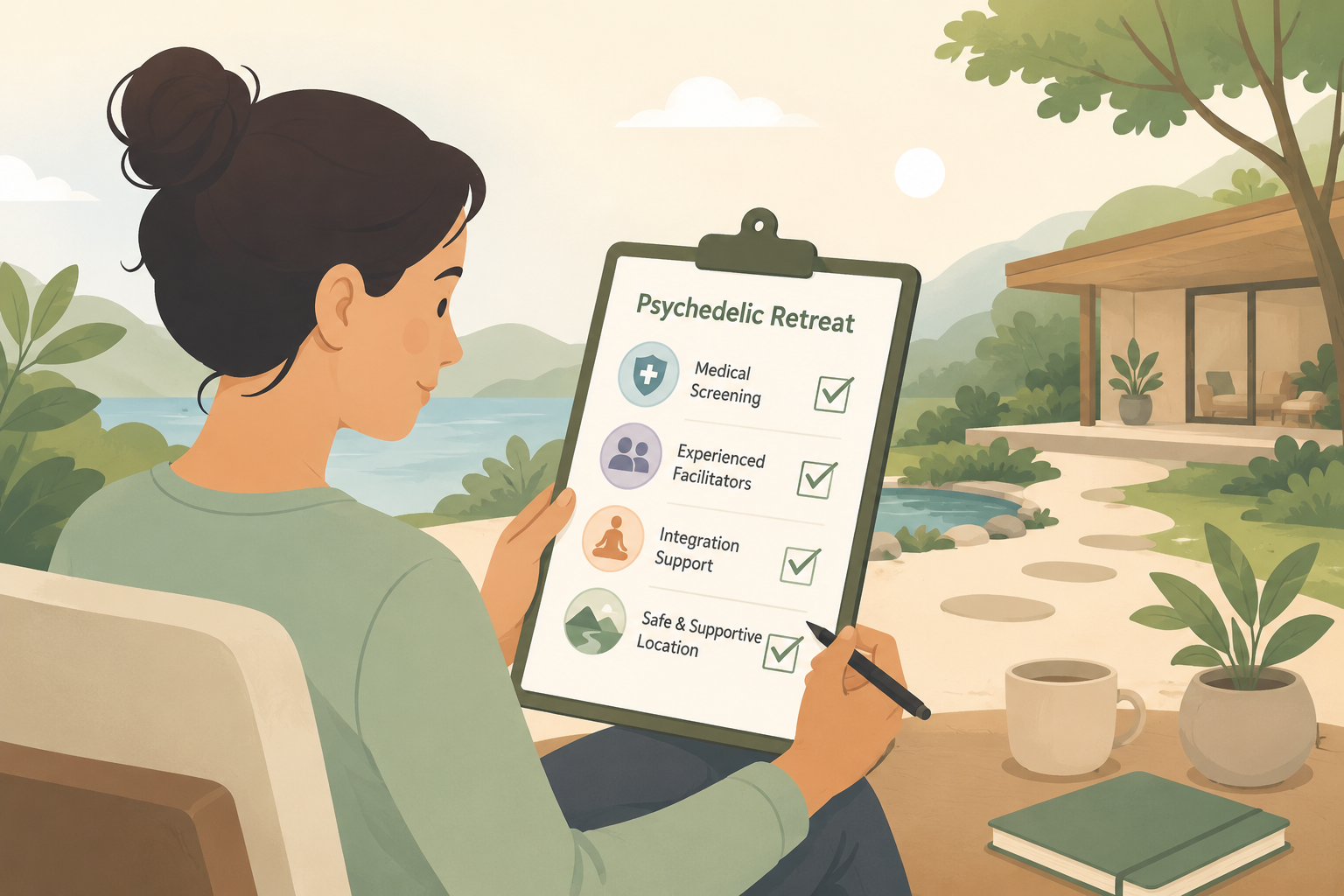
Public interest in psychedelic drugs and, more importantly, their applicability, is on the rise, as is the burgeoning retreat industry. Psychedelic retreats have the potential to make big, meaningful changes in people’s lives - that is, if guests are given the care and stewardship they need.
The issue is that there’s no global standard for psychedelic retreats. The burden falls at the consumer’s feet. If you’re going through something, or are interested in a retreat for relaxation, the last thing you need on your plate is having to play detective, too.

Consider this your framework for finding a trustworthy psychedelic retreat. We’ll cover what responsible retreat programs actually look like in practice, plus the red flags you should pay heed to during your search.
Why Choosing the Right Psychedelic Retreat Matters
Psychedelic retreats are an offshoot of the wellness tourism trend, which, according to market research, is expected to double in size between 2020 and 2030. However, psychedelics like psilocybin remain tightly controlled or outright banned in many parts of the world.
This has led to psychedelic retreats cropping up in specific parts of the world where regulations are looser, such as the Netherlands, or absent altogether, like in Jamaica. Retreats often operate without having to adhere to governmental oversight or universal standards of care.

Psychedelics also put you in a profoundly vulnerable state. The clinical potential is real, but “adverse events” do happen. Retreats staffed with qualified, experienced facilitators help users safely traverse the psychedelic experience. Underqualified hosts can make things worse or leave you unfulfilled.
What Safe and Responsible Retreats Typically Include
There’s no universal approach to designing and hosting a psychedelic retreat. Some conceal poor practices with fancy amenities. While a psychedelic retreat should be relaxing, you need to make sure you’re getting your money’s worth in terms of the care and support you receive.
Medical Screening
Most classical psychedelics are generally safe to consume in appropriate doses and under qualified supervision. There are exceptions; people with personal or family histories of certain psychiatric conditions, or who are taking specific medications, may not be eligible.

Responsible retreats flag these concerns well in advance during their intake process. You shouldn’t think of it as red tape; it’s a necessary part of engaging with psychedelics in a safe way.
Pre-Session Preparation
Think of a walk-in clinic. Now imagine the opposite. Psychedelic retreats utilize potent, mind-altering substances to unlock long-term benefits. That process begins well before you actually take anything. You don’t just dive in headfirst.
Your mindset and perspective on the session can strongly influence both the acute experience itself and the persistent effects that may follow. Retreat facilitators should help you lay that groundwork beforehand by unpacking your “why” - the reasoning and motivation you have for seeking out psychedelics in the first place.
Diverse, Qualified Staff
There’s no universally recognized qualification required to work with psychedelics. Facilitators blend years of real-world experience with backgrounds in associated fields like psychiatry, clinical psychology, and holistic medicine.

In addition to robust credentials, facilitators and retreat staff should also have first-aid training and crisis management plans in place. Any retreat that promotes psychedelic experiences as being smooth sailing in all cases is not to be trusted.
Integrative Support
You might think of using psychedelics as tilling soil - you till before and after, but you plant the seeds after the fact. This process is called integration. Research indicates it plays a significant role in both the quality and duration of changes associated with psychedelic use.
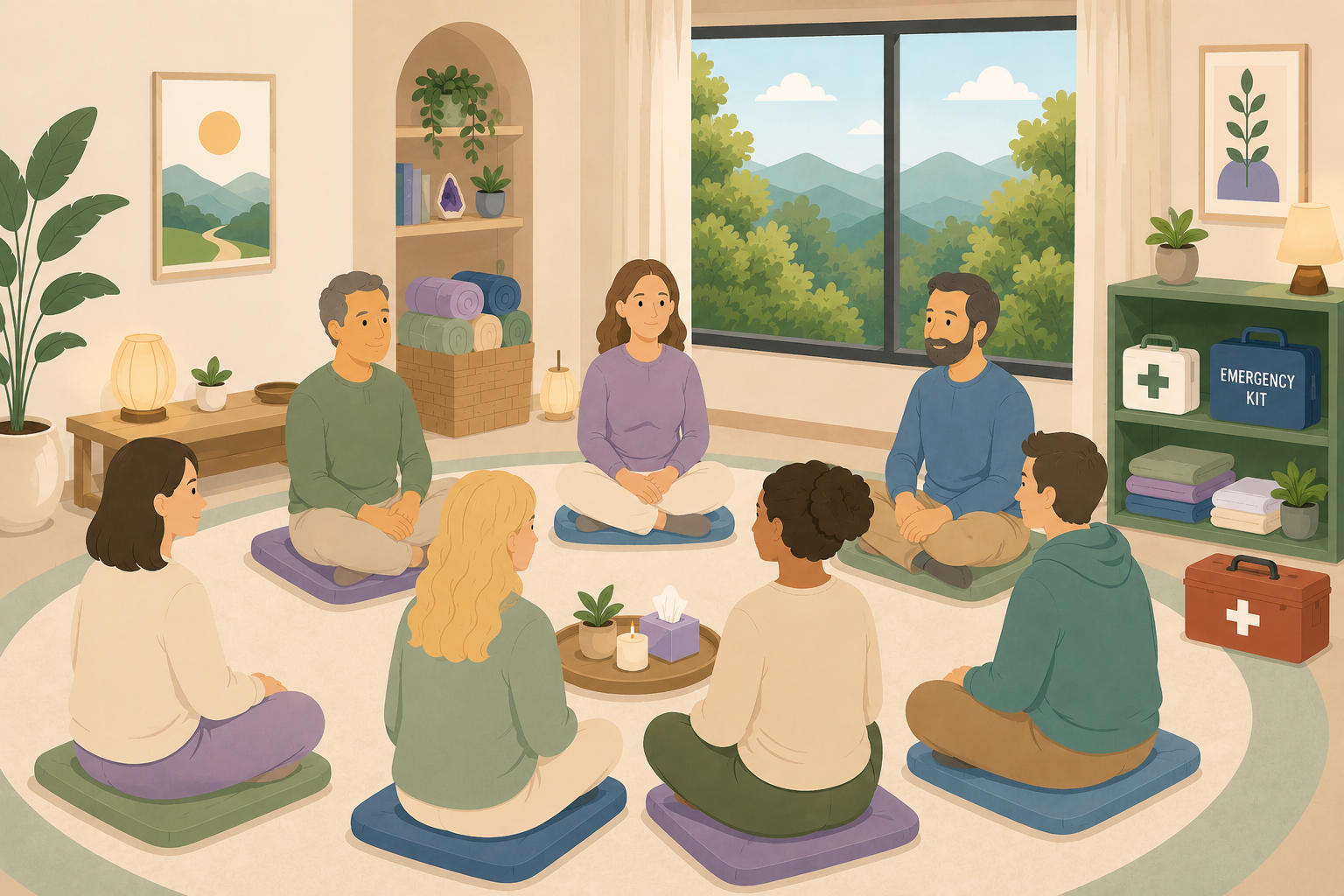
Retreats should have an itinerary in place that capitalizes on this period of sensitivity. Most programs will dedicate at least one full day after ingestion to “landing the plane,” during which guests utilize techniques like therapy, journaling, exposure to nature, or somatic activity such as breathwork.
Questions To Ask Before Booking a Psychedelic Retreat
Finding a trustworthy psychedelic retreat is a compatibility assessment, and compatibility is a two-way street. The retreat should provide the care you’re looking for, and you should feel vetted and secure in your decision.
Keep these questions in your pocket. Any psychedelic retreat worth considering should be able to answer them plainly.
“How many facilitators do you employ, and what are their credentials?”
Retreats should maintain an appropriate ratio of facilitators to guests, usually about one-to-five. Stretched thinner and the staff may not be able to provide personalized care that’s up to snuff.
“What is your applicant screening process?”
Retreats should scrutinize both your medical and personal histories beforehand. You may also want to ask about their denial rate - programs which truly prioritize care above profit should turn down some applicants, and be transparent about it.
“How do you provide integrative support?”
This is where you should hear exact specifics. A post-session debrief or a pat on the back on your way out the door doesn’t cut it here. Retreats should be able to outline exactly what you’ll be doing, and why, in the hours and days after you consume a psychedelic drug.
“How do you manage emergencies?”
This question serves two purposes. If a retreat pushes back on the premise, you know up front they’re more interested in selling you something than responsibly providing access to psychedelics. More optimistically, a well-thought-out crisis strategy should put your mind at ease.
Common Psychedelic Retreat Red Flags
The health & wellness industry isn’t short on charlatans. The silver lining is that bad actors utilize many of the same techniques, regardless of what they’re trying to sell you.
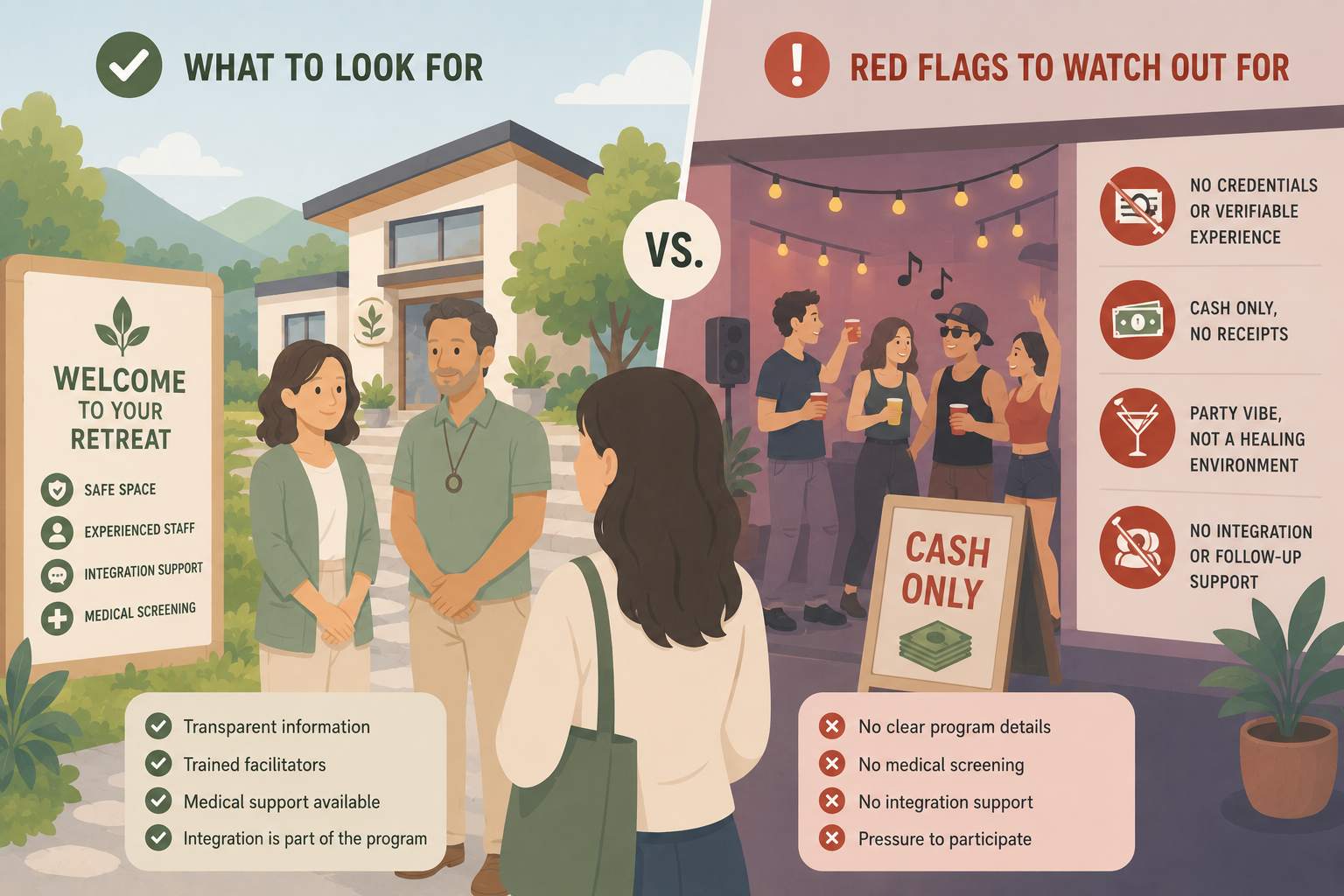
When it comes to psychedelic retreats specifically, keep a keen eye out for:
- Absolute claims: Psychedelics are, at times, transformative and illuminating, but they aren’t miracle cures. Responsible caregivers never promise cures up front.
- Vague staff qualifications: You should know exactly who will be caring for you and where they’ve been in their careers.
- No integration: The days and even weeks after using psychedelics matter just as much as the session itself.
- Luxury over care: Amenities are all well and good, but psychedelic retreats shouldn’t be style over substance.
- Open door policy: Psychedelics have risks. A retreat which denies that fact by accepting all applicants may be negligent.
- Booking pressure: Predatory marketing tactics don’t gel with psychedelic interventions. You should come to the decision of your own volition, not because the program scared you into thinking you could miss your chance.
Why Set, Setting, and Support Matter
“Set and setting” is a load-bearing maxim in psychedelic studies. It describes the mindset and goals of the user (set) as well as the physical, environmental, and social contexts in which psychedelics are consumed (setting).
In plain language, for psychedelics to “work,” the vibes have to be right.
Psychedelics can excavate deep-seated traumas and induce intensely cathartic experiences that, for some users, border on mystical. The real value of a reputable psychedelic retreat is in the scaffolding put in place by adhering to set and setting principles.
Frequently Asked Questions
Sources
- Carhart-Harris RL, Bolstridge M, Day CMJ, Rucker J, Watts R, Erritzoe DE, Kaelen M, Giribaldi B, Bloomfield M, Pilling S, Rickard JA, Forbes B, Feilding A, Taylor D, Curran HV, Nutt DJ. Psilocybin with psychological support for treatment-resistant depression: six-month follow-up. Psychopharmacology (Berl). 2018 Feb;235(2):399-408. doi: 10.1007/s00213-017-4771-x. Epub 2017 Nov 8. PMID: 29119217; PMCID: PMC5813086.
- Hinkle JT, Graziosi M, Nayak SM, Yaden DB. Adverse Events in Studies of Classic Psychedelics: A Systematic Review and Meta-Analysis. JAMA Psychiatry. 2024 Dec 1;81(12):1225-1235. doi: 10.1001/jamapsychiatry.2024.2546. PMID: 39230883; PMCID: PMC11375525.
- Johnson M, Richards W, Griffiths R. Human hallucinogen research: guidelines for safety. J Psychopharmacol. 2008 Aug;22(6):603-20. doi: 10.1177/0269881108093587. Epub 2008 Jul 1. PMID: 18593734; PMCID: PMC3056407.
- Bathje GJ, Majeski E, Kudowor M. Psychedelic integration: An analysis of the concept and its practice. Front Psychol. 2022 Aug 4;13:824077. doi: 10.3389/fpsyg.2022.824077. PMID: 35992410; PMCID: PMC9386447.
- Patch K, Smith WR. What are set and setting: Reducing vagueness to improve research and clinical practice. J Psychopharmacol. 2025 Sep;39(9):900-909. doi: 10.1177/02698811251337372. Epub 2025 May 26. PMID: 40415530; PMCID: PMC12354155.