
-2-1.png)


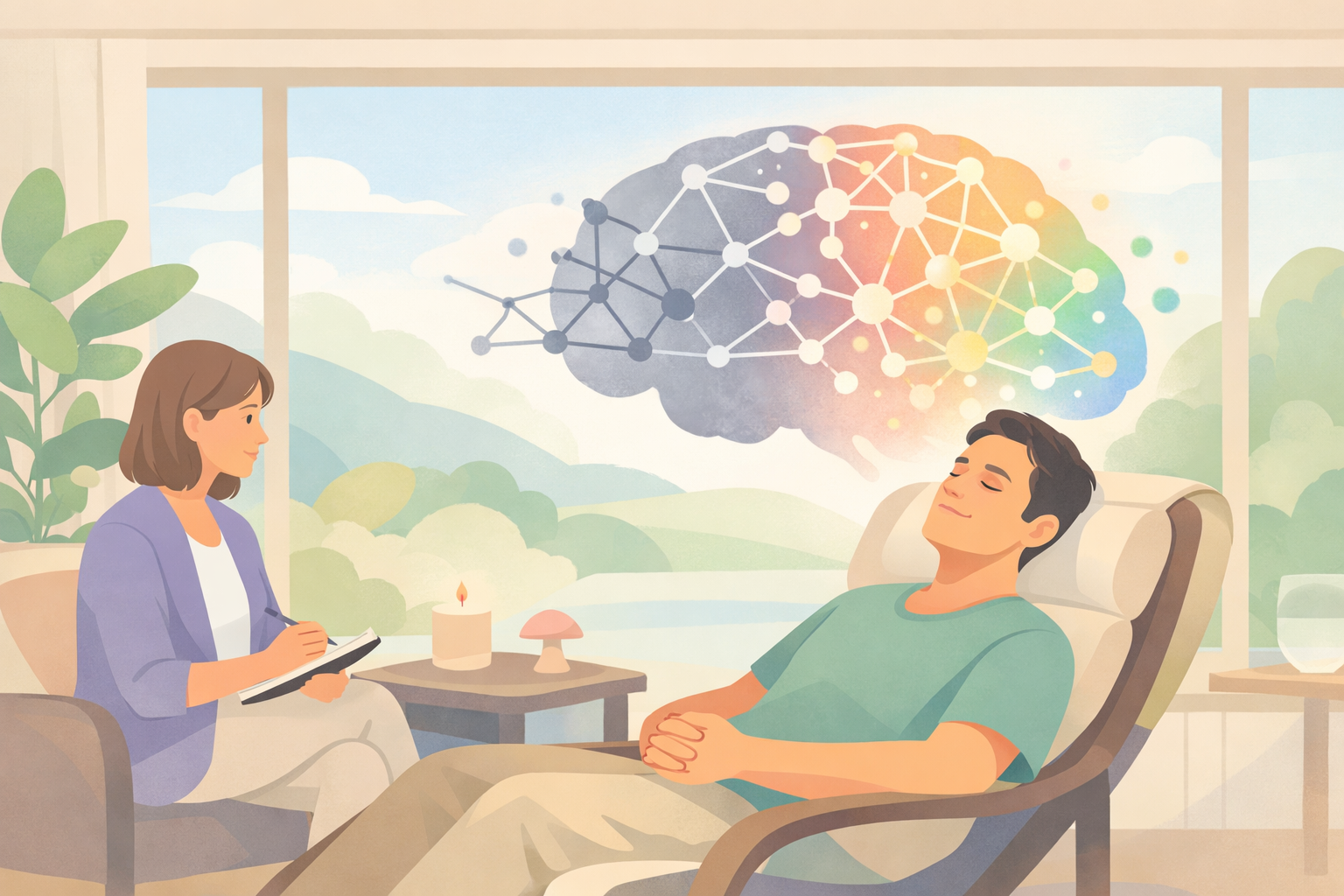
Managing mental health can feel like an uphill battle - but it doesn’t need to be. Prescription drugs and talk therapy have their place, but don’t always address the deeper causes of your troubles.
Enter psilocybin, or magic mushrooms. Psychedelics have unique properties that facilitate the rapid growth of new neural connections while allowing you to shift rigid thought patterns and self-sabotaging behaviors. The mechanism at play? Neuroplasticity.
Here’s how research into psilocybin and neuroplasticity are making headway, with regard to both their importance for mental health and for illuminating a new perspective on life.
The Problem: The Rigid Brain of Mental Illness
Mental illnesses trap your mind in a vice. Instead of untethered, explorative thought processes, when our minds are burdened by anxiety, depression, or melancholy, we struggle to break out of rigid, ruminative thought patterns. “It’ll always be this way”; “There’s nothing I can do”; “I can’t think of a way to fix this”; “No one cares,” are common trains of thought.
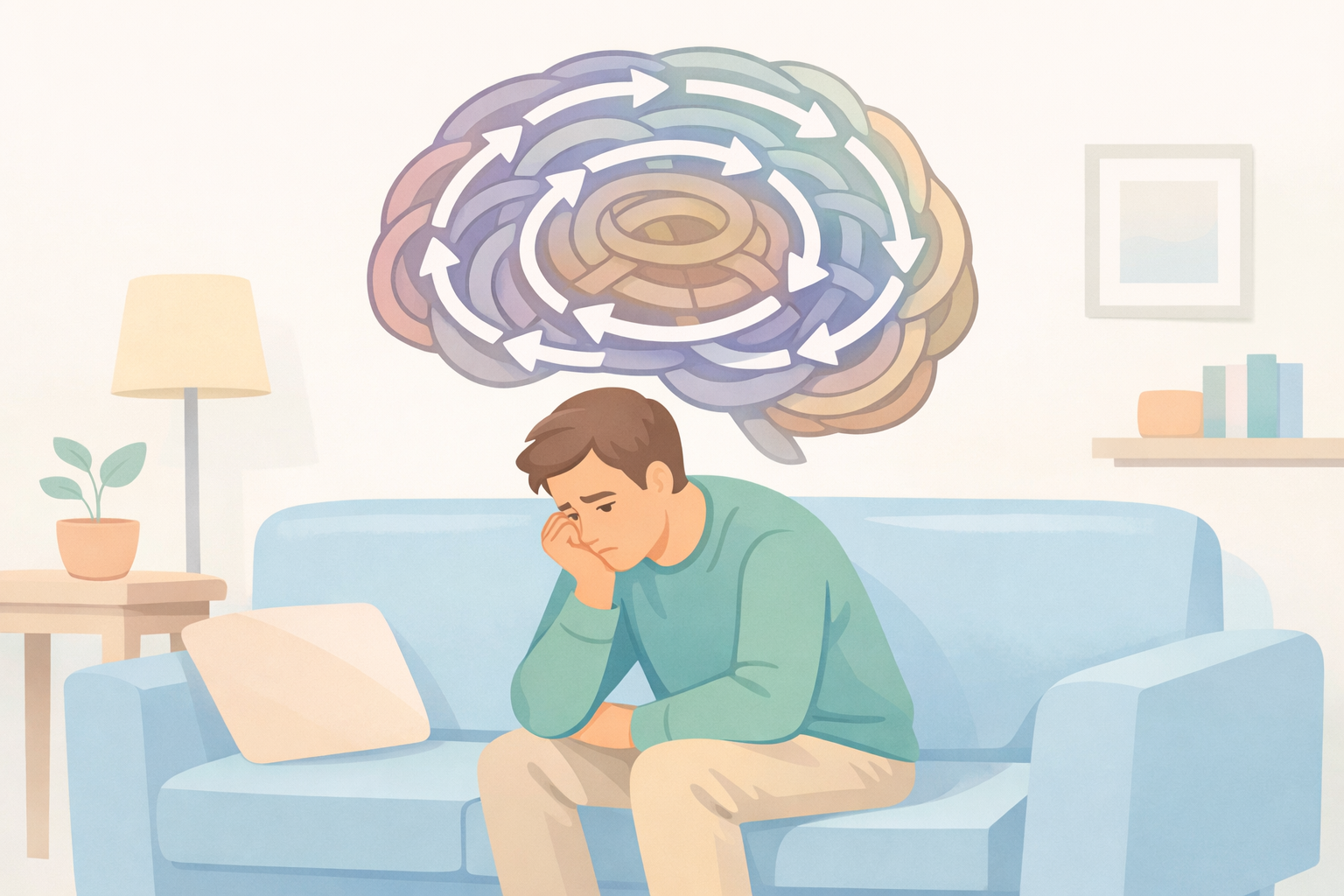
Scientists call it repetitive negative thinking (RNT). The most insidious part? Once these negative loops start, they tend to become self-perpetuating and difficult to manage. Such ruminative, repetitive thinking is a significant, transdiagnostic risk factor that is linked to or exacerbates a number of different forms of mental illness, including depression, anxiety, addiction, PTSD, OCD and eating disorders.
What Is Neuroplasticity? (& Why We Lose It)
In the literature, neuroplasticity is defined as the brain’s ability to “change its activity in response to stimuli by reorganizing its structure, functions, or connections.”
Put plainly, neuroplasticity is what allows your brain to interpret and adapt to change. A “healthy” brain can tie disparate ideas together, explore novel reasoning, and maintain logical coherence in the face of emotional obstacles - unless it’s being sabotaged.
The Default Mode Network
The human brain is the most complex system in the known universe. Like a supercomputer, your brain has its own software designed to promote efficiency, reduce harm, and carry out tasks. You can think of the Default Mode Network, or DMN, as a neural screen-saver.
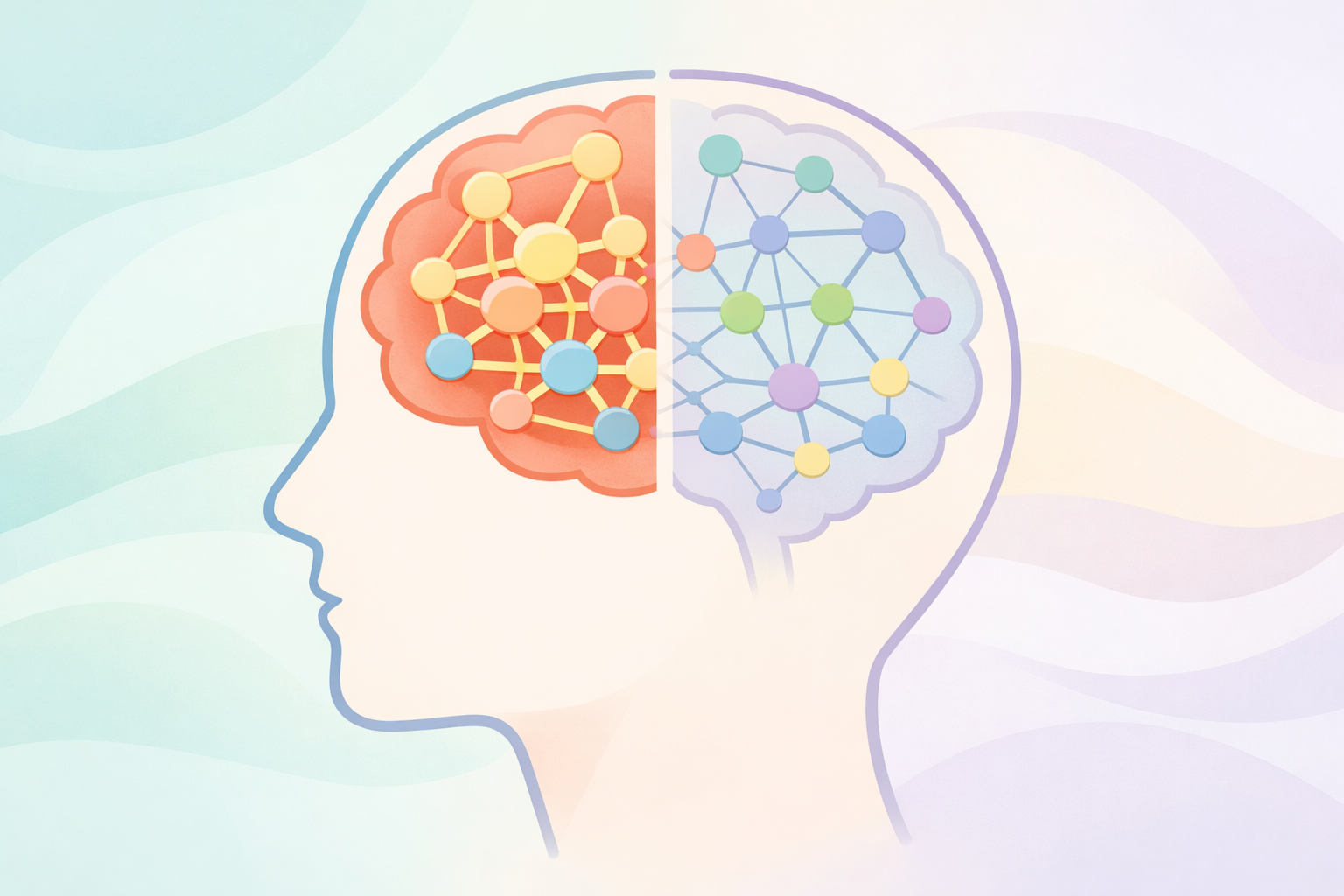
This network develops in childhood and puberty and, throughout adulthood, comes online when your brain lacks new stimuli. From neuroscientific studies, we know the DMN is crucial for self-reflection. We also know that depression and anxiety intensify the DMN to the point of locking your brain into existing thought patterns - a precursor to mental illnesses like major depressive disorder.
How Psilocybin Boosts Neuroplasticity
This is the crux of psilocybin’s utility for neuroplasticity and mental illness - it temporarily unfreezes and suppresses the DMN, allowing your brain to rewire and map new neural connections freely.
After consuming psilocybin and disabling the DMN, your brain also facilitates the secretion of another crucial chemical, called BDNF, or Brain-Derived Neurotrophic Factor. Experts have pointed toward research done on mice, which displayed significant increases in both the size and density of neuronal connections.
The exact science is complex. But what’s clear is that BDNF catalyzes neuroplasticity the way fanning an open flame helps it burn a little brighter.
Psilocybin & Neuroplasticity: How To Benefit
Maximizing neuroplasticity with psilocybin isn’t like taking a multivitamin; it’s not fire-and-forget. It’s also unlike most SSRIs, which take weeks of usage before effects accumulate to a therapeutic level in your system.
Psilocybin’s effects are more acute - a mushroom trip can last up to six hours. After you come down, your brain is primed to reap the benefits. How you use your time after the conscious effects of a psychedelic wear off is called integration.
Integration: The Critical Window
Psychedelic integration capitalizes on the neuroplastic window in the same way a blacksmith shapes steel. Psilocybin (the furnace’s heat) makes your brain (the metal) pliable, then you strike before things cool.
But while a blacksmith may have minutes to act, the psychedelic user’s neuroplastic window can last from days to weeks. Beyond laying down new neural circuitry, integration also helps you “stick the landing” of coming down from your trip.

Some psychedelic users experience ontological shock as they exit their trip - a feeling of having your reality shaken or disrupted. While unpleasant, this feeling is temporary and recedes faster if you follow therapeutic integration techniques.
Therapeutic Techniques
Despite psychedelic research being hamstrung for political reasons since the 1960s, science has long recognized the potential of mining the “afterglow” for all it’s worth. To capitalize, you’ll want to incorporate therapeutic techniques that align with your purpose.
Common therapeutic integration strategies for psilocybin-induced neuroplasticity include:
- Drawing or painting
- Listening to music, chanting, or rhythmic drumming
- Yoga or massage
- Journaling or meditation
- Talk or group therapy
- Shinrin Yoku ‘forest bathing’ nature-based mindfulness
In truth, the scope of integration practices is wider than you think. Matching the technique with your unique needs can be a challenge, which is why psilocybin therapy is often conducted in clinical or retreat settings under the stewardship of professional guides.
Other Implications for Psilocybin
Psilocybin’s neuroplastic effects are gaining increasing scientific support as an alternative option for treatment-resistant depression and other issues. The exact mechanism? “Global increases in brain network integration,” some scholars say.
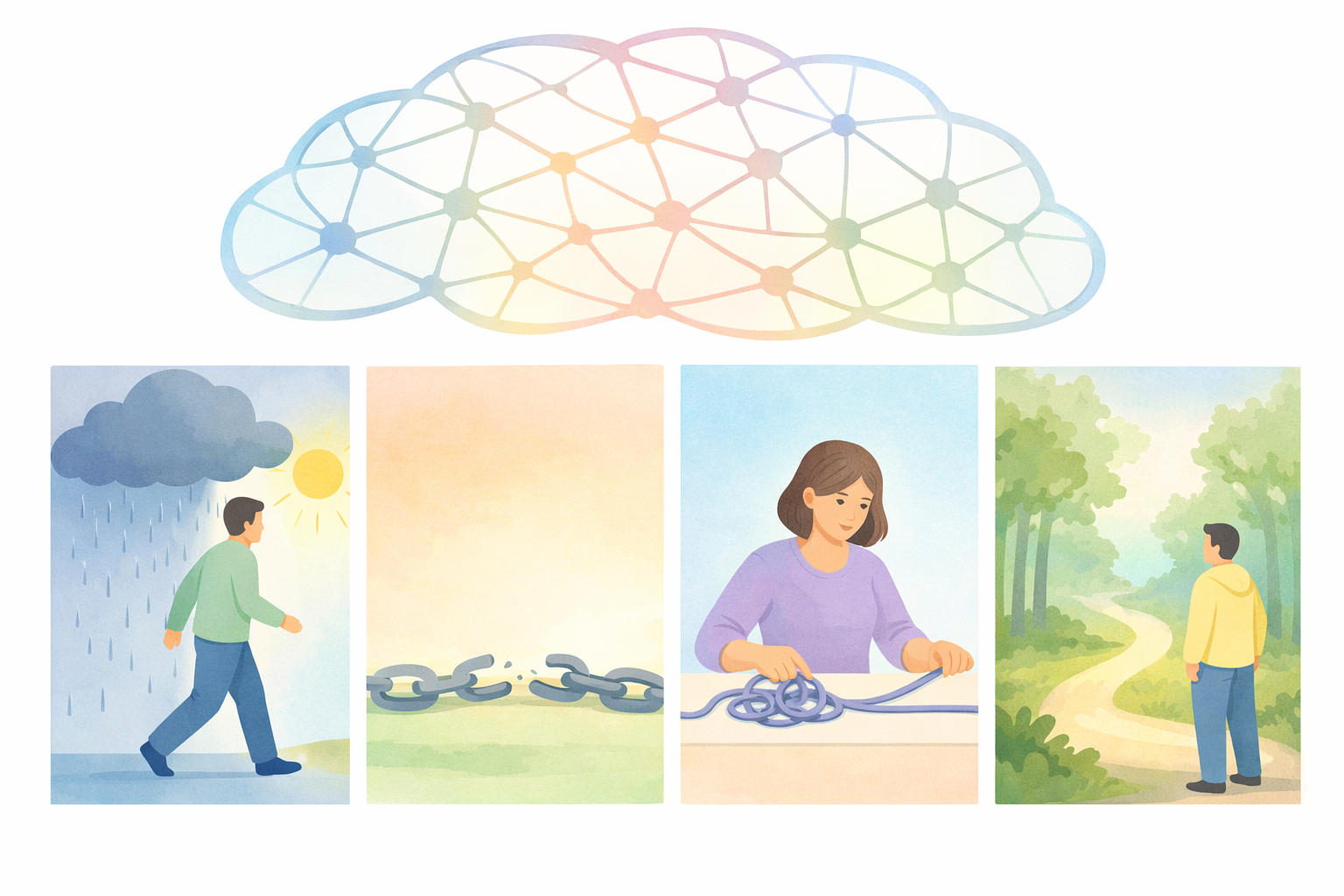
There’s a growing body of evidence suggesting that psilocybin’s ability to facilitate neuroplasticity by muting the DMN may also assist with managing other mental conditions.
Addiction
Addiction starts in the brain. While the exact pathway is still being looked at, scientists have some evidence showing that psilocybin may be an effective means of curbing addictive behavior, particularly for alcohol use disorder.
Obsessive-Compulsive Disorder (OCD)
Rigid and repetitive thinking is characteristic of the DMN - it’s also a calling card of obsessive-compulsive behaviors. Since 2006, studies have observed a relationship between OCD symptoms and the neurochemical effects of psilocybin, though the exact nature of the relationship is still under the microscope.
There are also emerging arguments for psilocybin’s ability to tackle PTSD, eating disorders, and anxiety disorders as well, but more structurally-sound studies are needed.
Frequently Asked Questions
Sources
- de Vos CMH, Mason NL, Kuypers KPC. Psychedelics and Neuroplasticity: A Systematic Review Unraveling the Biological Underpinnings of Psychedelics. Front Psychiatry. 2021 Sep 10;12:724606. doi: 10.3389/fpsyt.2021.724606. PMID: 34566723; PMCID: PMC8461007.
- Spinhoven P, van Hemert AM, Penninx BW. Repetitive negative thinking as a predictor of depression and anxiety: A longitudinal cohort study. J Affect Disord. 2018 Dec 1;241:216-225. doi: 10.1016/j.jad.2018.08.037. Epub 2018 Aug 10. PMID: 30138805.
- Guan, S., Takahashi, T., Tomita, N. et al. The chain mediation effect of rumination and worry between the intentionality and content dimensions of mind wandering and internalizing symptoms of depression and anxiety. Sci Rep 15, 21223 (2025).
- Puderbaugh M, Emmady PD. Neuroplasticity. 2023 May 1. In: StatPearls [Internet]. Treasure Island (FL): StatPearls Publishing; 2026 Jan–. PMID: 32491743.
- Azarias FR, Almeida GHDR, de Melo LF, Rici REG, Maria DA. The Journey of the Default Mode Network: Development, Function, and Impact on Mental Health. Biology (Basel). 2025 Apr 10;14(4):395. doi: 10.3390/biology14040395. PMID: 40282260; PMCID: PMC12025022.
- Marc G. Berman, Scott Peltier, Derek Evan Nee, Ethan Kross, Patricia J. Deldin, John Jonides, Depression, rumination and the default network, Social Cognitive and Affective Neuroscience, Volume 6, Issue 5, October 2011, Pages 548–555
- Laabi S, LeMmon C, Vogel C, Chacon M, Jimenez VM Jr. Psilocybin and psilocin regulate microglial immunomodulation and support neuroplasticity via serotonergic and AhR signaling. Int Immunopharmacol. 2025 Jun 26;159:114940. doi: 10.1016/j.intimp.2025.114940. Epub 2025 May 26. PMID: 40424654.
- Vaidya VA, Marek GJ, Aghajanian GK, Duman RS. 5-HT2A receptor-mediated regulation of brain-derived neurotrophic factor mRNA in the hippocampus and the neocortex. J Neurosci. 1997 Apr 15;17(8):2785-95. doi: 10.1523/JNEUROSCI.17-08-02785.1997. PMID: 9092600; PMCID: PMC6573109.
- Argyri EK, Evans J. Ontologically Challenging Psychedelic Experiences: Considerations for Managing Associated Distress. Curr Top Behav Neurosci. 2025 Dec 3. doi: 10.1007/7854_2025_609. Epub ahead of print. PMID: 41329316.
- Evens R, Schmidt ME, Majić T, Schmidt TT. The psychedelic afterglow phenomenon: a systematic review of subacute effects of classic serotonergic psychedelics. Ther Adv Psychopharmacol. 2023 May 29;13:20451253231172254. doi: 10.1177/20451253231172254. PMID: 37284524; PMCID: PMC10240558.
- Calder, A.E., Hasler, G. Towards an understanding of psychedelic-induced neuroplasticity. Neuropsychopharmacol. 48, 104–112 (2023). https://doi.org/10.1038/s41386-022-01389-z
- Bathje GJ, Majeski E, Kudowor M. Psychedelic integration: An analysis of the concept and its practice. Front Psychol. 2022 Aug 4;13:824077. doi: 10.3389/fpsyg.2022.824077. PMID: 35992410; PMCID: PMC9386447.
- Goodwin GM, Aaronson ST, Alvarez O, Arden PC, Baker A, Bennett JC, Bird C, Blom RE, Brennan C, Brusch D, Burke L, Campbell-Coker K, Carhart-Harris R, Cattell J, Daniel A, DeBattista C, Dunlop BW, Eisen K, Feifel D, Forbes M, Haumann HM, Hellerstein DJ, Hoppe AI, Husain MI, Jelen LA, Kamphuis J, Kawasaki J, Kelly JR, Key RE, Kishon R, Knatz Peck S, Knight G, Koolen MHB, Lean M, Licht RW, Maples-Keller JL, Mars J, Marwood L, McElhiney MC, Miller TL, Mirow A, Mistry S, Mletzko-Crowe T, Modlin LN, Nielsen RE, Nielson EM, Offerhaus SR, O'Keane V, Páleníček T, Printz D, Rademaker MC, van Reemst A, Reinholdt F, Repantis D, Rucker J, Rudow S, Ruffell S, Rush AJ, Schoevers RA, Seynaeve M, Shao S, Soares JC, Somers M, Stansfield SC, Sterling D, Strockis A, Tsai J, Visser L, Wahba M, Williams S, Young AH, Ywema P, Zisook S, Malievskaia E. Single-Dose Psilocybin for a Treatment-Resistant Episode of Major Depression. N Engl J Med. 2022 Nov 3;387(18):1637-1648. doi: 10.1056/NEJMoa2206443. PMID: 36322843.
- Daws RE, Timmermann C, Giribaldi B, Sexton JD, Wall MB, Erritzoe D, Roseman L, Nutt D, Carhart-Harris R. Increased global integration in the brain after psilocybin therapy for depression. Nat Med. 2022 Apr;28(4):844-851. doi: 10.1038/s41591-022-01744-z. Epub 2022 Apr 11. PMID: 35411074.
- Pagni, B.A., Petridis, P.D., Podrebarac, S.K. et al. Psilocybin-induced changes in neural reactivity to alcohol and emotional cues in patients with alcohol use disorder: an fMRI pilot study. Sci Rep 14, 3159 (2024). https://doi.org/10.1038/s41598-024-52967-8
- Collins HM. Psychedelics for the Treatment of Obsessive-Compulsive Disorder: Efficacy and Proposed Mechanisms. Int J Neuropsychopharmacol. 2024 Dec 1;27(12):pyae057. doi: 10.1093/ijnp/pyae057. PMID: 39611453; PMCID: PMC11635828.Bevione F,
- Lacidogna MC, Lavalle R, Abbate Daga G, Preti A. Psilocybin in the treatment of eating disorders: a systematic review of the literature and registered clinical trials. Eat Weight Disord. 2025 Jul 29;30(1):58. doi: 10.1007/s40519-025-01771-y. PMID: 40730892; PMCID: PMC12307571.
Before you apply
Beckley runs legal, guided psilocybin retreats in Jamaica and psilocybin retreats in the Netherlands: four weeks of preparation, two guided sessions on retreat, six weeks of integration, online and at your own pace, one to two hours a week. Plain answers to the questions people ask first:
What a psilocybin retreat costs · What happens, day by day · Jamaica or the Netherlands · Who should not attend · Apply