
-2-1.png)


If Psilocybe cubensis (aka Golden Teacher) is one of the more commonly taken species of psilocybin mushrooms, Psilocybe zapotecorum is a species tried as one descends deeper down, for it’s a rarer mushroom known to be ecologically distinct, culturally significant, and notably potent.
It’s native to the highland regions of southern Mexico, particularly Oaxaca, and this species has been documented in Indigenous Zapotec ceremonial contexts. It was originally studied in the mid-20th century by author and former R. Gordon Wasson, credited with introducing the psychedelics into the mainstream in America through his Life magazine article, and mycologist Gastón Guzmán. With its broad cap that often develops subtle waves along the margin as it matures, thick hollow stem, and tendency to fruit from freshly disturbed soil, P. zapotecorum looks less like a pasture mushroom and more like something shaped by the terrain itself.
What This Mushroom Is Known For
Psilocybe zapotecorum is recognized for two defining traits: its size and its alkaloid content.
It is one of the larger species in the Psilocybe genus, or a grouping of mushrooms that share similar qualities, with caps that can exceed 12 centimeters across and stems that are often thick, hollow, and irregularly curved. Unlike dung-adapted species, it thrives in humid ravines and mineral-rich soils, especially in areas disturbed by landslides or erosion in cloud forests.
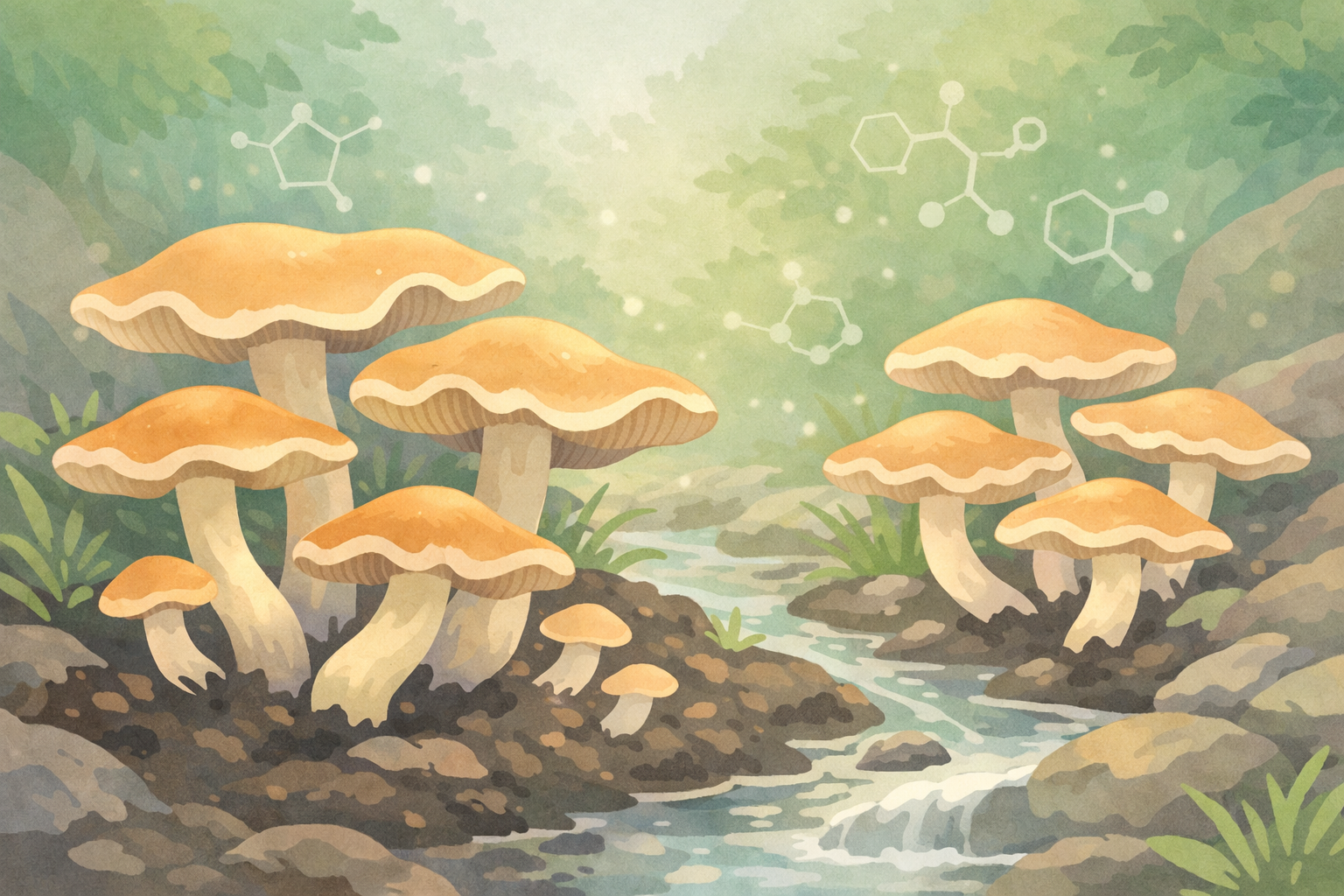
Chemically, analyses have found relatively high concentrations of psilocybin and psilocin compared to many cubensis samples, though potency varies widely depending on growing conditions. As a quick primer, it’s important to understand that psilocin is the psychoactive drug for which psilocybe species are sought. Once ingested, psilocybin is converted to psilocin.
Quick Facts Box
|
Feature |
Detail |
|
Species |
Psilocybe zapotecorum |
|
Common Names |
Badi, Corona de Cristo, Shepherdess’s Herb |
|
Potency Category |
Extremely High |
|
Notable Trait |
Twisted, contorted stems and "swampy" habitat preference |
How It Compares to Golden Teacher
Comparing P. zapotecorum to a common cubensis variety is less about mythology and more about ecology.
- Potency: Laboratory analyses suggest that P. zapotecorum can contain higher combined psilocybin and psilocin levels than most other samples.
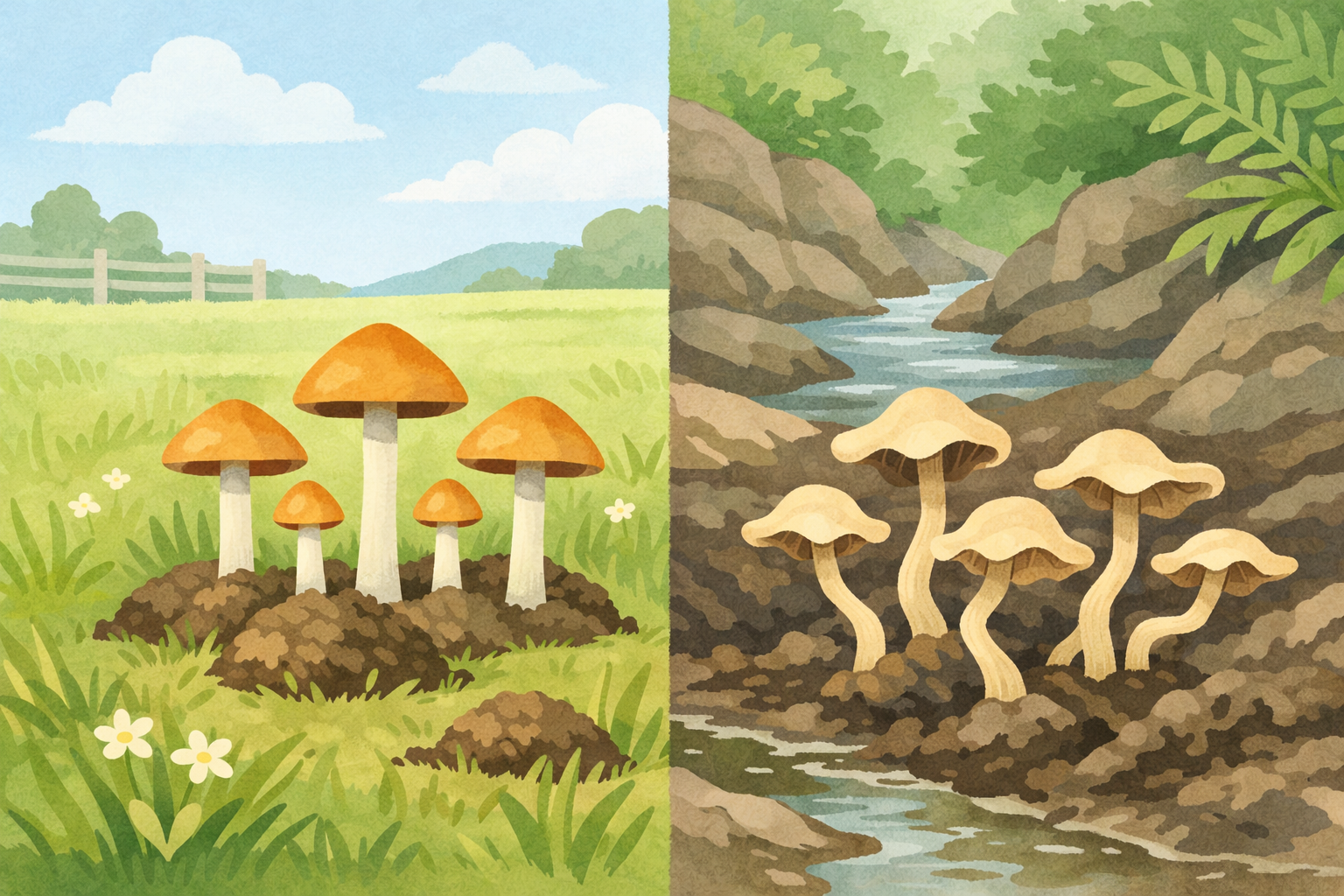
- Appearance: Cubensis varieties like “Golden Teacher” typically display straight stems and symmetrical caps. Zapotecorum often appears more irregular, with thick, hollow stems and undulating caps.
- Cultivation: Cubensis thrives on manure-based substrates and is widely cultivated. P. zapotecorum prefers mineral-rich soils and specific humidity ranges, making indoor cultivation more challenging and less common.
Reported Effects & Experience
Like other psilocybin-containing mushrooms, the effects come down to the same active compounds. What tends to differ between species isn’t some totally different mechanism, but the concentration and balance of those compounds. In other words, the experience isn’t fundamentally different, but it can feel stronger, faster, or more intense depending on the chemistry.
- Visual intensity: Structured geometric visuals are commonly reported, though this is anecdotal rather than clinically studied.
- Rapid onset: Because P. zapotecorum may contain measurable psilocin in addition to psilocybin, some users report a quicker subjective onset compared to typical cubensis experiences.
- Physical intensity: Higher-potency specimens can produce stronger physiological sensations during onset, including lightheadedness or body heaviness.
Potency: What We Know (and Don’t)
Alkaloid surveys have found P. zapotecorum specimens with relatively high combined psilocybin and psilocin levels compared to many P. cubensis samples (2.25-4.17% PCBE / psilocybin equivalency). However, potency varies significantly depending on genetics, environment, and substrate.
It is important to note that bruising intensity, even deep blue coloration, caused by the psilocybin within mushrooms, does not reliably indicate alkaloid concentration. Laboratory analysis is the only accurate method of determining potency.
Origins & Classification
Psilocybe zapotecorum was formally described in 1958 by Roger Heim and R. Gordon Wasson following fieldwork in Mexico. It later became the namesake of Section Zapotecorum, a taxonomic grouping defined by shared microscopic features.
Ethnomycological records document ceremonial use in parts of Oaxaca, though usage patterns likely varied across regions and communities.
Where It Grows Naturally
Psilocybe zapotecorum is primarily a Mexican and Central American species, though it has been reported as far south as Brazil.
- Habitat: It loves "mucky" soil. You will find it in humid ravines, near waterfalls, and on the banks of rivers in subtropical forests.
- Altitude: It thrives at high elevations, typically between 1,000 and 2,000 meters above sea level.
- The Landslide Effect: It is most abundant in areas where the earth has recently been moved or disturbed, acting as a "colonizer" of fresh, mineral-rich mud.
Safety, Legal Status & Harm Reduction
The main safety concern with P. zapotecorum is its potency. It is a "heavyweight" mushroom.
- Dosage: A "standard" 3.5g dose of P. zapotecorum could be an ego-dissolving, life-altering event that is far too intense for a casual user. Precise weighing and a profound respect for the substance are mandatory.
- Legality: It is illegal in most countries. In Mexico, while protected for indigenous sacramental use, it is otherwise subject to federal drug laws.
- Identification: Its habitat (muddy, swampy soil) is a key identifier, but its appearance can be similar to other Psilocybe species. Foragers must look for the distinct "hollow" stem and the way it grows in clusters (caespitose).
Frequently Asked Questions
Sources
-
Bought, M. (1957). O The Tale of the. https://www.cuttersguide.com/pdf/Periodical-Publications/life-by-time-inc-published-may-13-1957.pdf
-
Miller, D. R., Jordan Tayler Jacobs, Rockefeller, A., Singer, H., Bollinger, I. M., Conway, J., Slot, J. R., & Cliffel, D. E. (2023). Cultivation, chemistry, and genome ofPsilocybe zapotecorum. BioRxiv (Cold Spring Harbor Laboratory). https://doi.org/10.1101/2023.11.01.564784
-
Psilocybe_zapotecorum. (2026). Chemeurope.com. https://www.chemeurope.com/en/encyclopedia/Psilocybe_zapotecorum.html