
-2-1.png)


On Saturday, April 18, 2026, the Trump Administration penned a commitment to “accelerating medical treatments” for serious mental illnesses. The executive order cites “long struggles” of the medical field to treat the 14 million Americans suffering from a “mental, behavioral, or emotional disorder.”
The directive centers on the therapeutic potential of psychedelic drugs - including the compound ibogaine, which the administration believes may “reverse the mental illness crisis.”
Here’s what you need to know about psychedelic therapies for treating mental illness, and what the research says about ibogaine vs. well-known alternatives like psilocybin.
Expanding Access to Psychedelics: The Executive Order
The President’s executive order outlines several provisions intended to advance breakthroughs in psychedelic science and make treatments more available.

It’s worth noting that executive orders are not Congressional legislation. They are legally enforceable, but may be challenged in court. Here are the main provisions of the order:
- Drugs previously granted Breakthrough Therapy status shall be awarded priority review status by the FDA.
- The FDA and DEA will enable a pathway for eligible patients to access psychedelic drugs.
- Fifty million dollars will be allocated to State governments to advance psychedelic treatment programs.
- The FDA and VA will share clinical data and collaborate on the development of clinical trials.
- The Attorney General will review the Schedule I status of psychedelics that have successfully completed Phase 3 clinical trials for mental health disorders.
The Clinical Potential of Psychedelics for Mental Health
Executive orders may not carry as much legal weight as laws passed through Congress, but the Administration’s action highlights the clinical potential of psychedelics all the same. Here’s what we’re learning along the way.
- A landmark 2022 trial showed that single-dose psilocybin treatments, along with psychological support, significantly reduced treatment-resistant depression scores.
- One 2025 trial found that just one dose of LSD helped quell anxiety for months.
- One 2026 trial found that participants who received psilocybin to treat tobacco addiction were six times more likely to be smoking abstinent at 6 months in comparison to those who received a nicotine patch.
- A late 2025 review of over 100 trials corroborated the “efficacy and safety” of psychedelic interventions in the short term, highlighting applicability to PTSD as well.
- Long-term efficacy, with psilocybin therapy showing effects sustained at 5 years post session,for major depression, and 4.5 years post session for the treatment of psychiatric and existential distress associated with a terminal cancer diagnosis.
Psilocybin vs. Ibogaine: What To Know
Much of the conversation around psychedelic-assisted therapy (PAT) involves the use of psilocybin, the active ingredient in “magic” mushrooms. Once ingested, psilocybin - whether synthetic, or lab-grown, or natural caps or stems - converts to psilocin.
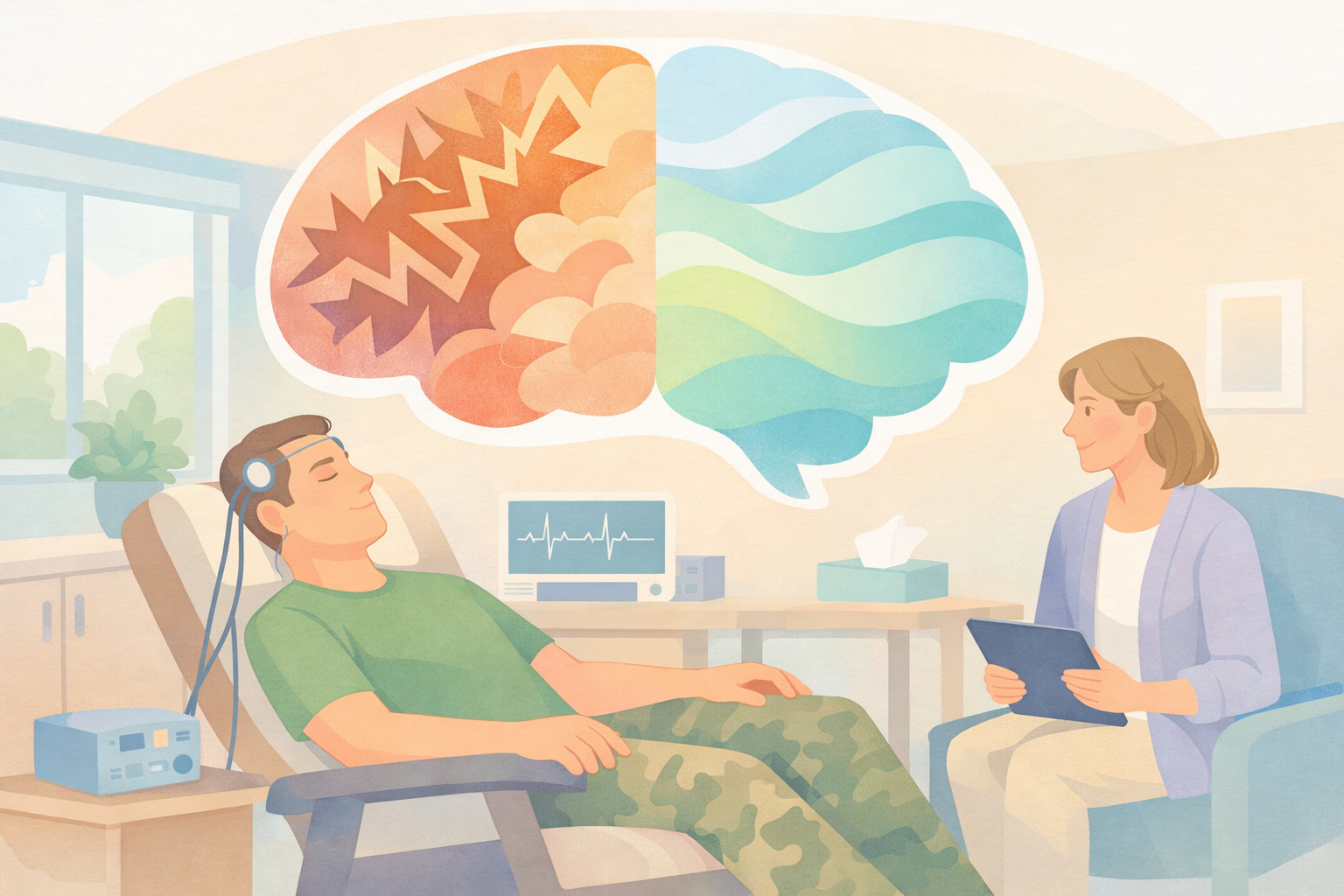
Psilocin is what crosses the blood-brain barrier and binds to 5-HT2A receptors, unlocking new neural pathways and, in some contexts, facilitating what users perceive as spiritual awakenings. This interaction is at the heart of psilocybin’s clinical utility, and its tolerable safety profile makes it a prime candidate for deep research.
But during the announcement of the executive order, the President and his advisors repeatedly mentioned another psychedelic called ibogaine.
Ibogaine is a psychedelic derived from the African fungi Tabermanthe iboga. Like psilocybin, ibogaine is a Schedule I controlled substance in the U.S. Unlike psilocybin, there’s a dearth of high-quality research on its properties and medical potential. That said…
- A 2025 clinical trial of ibogaine plus magnesium on veterans with traumatic brain injury found that ibogaine helped calm overactive neural activity and facilitated “cognitive improvements.”
- Other studies have remarked on ibogaine’s “rapid healing” potential, based on subjective user data.
More research is needed, but what seems evident at this stage is that ibogaine may provide a more restorative experience, like a physiological “brain salve.”
Meanwhile, psilocybin has a much more mature body of research behind it, with new clinical trials often focusing on conditions like treatment-resistant depression, rather than cognition.
Psilocybin is also commonly used in ceremonial or retreat settings to facilitate new perspectives and expand one’s consciousness. Psychedelics have deep anthropological ties to various cultures, many of whom have utilized psilocybin for generations.
|
Psilocybin |
Ibogaine |
|
Large body of evidentiary support |
New trials ongoing |
|
Low to moderate safety risk for most users |
Risk profile undefined, potential for serious adverse effects. |
|
Research focuses on depression, anxiety, some addictions |
Trials focus on addiction, withdrawal, and cognitive healing |
Key Takeaways
- The Trump Administration has published an executive order directing expanded research into and funding for psychedelics.
- The Executive Order in question highlights the need for new treatment options in the fight against mental health afflictions.
- The President specifically highlighted ibogaine, a psychedelic with trials supporting its utility in soothing conditions like PTSD.
Sources
- Goodwin GM, Aaronson ST, Alvarez O, Arden PC, Baker A, Bennett JC, Bird C, Blom RE, Brennan C, Brusch D, Burke L, Campbell-Coker K, Carhart-Harris R, Cattell J, Daniel A, DeBattista C, Dunlop BW, Eisen K, Feifel D, Forbes M, Haumann HM, Hellerstein DJ, Hoppe AI, Husain MI, Jelen LA, Kamphuis J, Kawasaki J, Kelly JR, Key RE, Kishon R, Knatz Peck S, Knight G, Koolen MHB, Lean M, Licht RW, Maples-Keller JL, Mars J, Marwood L, McElhiney MC, Miller TL, Mirow A, Mistry S, Mletzko-Crowe T, Modlin LN, Nielsen RE, Nielson EM, Offerhaus SR, O'Keane V, Páleníček T, Printz D, Rademaker MC, van Reemst A, Reinholdt F, Repantis D, Rucker J, Rudow S, Ruffell S, Rush AJ, Schoevers RA, Seynaeve M, Shao S, Soares JC, Somers M, Stansfield SC, Sterling D, Strockis A, Tsai J, Visser L, Wahba M, Williams S, Young AH, Ywema P, Zisook S, Malievskaia E. Single-Dose Psilocybin for a Treatment-Resistant Episode of Major Depression. N Engl J Med. 2022 Nov 3;387(18):1637-1648. doi: 10.1056/NEJMoa2206443. PMID: 36322843.
- Robison R, Barrow R, Conant C, et al. Single Treatment With MM120 (Lysergide) in Generalized Anxiety Disorder: A Randomized Clinical Trial. JAMA. 2025;334(15):1358–1372. doi:10.1001/jama.2025.13481
- Dominiak M, Gędek A, Modrzejewski S, Permoda-Pachuta A, Antosik AZ. Efficacy and Safety of Psychedelics in Mental Disorder Cases: An Umbrella Review of Meta-Analyses of Randomized Controlled Trials. J Clin Med. 2025 Dec 29;15(1):253. doi: 10.3390/jcm15010253. PMID: 41517502; PMCID: PMC12786876.
- Lissemore, J.I., Chaiken, A., Cherian, K.N. et al. Magnesium–ibogaine therapy effects on cortical oscillations and neural complexity in veterans with traumatic brain injury. Nat. Mental Health 3, 918–931 (2025). https://doi.org/10.1038/s44220-025-00463-xMash
- Schmitz, G.P., Chiu, YT., Foglesong, M.L. et al. Psychedelic compounds directly excite 5-HT2A layer V medial prefrontal cortex neurons through 5-HT2A Gq activation. Transl Psychiatry 15, 381 (2025). https://doi.org/10.1038/s41398-025-03611-0
- DC, Duque L, Page B, Allen-Ferdinand K. Ibogaine Detoxification Transitions Opioid and Cocaine Abusers Between Dependence and Abstinence: Clinical Observations and Treatment Outcomes. Front Pharmacol. 2018 Jun 5;9:529. doi: 10.3389/fphar.2018.00529. PMID: 29922156; PMCID: PMC5996271
- Olash, C., Buchanan, D.M., Brown, R. et al. Accelerated recovery using magnesium ibogaine: characterizing the subjective experience of its rapid healing from neuropsychiatric disorders. npj Mental Health Res 5, 8 (2026).
- Mertens LJ, Koslowski M, Betzler F, Brand M, Evens R, Kärtner L, Jungaberle A, Jungaberle H, Majic T, Schmitz CN, Ströhle A, Scharf D, Spangemacher M, Wolff M, Assadi Z, Bahri S, Becher L, Färber LV, Kirchen N, Kulakova E, Kunz L, Meijer A, Rohrmoser B, Wellek S, Berger MM, Gründer G. Efficacy and Safety of Psilocybin in Treatment-Resistant Major Depression: The EPISODE Randomized Clinical Trial. JAMA Psychiatry. 2026 Mar 18:e260132. doi: 10.1001/jamapsychiatry.2026.0132. Epub ahead of print. PMID: 41848690; PMCID: PMC13000742.
- Mackey KM, Anderson JK, Williams BE, et al. Evidence Brief: Psychedelic Medications for Mental Health and Substance Use Disorders. Washington (DC): Department of Veterans Affairs (US); 2022 Oct.
Before you apply
Beckley runs legal, guided psilocybin retreats in Jamaica and psilocybin retreats in the Netherlands: four weeks of preparation, two guided sessions on retreat, six weeks of integration, online and at your own pace, one to two hours a week. Plain answers to the questions people ask first:
What a psilocybin retreat costs · What happens, day by day · Jamaica or the Netherlands · Who should not attend · Apply