
-2-1.png)


With help from science, psychedelics are thriving. New research has illuminated the clinical potential of psychedelic drugs in tackling afflictions like treatment-resistant depression or PTSD.
Psilocybin is the drug of choice for many clinical trials. But we’re also seeing young people in particular explore the viability of LSD as a mental health tool - often unsupervised.
It’s more important than ever to have a clear view of the effects of LSD microdosing for depression. One recent study tackled that exact subject.
Here’s what the study says, and what you should know.
LSD Microdosing for Depression: What the Study Says
The paper in question was published in the journal Progress in Neuropsychopharmacology & Biological Psychiatry in Mar. 2026.
It’s a pilot study by authors Dimitri Daldegan-Bueno et al. called “LSD microdosing for major depressive disorder: Mood and pharmacokinetic outcomes from a Phase 2A trial.”
Broadly, Daldegan-Bueno & colleagues described LSD microdosing for depression as having “short-term improvements in mood” - including an average symptom severity reduction of 60%. A compelling figure, but not one without its caveats.
Before we dive into the study, let’s brush up on terminology:
- LSD is lysergic acid diethylamide; also known as acid. It is a synthetic classic psychedelic drug derived from a fungus called ergot.
- Microdosing describes the regular consumption of very small amounts of a drug or supplement.
- Major depressive disorder, also called clinical depression, is characterized as more than periodic sadness or a “bout of the blues” by the Mayo Clinic.
Study Design
- 19 patients who met the DSM-5 diagnosis criteria for major depressive disorder were enrolled.
- Participants were clinically observed three times: a baseline exam, a first administration session seven days after, and a follow-up two to seven days after the final microdose.
- Participants took 8 micrograms of liquid LSD at the initial, supervised dosing session, and were instructed to consume additional doses twice weekly at home for 8 weeks.
- At home, participants were given the freedom to adjust their LSD microdose between 4 and 20 micrograms, depending on their “self-perception” of effects.
Study participants were instructed to perform any “psychologically beneficial” activity after self-administering their LSD microdose at home.
Participants also filled out a daily questionnaire, reporting on their daily depression severity, sleep quality, mood and disposition, and how the LSD felt to take.
Findings
- Participants experienced variability in mood throughout the protocol.
- Over the course of the protocol, creativity and happiness scores elevated and then transiently decreased.
- There was a net positive effect on self-reported depressive symptoms, general mood, creativity, and energy.
Caveats & Limitations
Research on LSD microdosing for depression is limited, so any additional works that help steer the scientific ship are welcome. However, Daldegan-Bueno et al.’s study has a few important limitations to consider.
- This study involved fewer than 20 participants, most of whom were men. Broad conclusions are difficult to draw from small sample sizes.
- Participants also had prior experience with psychedelics, which could have affected their self-reported anxiety and apprehension scores.
- This was not a blinded study. All participants knew they were microdosing LSD for depression. This awareness may bias self-reported findings if patients actively want the treatment to work.
- There was no control group, which the authors acknowledged muddied the findings by “hindering the interpretation of a direct dosing effect.”
Crucially, the authors strictly acknowledged that it was not possible to directly attribute the reduction in depression to LSD due to the patients’ awareness of the nature of the trial.
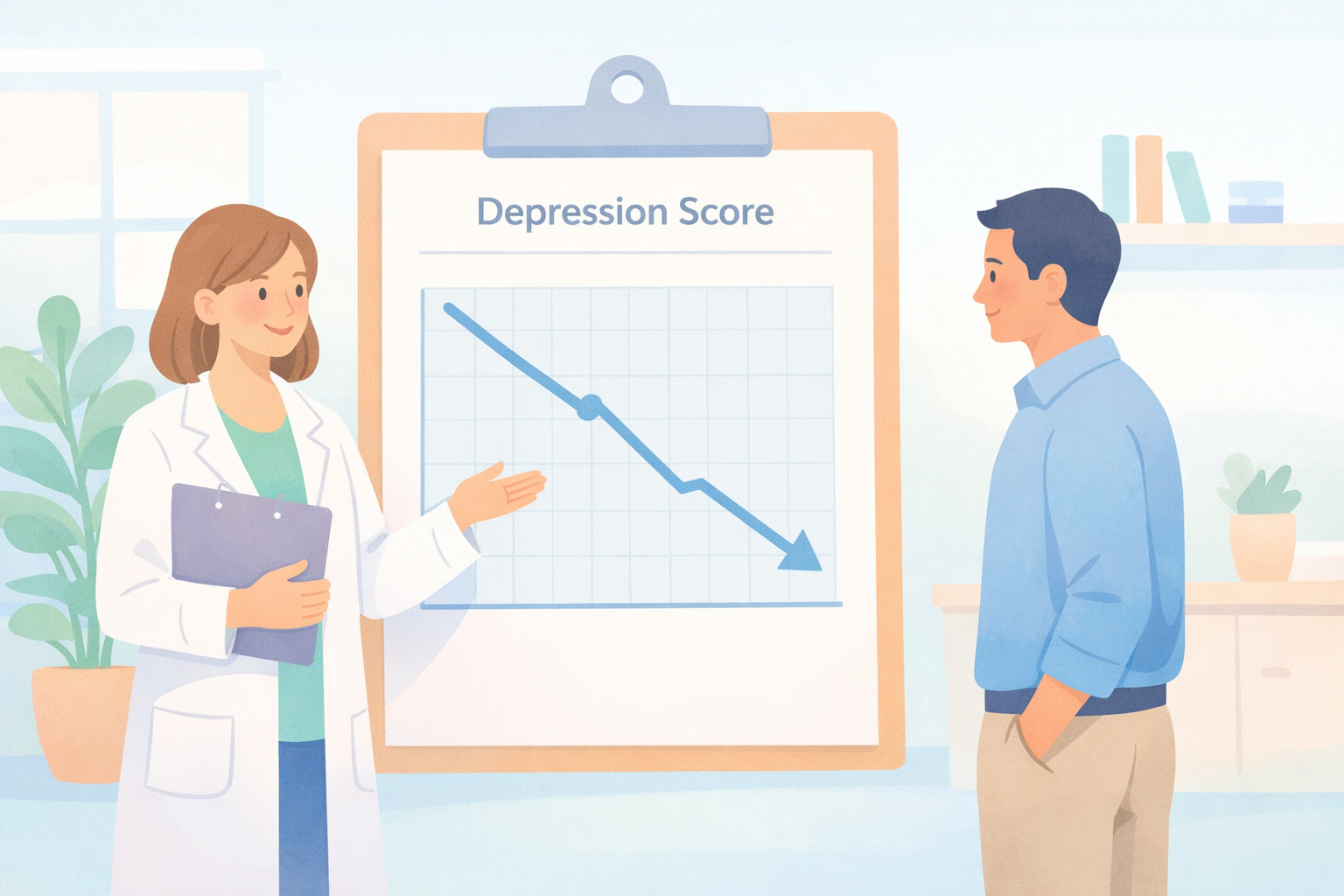
However, they couched this among an endorsement of participants’ capability of self-regulating LSD microdosing for depression at home, highlighting the practicality of the intervention.
LSD for Depression: What Else We Know
LSD microdosing for depression is a hot topic in the clinical sphere, thanks largely to a resurgence in the acceptability of researching psychedelics. Daldegan-Bueno has co-authored other studies of LSD’s effects on depression, including a thematic analysis of microdosers’ interviews. The findings were similar, even though this work had similar limitations:
- Self-perception of the drug strongly impacts its effects
- Careful titration is needed for self-administration of LSD
- Some individuals report no improvement or even feel worse
Elsewhere, other studies insist on LSD’s potential potency - but the endorsement is again underscored by a call for more thorough research, particularly into the exact mechanism of action driving the change.
This latest study by Daldegan-Bueno is another data point, not a closing argument. But one thing is clear: microdosing LSD for depression may be an effective alternative for sufferers who haven’t found relief with other means.
Frequently Asked Questions
Sources
- Goodwin GM, Aaronson ST, Alvarez O, Arden PC, Baker A, Bennett JC, Bird C, Blom RE, Brennan C, Brusch D, Burke L, Campbell-Coker K, Carhart-Harris R, Cattell J, Daniel A, DeBattista C, Dunlop BW, Eisen K, Feifel D, Forbes M, Haumann HM, Hellerstein DJ, Hoppe AI, Husain MI, Jelen LA, Kamphuis J, Kawasaki J, Kelly JR, Key RE, Kishon R, Knatz Peck S, Knight G, Koolen MHB, Lean M, Licht RW, Maples-Keller JL, Mars J, Marwood L, McElhiney MC, Miller TL, Mirow A, Mistry S, Mletzko-Crowe T, Modlin LN, Nielsen RE, Nielson EM, Offerhaus SR, O'Keane V, Páleníček T, Printz D, Rademaker MC, van Reemst A, Reinholdt F, Repantis D, Rucker J, Rudow S, Ruffell S, Rush AJ, Schoevers RA, Seynaeve M, Shao S, Soares JC, Somers M, Stansfield SC, Sterling D, Strockis A, Tsai J, Visser L, Wahba M, Williams S, Young AH, Ywema P, Zisook S, Malievskaia E. Single-Dose Psilocybin for a Treatment-Resistant Episode of Major Depression. N Engl J Med. 2022 Nov 3;387(18):1637-1648. doi: 10.1056/NEJMoa2206443. PMID: 36322843.
- Modlin NL, Williamson V, Maggio C, Stubley J, Kirlic N, Cleare A, Rucker J. Clinical conceptualisation of PTSD in psilocybin treatment: disrupting a pre-determined and over-determined maladaptive interpretive framework. Ther Adv Psychopharmacol. 2025 Jun 8;15:20451253251342319. doi: 10.1177/20451253251342319. PMID: 40492108; PMCID: PMC12146596.
- Walsh CA, Gorfinkel L, Shmulewitz D, Stohl M, Hasin DS. Use of Lysergic Acid Diethylamide by Major Depression Status. JAMA Psychiatry. 2024;81(1):89–96. doi:10.1001/jamapsychiatry.2023.386
- Daldegan-Bueno D, Donegan CJ, Sumner R, Forsyth A, Jeong SH, Evans W, Alshakhouri M, Murphy RJ, Reynolds L, Hoeh N, Allen N, Sundram F, Menkes DB, Muthukumaraswamy S. LSD microdosing for major depressive disorder: Mood and pharmacokinetic outcomes from a Phase 2a trial. Prog Neuropsychopharmacol Biol Psychiatry. 2026 Mar 20;145:111645. doi: 10.1016/j.pnpbp.2026.111645. Epub 2026 Feb 17. PMID: 41713673.
- Joy Donegan C, Daldegan-Bueno D, Sumner RL, Forsyth A, Evans W, Hoeh NR, Sundram F, Menkes D, Muthukumaraswamy S, Reynolds L. What is it like to microdose LSD for depression? a thematic analysis of participant interviews from an open-label trial. Ther Adv Psychopharmacol. 2025 Dec 4;15:20451253251396253. doi: 10.1177/20451253251396253. PMID: 41362594; PMCID: PMC12681616.
- Bouloufa A, Delcourte S, Delannay T, Rovera R, Lau T, Mouledous L, Dkhissi-Benyahya O, Guiard BP, Haddjeri N. LSD: Mechanisms and relevance to the treatment of depression. Neurosci Biobehav Rev. 2025 Dec;179:106407. doi: 10.1016/j.neubiorev.2025.106407. Epub 2025 Oct 10. PMID: 41076096.
Before you apply
Beckley runs legal, guided psilocybin retreats in Jamaica and psilocybin retreats in the Netherlands: four weeks of preparation, two guided sessions on retreat, six weeks of integration, online and at your own pace, one to two hours a week. Plain answers to the questions people ask first:
What a psilocybin retreat costs · What happens, day by day · Jamaica or the Netherlands · Who should not attend · Apply