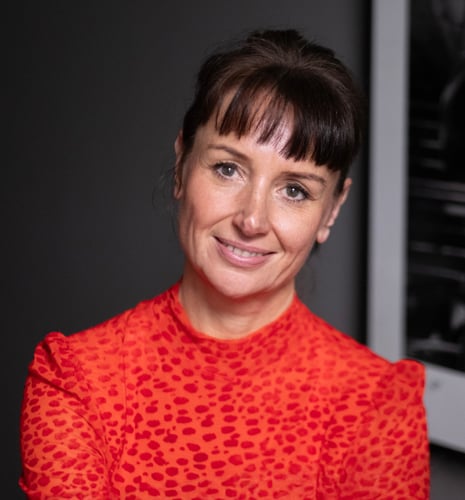
Menopause is a transition that can last four to ten years, and its hardest symptoms are often the ones other people can't see. In this conversation, neuroscientist Dr. Grace Blest-Hopley and journalist and program alum Helen Down talk about what changes in the brain and body, and why this stage of life is so often misunderstood.
Grace explains how falling estrogen affects mood, memory, sleep and the stress response, and why some women are diagnosed with depression when hormones may be part of the picture. She outlines where research on psilocybin stands, and where it is still early.
Helen describes taking part in a women-only Beckley Retreats program in the Netherlands in May 2024, including what was difficult and how she felt in the weeks and months afterwards. The panel then answers questions from the audience.
We've often thought of menopause as a finite moment, where there's a before and an after, but menopause really is a transition. And I think we don't speak enough about quite how long that transition can be.
Dr. Grace Blest-Hopley on the symptoms people don't see
As women, we all have quite a strong, vocal inner critic, and menopause will give that inner critic a microphone. But after the retreat, that inner critic was a bit quieter.
Questions this replay answers
How long does menopause last?
Grace describes it as a transition rather than a single moment, lasting between four and ten years, and notes that symptoms can begin as early as the mid to late 30s.
Why can menopause look like depression?
Grace explains that fluctuating and then falling estrogen affects the serotonin system, sleep and the stress response, so symptoms can resemble depression. She suggests looking at hormonal health alongside any diagnosis.
What was the program like for Helen?
She found the preparation time-consuming but worthwhile, valued the facilitators and the group, and felt delicate for about a week afterwards before her sleep improved. The lift in mood faded gradually over around six months, she says, but the insights stayed with her.
Where can I learn more about who the program suits?