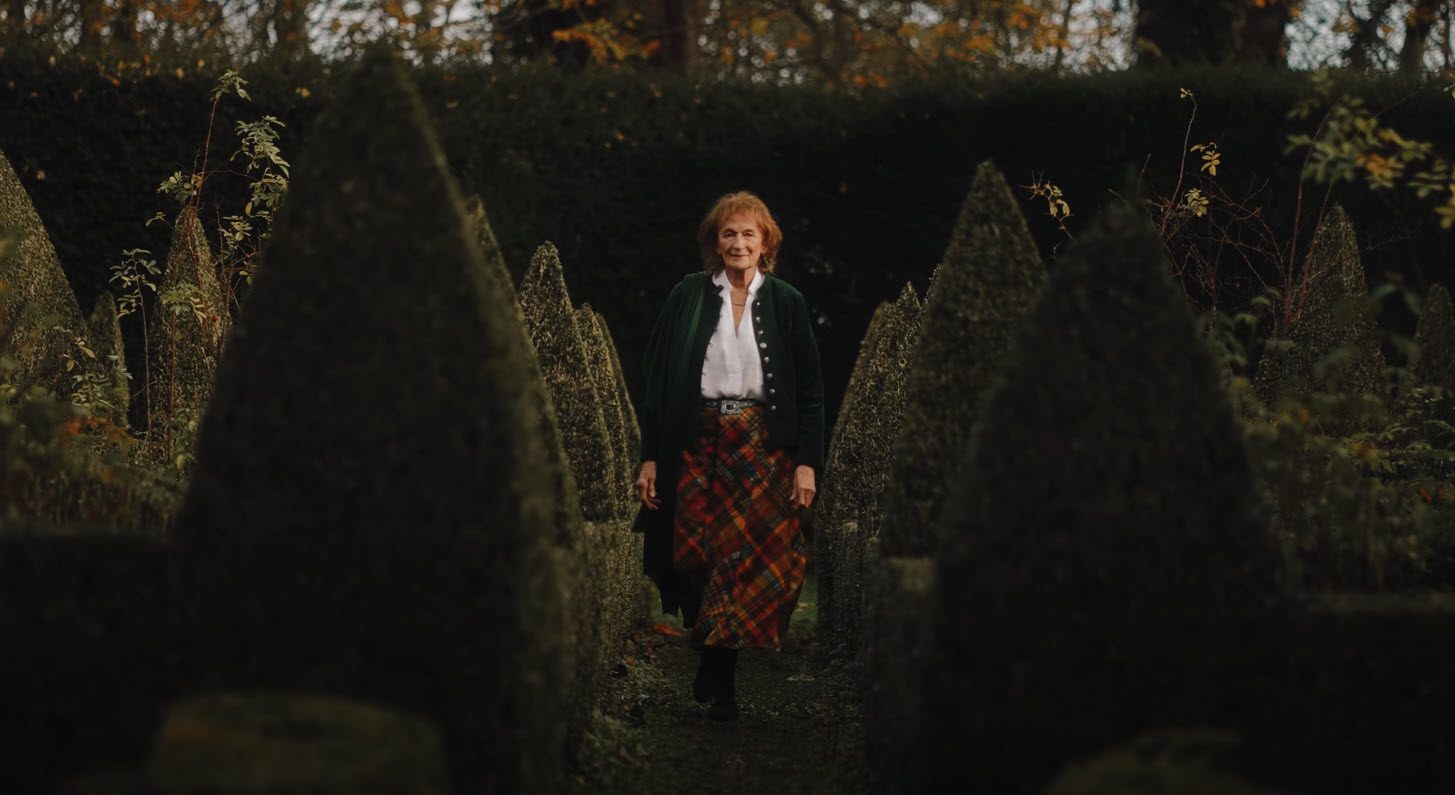
Amanda Feilding: A Life Advancing Psychedelic Science & Healing
Amanda Feilding, Countess of Wemyss and March (January 30, 1943 to May 22, 2025), was the preeminent voice in psychedelics, advocating for scientific exploration of psychoactive substances and challenging longstanding taboos. Born in Oxfordshire, England, Feilding was raised at Beckley Park, a Tudor-style hunting lodge that would later become the headquarters for the Beckley Foundation. This think tank leads drug policy reform and scientific research into psychoactive substances. She was also the co-founder of Beckley Retreats, which provides facilitated psychedelic retreat experiences.
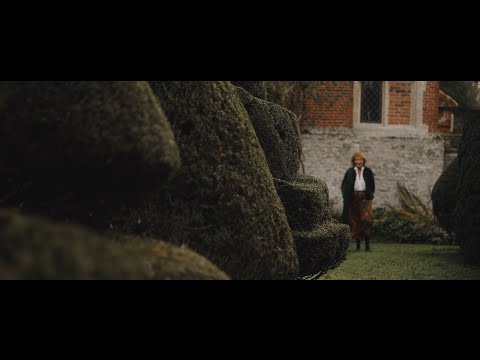
Behind the scenes, Feilding publishes numerous scholarly articles and policy reports in journals such as The Lancet Psychiatry and Current Biology. In her later years, she remained a public face for psychedelics, appearing on the Joe Rogan Experience, one of the most listened-to podcasts in the U.S., and being profiled in media outlets such as Wired and Vice.
Fast Facts
- Founder of the Beckley Foundation (initially called the Foundation to Further Consciousness) in 1996, which pushed for rigorous scientific inquiry into drug policies and consciousness studies.
- According to Beckley records, she co-authored over 80 peer-reviewed papers on psychedelics, consciousness, and brain science (though external bibliographies sometimes list 50+).
- Often called “the hidden hand behind the psychedelic renaissance,” Feilding’s networking and advocacy helped raise the respectability and visibility of research in policy and scientific circles.
From Curiosity to Science
With few formal credentials, she often described herself as “self-educated.” She studied comparative religion and mysticism at Oxford (ultimately deciding not to graduate) under Professor R. C. Zaehner. Later, she deepened her understanding of altered states through travels across Asia and the Middle East, where she immersed herself in Eastern philosophies.
At 22 years old, someone spiked Feilding’s drink with LSD, leading to months of recovery. Instead of being deterred from psychedelics, however, this experience drove her toward scientific inquiry.
Her early explorations weren’t to escape but to discover. She wanted to understand how changes in consciousness might expand human potential, creativity, and compassion. While others were swept up in the culture surrounding psychedelia, she approached it with the eye of an anthropologist and the mind of a philosopher.
Even then, her conviction was clear: altered states of consciousness should not be dismissed as fringe or dangerous, but studied with the same seriousness afforded to medicine and psychology. That belief became the foundation of her life’s work.
Shaping Research and Policy
Psychedelics were culturally vilified (not to mention illegal) starting in the 1970s, but Feilding didn’t waver from her mission. In 1996, she established the Foundation to Further Consciousness, which was renamed the Beckley Foundation two years later. This organization would become instrumental in persuading governments and institutions to reopen the scientific conversation about psychedelic compounds.
In 2008, Feilding partnered with leading neuroscientist Professor David Nutt at Imperial College London to initiate a new wave of psychedelic research. Their collaboration led to the first modern brain-imaging studies with psilocybin and LSD, which showed that these compounds reduce activity in the brain’s default mode network. This finding helped explain the experience of “ego dissolution” and illuminated psychedelics’ potential for treating mental-health disorders.
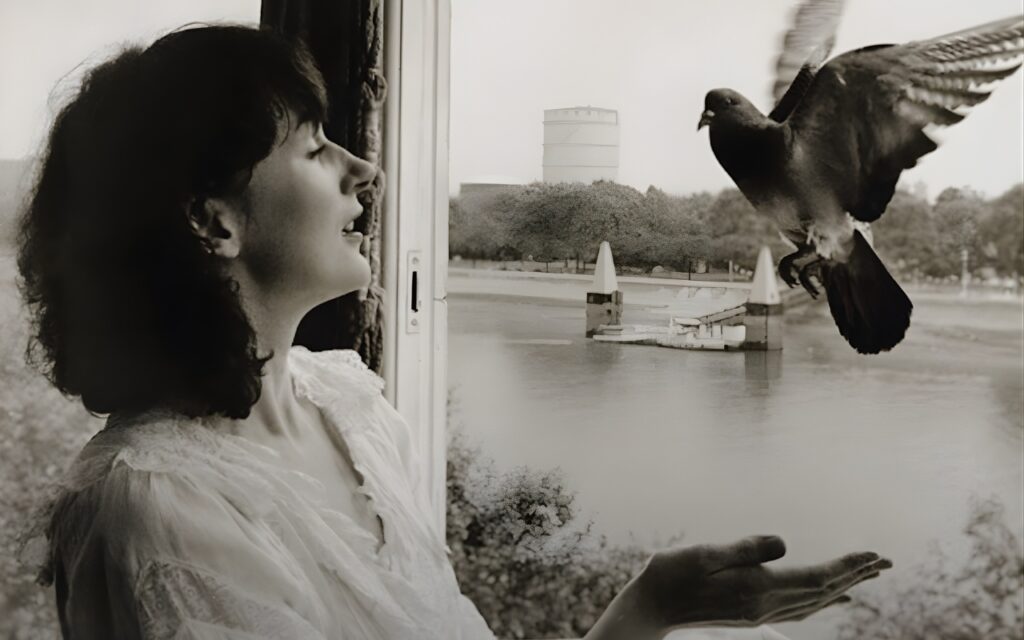
Robin Carhart-Harris, now a global authority in psychedelic research, credited Feilding with enabling this progress. Before launching one of the first clinical trials using psilocybin to treat depression, he told the media: “None of it would have been possible without Amanda and the Beckley Foundation.”
Her influence also reached the political realm. Over 40 much-cited books, reports, and briefing papers have been written and/or inspired by the Beckley Foundation’s Policy Program, which brings together policy-makers and other specialists to open up discussion and dispel the taboo surrounding the subject of global drug policy reform. In short, she built a bridge between science, policy, and culture that few others dared attempt.
Science in Practice: Beckley Retreats
Beckley Retreats is the tangible manifestation of Feilding’s life’s work—an attempt to turn her scientific and policy insights into a lived human experience. Hosted in carefully chosen settings and led by veteran facilitators, the retreats avoid quick fixes and spectacle. They are designed, in part, on the structure of clinical trials, while preserving the depth of a spiritual or therapeutic journey.
Each retreat follows a rhythm:
- preparation workshops to establish intentions and psychological readiness;
- guided psilocybin sessions facilitated by trained practitioners;
- and integration practices such as meditation, journaling, and group dialogue.
This structure reflects decades of research showing that “set and setting” (the mindset of the participant and the environment they are in) profoundly shapes the outcome of a psychedelic experience.
Feilding viewed psychedelics as tools that demand respect, not consumer commodities. That conviction continues to shape how Beckley Retreats operates: with an emphasis on ethical foundations, reciprocity with local communities, respect for indigenous traditions, and environmental care for the places that host its work. Unlike commercial models that promise instant transformation, Beckley’s approach is patient and principled—defined as much by what it won’t do as by what it offers. It will not pursue scale at the expense of safety, nor reduce the nuances of consciousness to marketing slogans.
The Future She Helped Catalyse
The academic and public interest in psychedelics is undeniable. Johns Hopkins University, Imperial College, and other major institutions now run large-scale clinical trials on psilocybin for depression, PTSD and end-of-life anxiety. Policymakers in Oregon and Colorado have taken tentative steps toward regulated therapeutic use. Start-ups are investing millions in psychedelic medicine. And beneath this wave lies the quiet, steady work of figures like Amanda Feilding, who kept the interest alive through decades of scepticism.
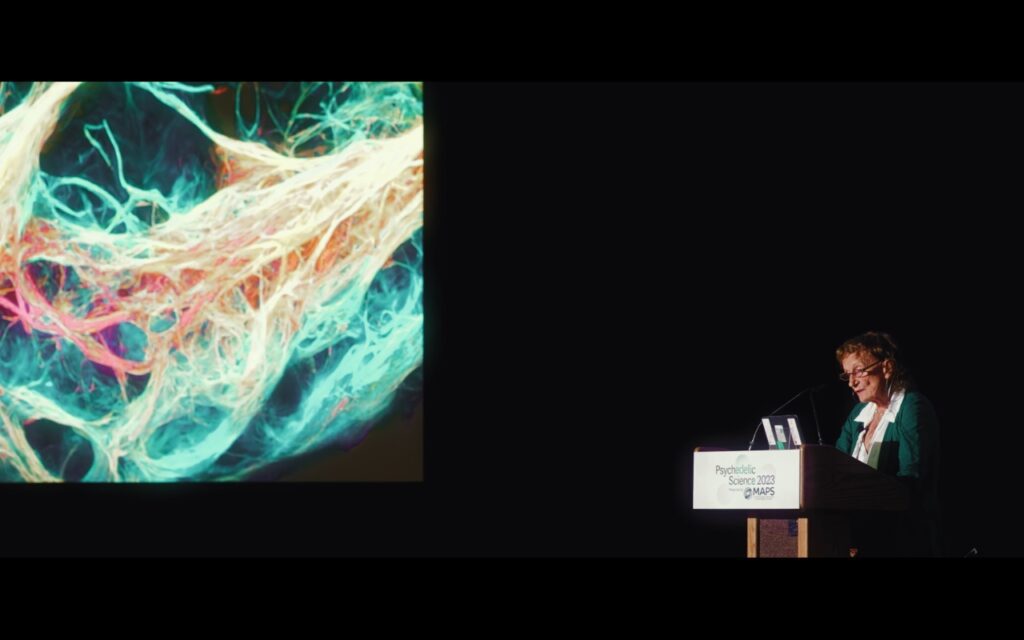
Yet as enthusiasm grows, so does the need for restraint. Feilding herself cautioned against the risks of over-commercialisation and the temptation to oversell outcomes. Her vision for the future was never about mass-market psychedelics but about responsible, well-governed access—tools for healing handled with care. Beckley Retreats, with their measured pace and scientific grounding, represent not an endpoint but a model for how that future might unfold: rooted in evidence, guided by ethics, and sustained by the same curiosity that defined her life’s work.
Closing Reflection
Amanda Feilding’s story is not one of sudden recognition but of decades of persistence. She was called eccentric, visionary, and stubborn—and perhaps she was all three. Yet her impact is measured not in labels but in the gradual reawakening of a field once considered lost. Through science, policy, and practice, she helped catalyze a cultural shift whose implications are only beginning to unfold.
By the time of her passing in May 2025, Amanda had completed her life’s work with grace and foresight. She died at her home surrounded by loved ones. In her final note, she wrote of her lifelong belief in psychedelics as a “gift of the gods” for expanding human consciousness and healing societies battered by outdated dogma.
For those who encounter her work today through Beckley Retreats, it is easy to forget how improbable her work once seemed. That psychedelic science would be discussed in medical journals, government reports, and financial newspapers alike owes much to her quiet determination. By giving form to her philosophy through retreats, she ensured that this renaissance is not just about data or politics, but about human beings learning, once again, how to navigate the depths of their own minds.
FAQs
Who is Amanda Feilding?
Amanda Feilding was the founder of the Beckley Foundation and co-founder of Beckley Retreats. She spent over 50 years advocating for scientific research into psychedelics and evidence-based drug policy reform.
What makes Beckley Retreats different from other psychedelic retreats?
They are grounded in decades of scientific research, with an emphasis on preparation, safety, and integration. The retreats reflect Feilding’s belief that psychedelics should be approached with both rigor and reverence.
How does her policy work connect to the retreats?
Her work with governments and institutions was always about creating safe, ethical frameworks for access. Beckley Retreats put those principles into practice on a legitimate commercial scale.
References
- The Beckley Foundation. (2025, May 27). Amanda Feilding – Rest in Peace. Beckley Foundation. https://beckleyfoundation.org/2025/05/27/amanda-feilding-rest-in-peace
- The Beckley Foundation. (n.d.). Amanda Feilding. Beckley Foundation. https://www.beckleyfoundation.org/amanda-feilding
- The Economist. (2025, June 5). Amanda Feilding fought to rescue the reputation of psychedelics. The Economist. https://www.economist.com/obituary/2025/06/05/amanda-feilding-fought-to-rescue-the-reputation-of-psychedelics
- Beckley Psytech. (n.d.). In memory: Lady Amanda Feilding, visionary in psychedelic science and drug policy reform. Beckley Psytech. https://www.beckleypsytech.com/posts/in-memory-lady-amanda-feilding
- Vice. (n.d.). For the first time, scientists have imaged the brain on LSD. Vice. https://www.vice.com/en/article/for-the-first-time-scientists-have-imaged-the-brain-on-lsd
- Horgan, J. (2025, June 18). Requiem for a psychedelic holy lady. John Horgan. https://johnhorgan.org/cross-check/requiem-for-a-psychedelic-holy-lady