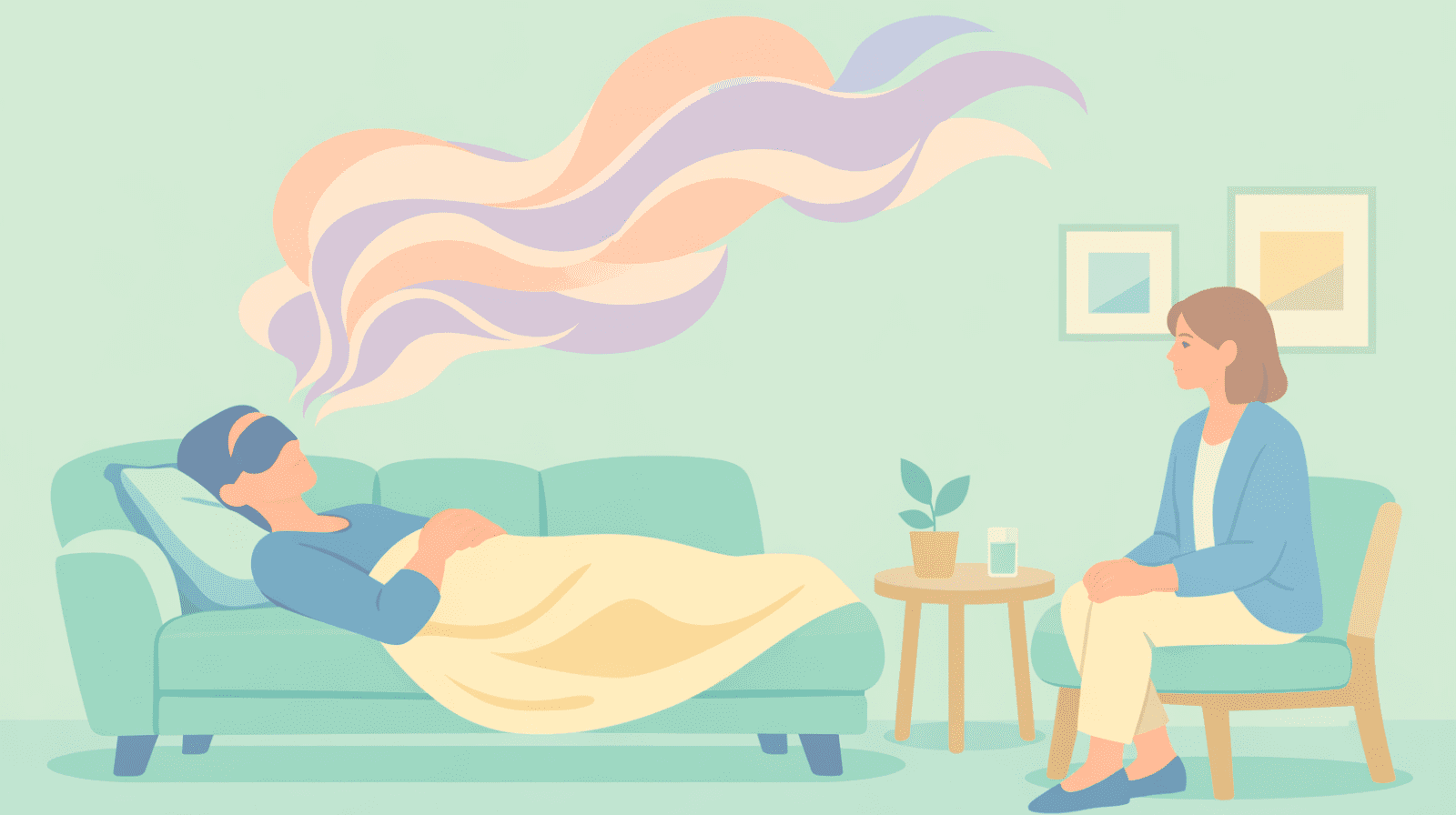
Finding Calm in a Stressed-Out World: Can Ketamine Help Your Anxiety?
When you’re suffering from a mental health disorder like anxiety or depression, it can easily feel like an uphill battle – even if you’re taking the brave and necessary steps to pull yourself out of a rut.
Here’s the issue: Research tells us that roughly half of people seeking treatment for Generalized Anxiety Disorder, or GAD, don’t respond to their first intervention. If that sounds familiar, and if you’re tired of striking out, you might want to consider ketamine treatment for anxiety.
Some serious headway has been made regarding the research of ketamine’s applicability to treating anxiety and other mental health disorders. So far, the results are promising. Here’s what you need to know.
What Is Ketamine?
It may be making waves as a novel treatment for anxiety, but ketamine has been around for years. Discovered and developed in the 1950s, ketamine has traditionally been used as an injectable anesthetic in human and veterinary medicine alike.
Notably, ketamine is also a mild psychedelic. The United States Drug Enforcement Agency categorizes ketamine as a “dissociative anesthetic that has some therapeutic effects.”
How Ketamine Works for Anxiety
Ketamine creates a state of detachment from one’s physical self, easing tension and allowing one to see and approach issues from a different perspective. That’s the crux of its potential for treating anxiety and depression.
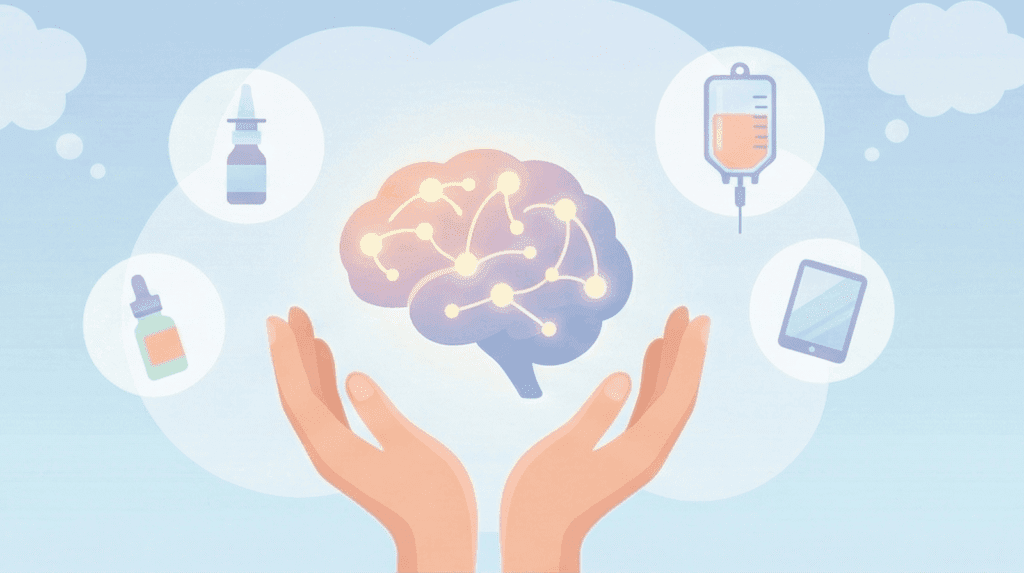
Studies have also shown ketamine to boost the production of glutamate, a neurotransmitter, or brain chemical, which is crucial to healthy cognitive function.
Scientists are still digging into the nuances of ketamine’s interaction with glutamate and its broader impacts on the brain. But the results clearly show Ketamine’s therapeutic effects have proven to be “an effective treatment in rapidly decreasing depressive symptoms,” according to a 2022 narrative review (a comprehensive look at existing scientific research on a specific topic).
Is Ketamine a Safe Treatment for Anxiety?
Generally speaking, ketamine is safe as a treatment for severe anxiety and depression. That said, no form of medicine is completely without side effects. According to Northwestern Medicine, about 10% of ketamine users may experience:
- Dizziness
- Blurred vision
- Hallucinations
- Headache
- Nausea or vomiting
- Elevated heart rate or blood pressure
- Lack of body coordination
- Blurred or double vision
Ketamine is not recommended for those with hypertension, dementia, schizophrenia, or pregnant women. Your doctor can evaluate your medical history and provide informed guidance about whether ketamine is appropriate for you.
Anxiety Medication vs. Ketamine: The Difference
Anti-anxiety medications are nothing new, but ketamine presents a novel treatment option. If you haven’t sought any form of treatment for your anxiety already, you should know how ketamine differs.
- Anxiety is typically medicated in pill form via prescription SSRIs or benzodiazepines. These are meant to alter your brain chemistry to produce more of the brain’s “happy hormones” like serotonin and norepinephrine.
With the right SSRI (there’s typically trial and error involved in matching the right pill to your unique needs), anxiety symptoms tend to slowly dissipate over a period of weeks or months.
Benzos, as they’re known, are usually a triage option – something you take on an as-needed basis when your anxiety flares up to disruptive levels. However, their potency also makes benzos more addictive.
- Ketamine is typically administered intravenously or as a nasal spray. By targeting glutamate, ketamine “resets” your mind and boosts neuroplasticity.
Ketamine treatments produce acute effects as well, such as intense relaxation and dissociation, usually lasting a few days to a week after each session. That said, since it is administered in a supervised, clinical setting, ketamine is far less addictive than benzos.
Types of Ketamine Therapy
Another upside of ketamine therapy is its versatility. You can undergo treatment in a variety of different ways, both under real-life supervision from experts in a clinical setting, or in the comfort and safety of your own home, with remote monitoring.
Nasal Spray
The brand name for nasal ketamine is Spravato, and it has been approved by the FDA. Spravato is technically esketamine, a chemical derivative with a slightly different makeup which allows it to be administered as a spray.
Spravato treatments are conducted in clinical settings, roughly once per week, and require you to stay under supervision for a few hours after taking the drug.
IV Infusions
The most common mechanism for administering ketamine is via an intravenous injection. This form of therapy has yet to receive FDA approval, but is widely utilized at the state level, depending on local laws. Why the discrepancy? Intravenous administration of ketamine for mental health purposes is considered “off-label” use.
Infusion sessions last between 30 and 60 minutes. Doses are frontloaded over the first few weeks, then maintained with one session every 2 to 6 weeks afterward.
At-Home Therapy
Ketamine is also periodically used in tablet form, which dissolves under your tongue. This protocol can be especially effective if your anxiety is debilitating enough such that you struggle to leave the house, since you can have it delivered by a courier or family member, or if your anxiety is triggered by things considered invasive like nasal sprays or needles.
Here’s how it works:
- Patients receive one dose of ketamine at a time in tablet form.
- The tablet is placed under the tongue for 7 to 10 minutes.
- Afterward, patients spit out all saliva to avoid swallowing the medication.
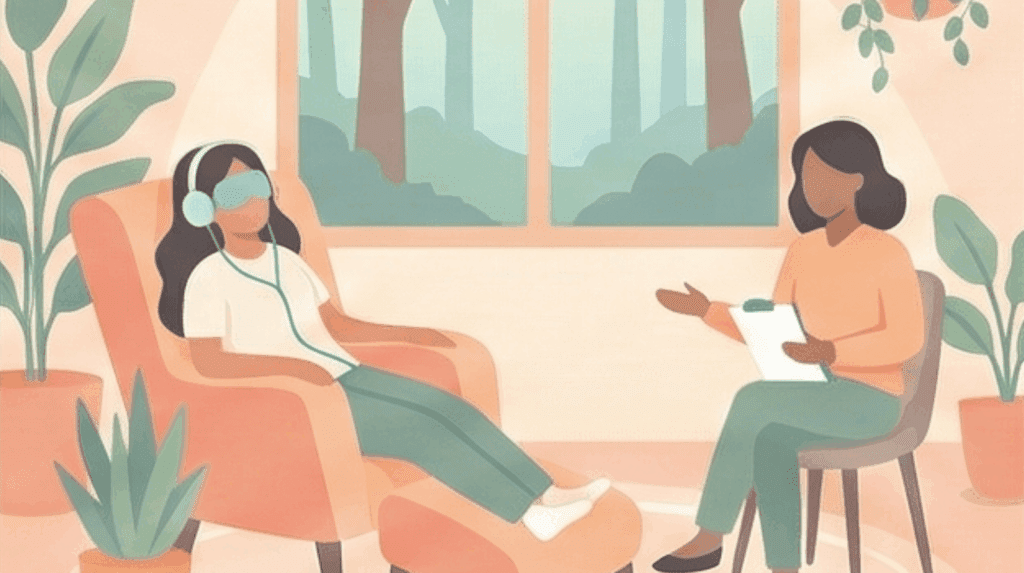
- Patients typically lie down with an eye mask and headphones as the ketamine takes effect.
- Afterward, patients consult remotely with their provider and begin the integration procedure.
When taken under telehealth supervision from a professional, at-home ketamine tablet therapy has been shown to create “rapid and significant antidepressant and anxiolytic effects.” While it is technically a guided experience, the lack of direct involvement from a supervisor or steward leaves something to be desired.
What to Expect During a Guided Ketamine Experience
Hospitals and clinics do their job well, but they’re hardly soothing. If you’re suffering from anxiety, a cold, sterile environment might do you more harm than good. Luckily, not all guided ketamine therapies take place under fluorescent lights.
Outside of clinical settings, guided ketamine experiences, like weekend retreats, provide a holistic approach to therapy. Licensed professionals guide you on your journey, rather than leaving you to navigate the experience on your own.
Guided Ketamine Therapy: The Three-Phase Approach
Ketamine isn’t typically regarded as a psychedelic in the same way as LSD or psilocybin, but it does produce substantial mind-altering effects when administered below the sedative dose. Psychedelic medicines involve a three-pronged approach for maximum efficacy.
Preparation
The preparatory phase can begin weeks prior to your ketamine therapy. During preparation, you lay the groundwork for a successful, holistic experience, both personally and clinically.
This is the period when you’ll cover any potentially conflicting parts of your medical history, focus your aim on your goals, and build rapport with your therapist or provider..
Immersion
This phase of the guided experience involves administering ketamine and embarking on your journey. Here, you’ll experience an altered perception of reality and an expanded, imaginative perspective.
Your therapist is your navigator; while you’re on ketamine, they help you stay on course in a controlled, predictable environment, providing emotional and experiential support as your mind stretches outward.
Integration
After you’ve taken flight, it’s time to land the plane safely. That’s where your guide comes in; integration involves everything from the come-down to the days and weeks afterward. A guided ketamine experience doesn’t end once you leave the room.

There’s work to be done afterward, making sense of your experience—and synthesizing your feelings into something positive and actionable. To get there, you’ll return for follow-up sessions with your therapist, who can help you crystallize your perspective and get the ball rolling.
Finding a Trusted Ketamine Program
Ketamine therapy sounds good on paper. But how do you put it into practice, especially with the rising popularity of off-label use? First things first, check local laws – ketamine isn’t banned for medical reasons in any state, but regulations vary wildly about which clinics can provide it and under what conditions.
That said, if you’ve hit a dead end with the standard fare of anxiety medication, or are tired of fighting through a web of bureaucracy and legalese to get help, it might be time to try taking a different path.
Beckley Retreats’ weekend ketamine program is an industry leader. Our two-day weekend retreats are evidence-based and managed by board-licensed experts with decades of experience.
At Beckley, you can harness the transformative power of guided ketamine therapy—and it all centers around you, your pace, and your needs. Our weekend retreats provide everything you need:
- A comfortable, serene sanctuary in the California redwoods
- Nutritious, whole-food meals from start to finish
- Individual and group wellness activities
- Pre and post-session counseling and integration
You didn’t fall into the cavern of anxiety in a day; it takes more than a weekend to climb out. Beckley’s ketamine experiences help set things in motion, and ensure you have the confidence and capability to take the wheel and stay on the right path.
FAQs
How fast does ketamine work for anxiety?
Ketamine treatments for anxiety take effect within minutes, producing a state of relaxation and dissociation. Long-term relief is achieved via a treatment protocol of weekly doses that can last for several months, depending on the mechanism of administration.
Is ketamine safe for anxiety?
Yes. Research shows that ketamine experiences are generally safe and have a low risk of dependency, since ketamine is administered in clinical settings or under direct supervision.
How does ketamine improve anxiety?
Ketamine improves anxiety symptoms primarily by acting on the neurotransmitter glutamate, improving mood and expanding the mind. It’s also been shown to promote dopamine, opening new pathways in the brain for regulating mood.
Sources
- Ansara ED. Management of treatment-resistant generalized anxiety disorder. Ment Health Clin. 2020 Nov 5;10(6):326-334. doi: 10.9740/mhc.2020.11.326. PMID: 33224690; PMCID: PMC7653736.
- Kohtala, S. Ketamine—50 years in use: from anesthesia to rapid antidepressant effects and neurobiological mechanisms. Pharmacol. Rep 73, 323–345 (2021).
- Abdallah CG, De Feyter HM, Averill LA, Jiang L, Averill CL, Chowdhury GMI, Purohit P, de Graaf RA, Esterlis I, Juchem C, Pittman BP, Krystal JH, Rothman DL, Sanacora G, Mason GF. The effects of ketamine on prefrontal glutamate neurotransmission in healthy and depressed subjects. Neuropsychopharmacology. 2018 Sep;43(10):2154-2160. doi: 10.1038/s41386-018-0136-3. Epub 2018 Jun 28. PMID: 29977074; PMCID: PMC6098048.
- Sepulveda Ramos C, Thornburg M, Long K, Sharma K, Roth J, Lacatusu D, Whitaker R, Pacciulli D, Moredo Loo S, Manzoor M, Tsang YY, Molenaar S, Sundar K, Jacobs RJ. The Therapeutic Effects of Ketamine in Mental Health Disorders: A Narrative Review. Cureus. 2022 Mar 30;14(3):e23647. doi: 10.7759/cureus.23647. PMID: 35505747; PMCID: PMC9053551.
- Hull TD, Malgaroli M, Gazzaley A, Akiki TJ, Madan A, Vando L, Arden K, Swain J, Klotz M, Paleos C. At-home, sublingual ketamine telehealth is a safe and effective treatment for moderate to severe anxiety and depression: Findings from a large, prospective, open-label effectiveness trial. J Affect Disord. 2022 Oct 1;314:59-67. doi: 10.1016/j.jad.2022.07.004. Epub 2022 Jul 6. PMID: 35809678.