-2-1.png)



Or What Does a Psychedelic Trip Feel Like?
Explaining a psychedelic trip to someone is a lot like trying to describe the color blue to a person who has never seen it. You can use metaphors like sky, ocean, or tranquility, but, ultimately, the person has to see it themselves. These experiences feel “ineffable,” meaning they feel indescribable or resist being rendered into language, which is why explaining something like a psychedelic trip is so difficult.
At the same time, as interest in psilocybin retreats and psychedelic-assisted therapy grows, so does the desire to know what the experience will be like. You might wonder: Will I lose control? Do you hallucinate the whole time? Will I still be myself? These are not naïve questions.
While no article or scientific paper can fully explain the experience itself, this one can offer a map of the territory. Psychedelic journeys tend to follow a reliable arc, with distinct stages and familiar sensations. Understanding that structure won’t eliminate uncertainty, but it can offer orientation. And when you can place yourself on a map, the journey often feels far less intimidating.
The Foundation: Set and Setting
Many variables shape a psychedelic journey, which is why there is no single way to describe what happens. Different substances and dosages affect the body in different ways. Each person brings their own biology, personality, and expectations to the experience. And the environment in which the psychedelics are taken also plays a major role.
Psychedelic Journey = substance + internal state + external environment
In other words, the trip isn’t just about the substance. It also encompasses what researchers call “set and setting,” the interaction between you and your environment with the psychedelic substance. Changing any one of these variables can drastically change the experience.

Set refers to your internal state: your mental and emotional state, mindset, mental and physical health, personality structure, your expectations and intentions, and past experiences. Psychedelics tend to act like a magnifying glass. If you’re anxious going in, that anxiety may intensify. If you’re open or curious, that openness may deepen into insight. Entering into a psychedelic experience with a calm, accepting, unburdened, open and positive mindset has been found to predict positive outcomes.
Setting refers to your external environment: music, aesthetics, lighting, physical safety and comfort, the people present, and the cultural context that shapes the experience. A calm, safe, and supportive setting signals to your nervous system that it’s safe to let go, while a chaotic one may set you on edge.
This is why therapeutic and retreat settings emphasize preparation, intention-setting, and trained facilitators. For many people, set and setting are the difference between a supportive journey and a difficult one. You can’t control where the journey will take you, but you can use tools to navigate your way through it.
The Three Stages of a Psychedelic Trip
Most psychedelic experiences follow a consistent three-stage structure used in both clinical research and therapeutic settings: onset, peak, and comedown. While the intensity and content vary, the overall arc is remarkably consistent across substances.
Stage 1: The Onset
Also called the “come up,” this stage is when you first begin to feel the effects. Receptors in the brain are activated, initiating a cascade of effects, as your consciousness shifts out of ordinary reality. This is normal and temporary, but for many people, it’s the most uncomfortable stage.
Common sensations include:
- Tingling or body temperature changes
- Butterflies in the stomach, similar to anxiety or excitement
- Heightened awareness of the breath or heartbeat
- Feelings of heaviness, lightness, or restlessness
Emotionally, the onset can feel like the slow climb up a rollercoaster. There’s anticipation, uncertainty, and sometimes anxiety or fear. Thoughts like “Is this too much?” or “Am I ready for this?” are common, even among experienced participants.
The core guidance here is to surrender yourself to those feelings. At Johns Hopkins University, therapists used the mantra “trust, let go, be open” during clinical sessions, which has been adopted in many other therapeutic settings. By allowing sensations to move through the body, rather than resisting them, the experience stabilizes more quickly.
Stage 2: The Peak
The peak is the heart of the psychedelic experience, the point at which your perception, emotion, and cognition are most altered. This is the stage where people tend to “see” things. It is also the stage most people reference when describing a trip.
Visuals on Psychedelics
Sensory shifts often include colorful patterns, geometric imagery, synesthesia-like experiences, and vivid closed-eye visuals. Despite popular portrayals, these usually aren’t true hallucinations. You’re not seeing things that aren’t there; you’re seeing patterns layered onto what already exists. Neuroscience research suggests this happens because the visual cortex becomes hyper-connected to other brain regions, allowing imagery, memory, and emotion to blend.
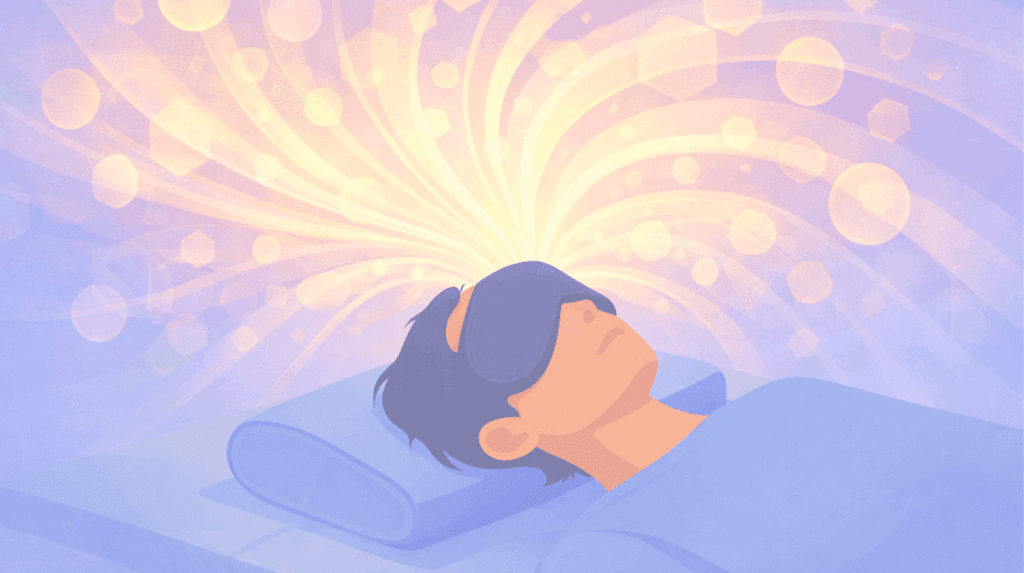
Thinking also becomes more fluid and interconnected during the peak state. Participants feel less constrained by logic or even time. Insights may arise suddenly, time dilates so that minutes can feel like hours, and new mental patterns are formed.
Ego Dissolution
This phase can be profound and is often equated with a “mystical experience.” A sacred and noetic quality tends to define this stage. Some people experience ego dissolution, a temporary release of the sense of self, which can feel liberating and oceanic. Others may experience intense emotional release, including tears, laughter, or vivid memories.
“Mystical experiences encompass experiential facets of unity, oneness and interconnectedness, transcendence of time and space, deeply felt positive mood (joy, peace, and love), a sense of sacredness, reverence or awe, ineffability, and a noetic quality (an intuitive belief that what is being revealed has authenticity and validity),” writes Sam Gandy, PhD.
For a small number of people however, the peak can feel overwhelming or distressing. This is why preparation, dosage, and support are important. Opening the eyes, orienting to the room, or connecting with a guide can help re-anchor the experience.
Stage 3: The Comedown
The comedown is the gradual return to ordinary consciousness and is often the longest stage. Visual effects slowly fade, thoughts become more linear, and the body may feel tired but calm.
Many people report an “afterglow”, or a sense of clarity, emotional softness, and mental spaciousness. Others feel reflective or quiet, as if returning from a long journey. Insights begin to settle, preparing the ground for integration.
Navigating “Bad Trips”
One of the biggest fears of first-time psychedelic users is having a “bad trip.” While difficult experiences can happen, a bad trip typically refers to unnecessary suffering caused by poor preparation, dosing errors, unsafe settings, or a lack of support. This is very different from a “challenging experience,” which involves encountering difficult emotions, memories, or sensations because something meaningful is being processed.
A bad trip can often be avoided, but challenging moments are sometimes part of the journey. Intense fear, grief, or unresolved memories can surface and cause panic, fear, and paranoia. The natural instinct is to push it down or try to escape it, but doing so often pushes you deeper into the sensation. Remember, the trip won’t last forever. It does eventually end. In the meantime, the key is to surrender to the experience.
Surrendering doesn’t mean letting the difficult feelings overrun you. It means allowing sensations and emotions to move through you with equanimity. Resistance creates friction, but being able to “trust, let go, and be open” helps change the narrative around those feelings so that they can be transformed.
In supported settings, guides or sitters play a crucial role. Their calm presence and simple grounding interventions, like reminding you to feel your body, breathe, or focus on the music, can make the difference between feeling overwhelmed and feeling safe to let go. Integrating the experience also becomes easier with this type of support.
Integration: The Trip After the Trip
Integration is the process of making sense of the experience and applying those insights to daily life. Without integration, even powerful journeys can fade into interesting memories. But with it, subtle shifts can become lasting change.

This may include journaling, therapy, group sharing, or structured support like Beckley Retreats’ private integration coaching. The goal isn’t to chase the experience again, but to ask: How does this inform how I live, relate, or care for myself now?
The psychedelic experience doesn’t end when the effects wear off. In many ways, that’s when the real work begins.
Frequently Asked Questions
Will I see things that aren’t there?
Likely no. Usually what happens is your surroundings appear distorted, meaning they are more colorful, appear more fluid, or have more texture. This is because your visual cortex is altered during the experience. Your internal imagery is also enhanced, but remains internal. You aren’t likely to see pink elephants or other apparitions with your eyes open.
How long does a trip last?
This depends on the substance, your biology, and tolerance levels. But typically psilocybin lasts 4-6 hours and LSD lasts 8-12 hours. Other substances tend to fall in the range of 4-12 hours, with ibogaine lasting the longest (24-36 hours) and DMT lasting the shortest (15 mins to one hour).
What if I panic?
Panic comes from resistance. Before taking psychedelics, prepare your environment and your mind for the experience. This will help you feel more confident. If panic arises during an experience, focus on breathing and “letting go.” You can also open your eyes, change the music, or sit in nature. In a retreat setting, guides are there to support you.
Will I be a different person afterwards?
You will still be you, but you may have a new perspective or sense of self. The only caveat would be if you weren’t in a safe, supportive environment, you may feel unlike yourself. If that is the case, work with an integration therapist or use online integration resources.
Sources
- Hartogsohn, Ido. (2016). Set and setting, psychedelics and the placebo response: An extra-pharmacological perspective on psychopharmacology. Journal of Psychopharmacology. 30. 10.1177/0269881116677852.
- Brouwer, A., Raison, C. L., & Shults, F. L. (2025). The trajectory of psychedelic, spiritual, and psychotic experiences: implications for cognitive scientific perspectives on religion. Religion, Brain & Behavior, 15(3), 330–346. https://doi.org/10.1080/2153599X.2024.2349151
- Brouwer, A., Brown, J.K., Erowid, E. et al. A qualitative analysis of the psychedelic mushroom come-up and come-down. npj Mental Health Res 4, 6 (2025). https://doi.org/10.1038/s44184-024-00095-6
- Stoliker, D., Preller, K.H., Novelli, L. et al. Neural mechanisms of psychedelic visual imagery. Mol Psychiatry 30, 1259–1266 (2025). https://doi.org/10.1038/s41380-024-02632-3
- Villiger, Daniel. “Giving Consent to the Ineffable.” Neuroethics vol. 17,1 (2024): 11. doi:10.1007/s12152-024-09545-6
- Gandy, Sam. “Predictors and potentiators of psychedelic-occasioned mystical experiences”. Journal of Psychedelic Studies 6.1 (2022): 31-47. https://doi.org/10.1556/2054.2022.00198 Web.
- Evens R, Schmidt ME, Majić T, Schmidt TT. The psychedelic afterglow phenomenon: a systematic review of subacute effects of classic serotonergic psychedelics. Therapeutic Advances in Psychopharmacology. 2023;13. doi:10.1177/20451253231172254
- Carbonaro, Theresa M et al. “Survey study of challenging experiences after ingesting psilocybin mushrooms: Acute and enduring positive and negative consequences.” Journal of psychopharmacology (Oxford, England) vol. 30,12 (2016): 1268-1278. doi:10.1177/0269881116662634
- Wolff, M., Evens, R., Mertens, L. J., Koslowski, M., Betzler, F., Gründer, G., & Jungaberle, H. (2020). Learning to Let Go: A Cognitive-Behavioral Model of How Psychedelic Therapy Promotes Acceptance. Frontiers in Psychiatry, 11, 501786. https://doi.org/10.3389/fpsyt.2020.00005