-2-1.png)

Over the last decade, magic mushrooms, once considered a fringe psychedelic drug, have become widely accepted as a legitimate way to broaden one’s mind and help curb depression and anxiety. There’s more clinical research being conducted on psilocybin (the psychedelic compound within mushrooms) than ever before, and federal laws are starting to soften regarding the use of psilocybin for treatment.
What follows is an overview of the legal status of psilocybin worldwide. This is not a definitive guide to the legality of psychedelic drugs. Always triple-check your local regulations before taking any substance.
If you live in the US and are weighing where a retreat would be legal for you, start with our guide to psilocybin retreat options for people in the US.
To The Point
Magic mushrooms are illegal in most countries in 2026. However, they are legal or partially legal in specific countries. Legal magic mushrooms are typically accessible in licensed clinical settings or through private retreats.
Key Takeaways
- The global stance on magic mushrooms is, broadly, prohibition.
- Emerging scientific evidence is helping to slowly loosen restrictions worldwide.
- A small number of countries have fully legalized or decriminalized magic mushrooms.
- Access to legal magic mushrooms is usually available through clinics or retreats.
Where Are Magic Mushrooms Legal?
Magic mushrooms are largely prohibited worldwide, but specific legal status varies considerably. Some regions are more permissive than others due to cultural attitudes and policy priorities.
Netherlands
The Netherlands offers the most established and clear legal policies regarding psilocybin, making it the safest country to visit. Psilocybin mushrooms are prohibited, but a person can possess and consume psilocybin truffles.
As a result, professional, safety-forward retreat centers have popped up all over the Netherlands. For example, Beckley Retreats operates in the Netherlands and offers multi-day programs that include medical screening, experienced facilitators, and weeks of post-experience integration support.
Jamaica
Jamaica is a popular destination for psilocybin seekers due to its ambiguous legal status. There are no laws strictly prohibiting psilocybin use in Jamaica, and the country has taken steps in recent years to foster growth in the industry.
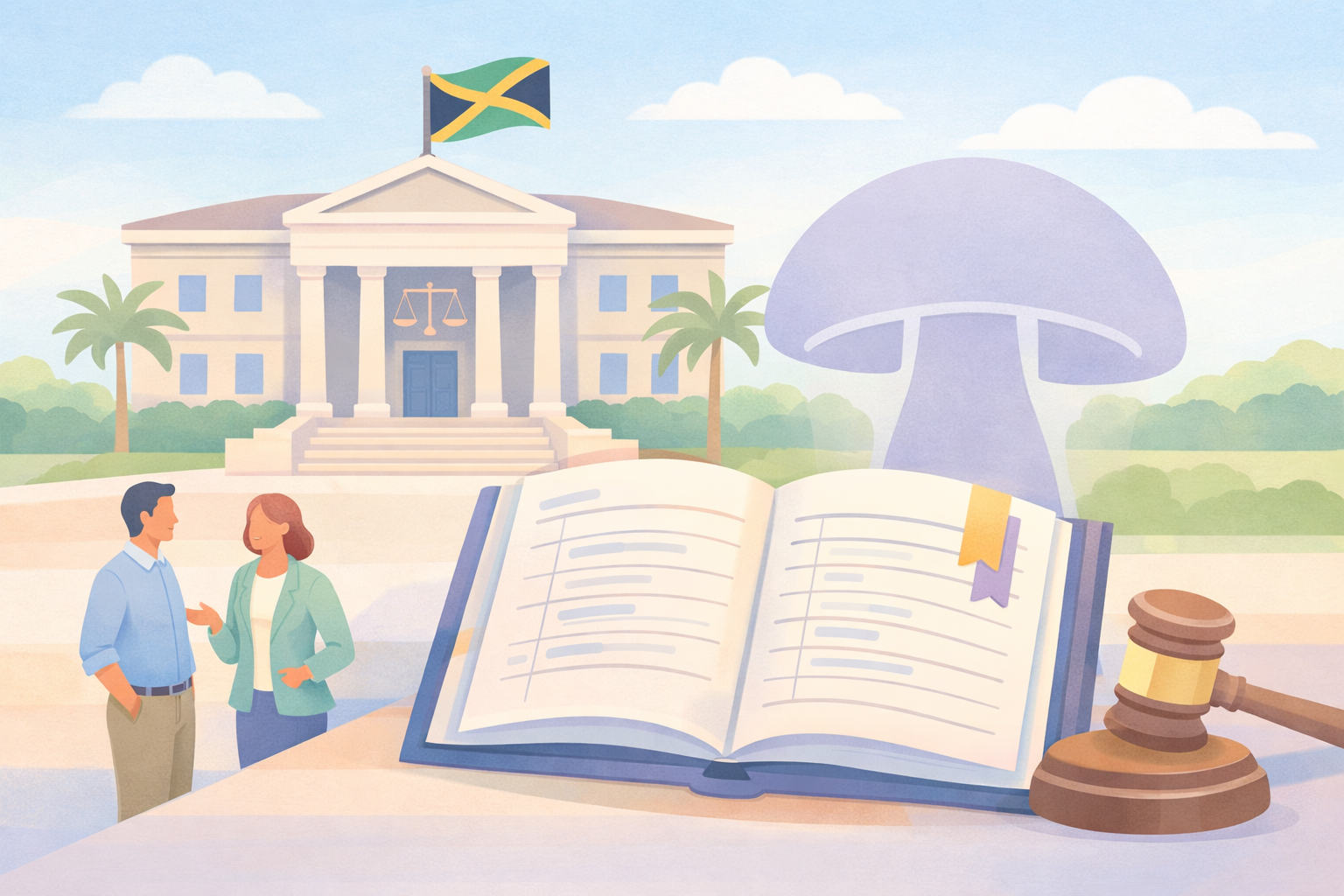
Although there's no formal licensing structure, many reputable providers have adopted rigorous safety and harm reduction standards, medical screening protocols, and integration protocols to ensure participant well-being. Beckley Retreats also offers psilocybin retreats in Jamaica at its Good Hope facility.
Brazil
In Brazil, psilocybin and psilocin are illegal, but the law specifically refers to the molecules themselves, not the fungi containing the molecule. This has allowed for cultivation and personal use with minimal enforcement and has enabled informal retreat settings. However, the lack of regulation means standards vary significantly between providers.
Other Countries
There are other countries and states where psilocybin is decriminalized or legal in a more specific context. Here’s a brief overview of countries where psilocybin access exists via specific pathways - for a comprehensive country-by-country rundown, refer to this tracker.
- Australia: May be prescribed by a psychiatrist for treatment-resistant depression.
- New Zealand: May be prescribed through specialized medical exemptions.
- Canada: Available to patients if their physician requests a Special Access Pathway.
- Germany: Available in extremely select clinical settings for treatment-resistant depression.
- United States: Federally illegal, but fully legal in Oregon and Colorado if used in licensed centers.
Growing magic mushrooms falls under legal gray areas in countries like the Bahamas, the British Virgin Islands, Nepal, Samoa, and parts of the Caribbean. They are decriminalized in Austria, the Czech Republic, and Portugal.
The rest of the world, outside of extremely niche situations, regards psilocybin as a controlled substance with no general exemption.
Magic Mushroom Legality in the United States
Psilocybin is a Schedule I controlled substance in the United States according to the U.S. Drug Enforcement Agency. This designation, applied in 1970, categorizes psilocybin as having
- No accepted medical use
- High potential for abuse
This classification applies nationwide despite growing evidence to the contrary and regardless of state laws. The designation carries significant penalties for manufacturing, distributing, or possessing.
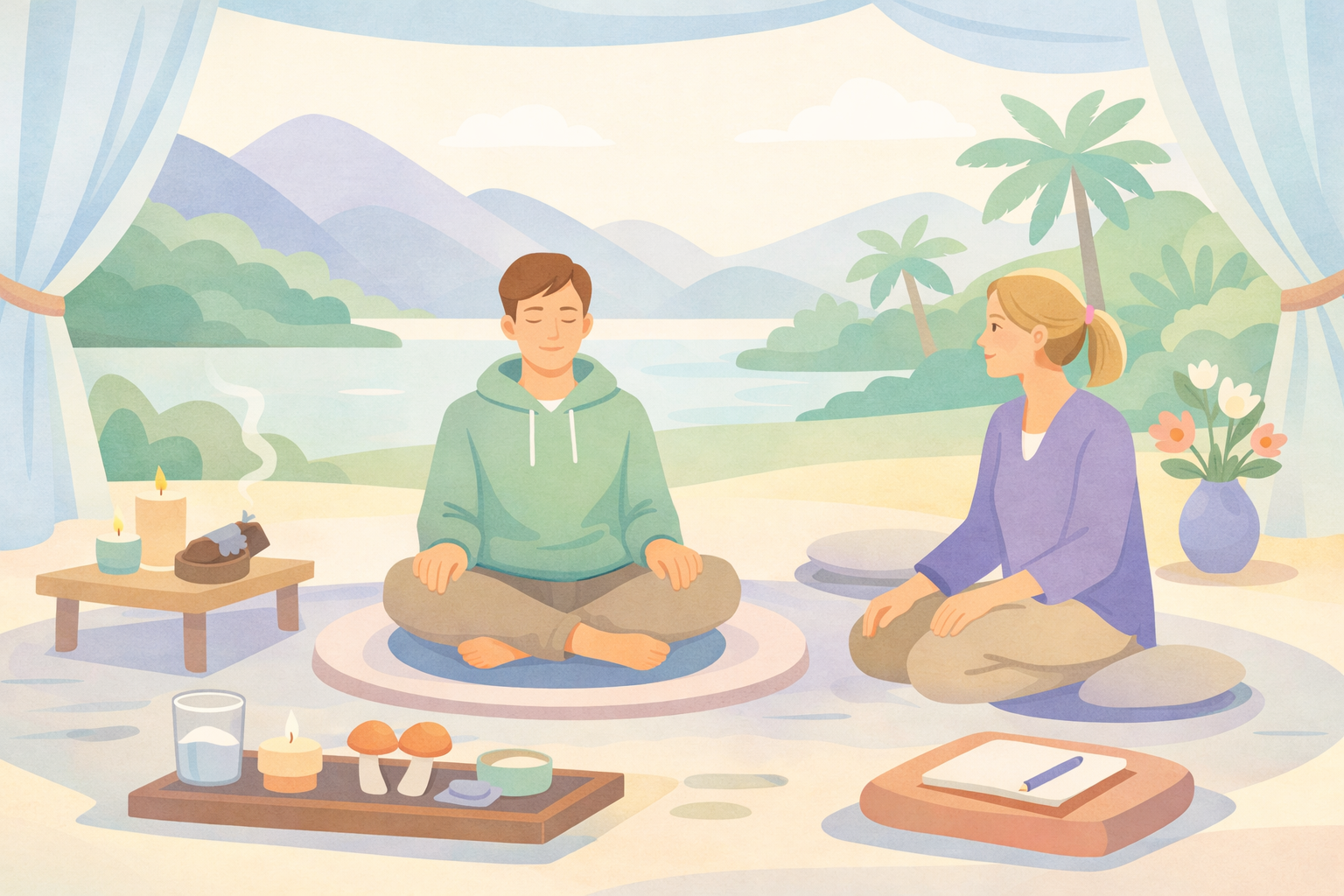
However, psilocybin has been decriminalized at the state level. This means possession remains technically illegal, but enforcing the letter of the law is of lower priority. There are often no criminal penalties for possessing small amounts. Denver, Oakland, Seattle, and Washington D.C. have decriminalized psilocybin possession this way.
Oregon made history in 2020 with the passage of Measure 109, which legalized the manufacture and administration of psilocybin in licensed service centers. The program requires extensive facilitator training, medical screening for participants, and integration support. Colorado followed with Proposition 122 in 2022, which both decriminalized personal possession and created a framework for licensed "healing centers."
Understanding Mushrooms vs. Truffles
You’ll read and hear a lot about psychedelic (or “magic”) mushrooms and truffles the more that you research this topic, and while you can go deep down this particular rabbit hole, we’ll give you a quick rundown.
Mushrooms and truffles are different forms that some Psilocybe fungi can take. Mushrooms are the fruiting bodies of fungi that sprout above ground. And truffles (scientifically referred to as the “sclerotia”) are the underground portion of the fungus that stores nutrients, allowing it to bounce back from environmental extremes. Both truffles and mushrooms contain psilocybin, which is the compound within the fungus that elicits a psychedelic effect, but they're legally treated differently in some jurisdictions.
This distinction is most notable in the Netherlands, after psilocybin mushrooms were banned in 2008. Since the law only specifies the banning of the fruiting body of fungi, a loophole exists that allows people to possess and consume psilocybin truffles and mycelium legally. This created the foundation for the Netherlands' thriving legal psilocybin retreat industry, where providers offer truffle-based experiences with comprehensive preparation and integration support.
How to Choose a Safe, Legal Psilocybin Experience
If you're considering a psilocybin experience, here’s a quick checklist to prioritize safety and legality before choosing a retreat or treatment center.
Verify Legal Status: Confirm the provider operates in a jurisdiction where psilocybin is legal or at least decriminalized. Ask directly about their legal standing and what protections exist for participants.
Check Credentials: Look for facilitators with extensive training and experience. In Oregon, facilitators must complete 150+ hours of training. Established international programs often have facilitators with years or decades of experience supporting psychedelic journeys.
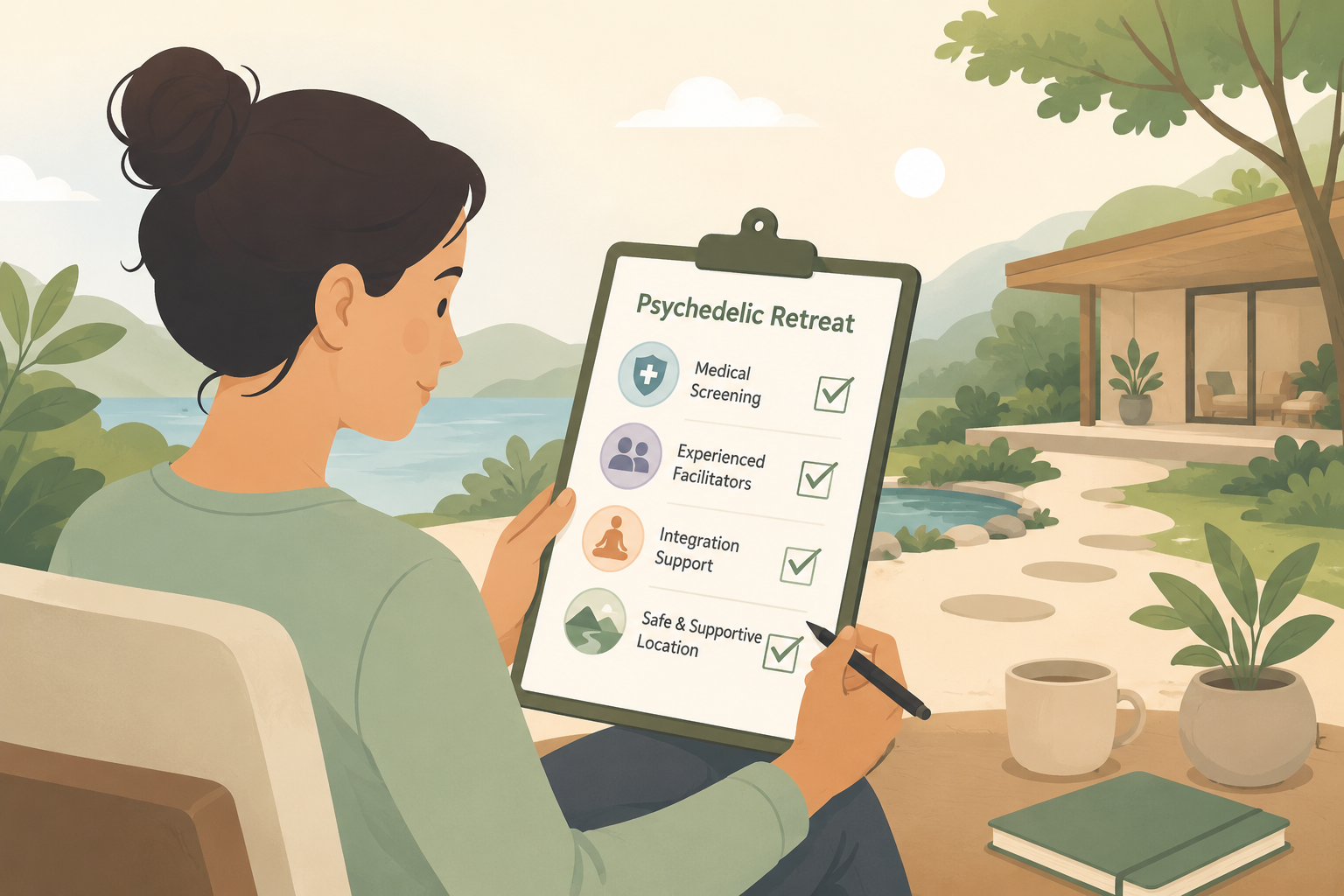
Medical Screening: Reputable providers conduct thorough health assessments, reviewing medications, cardiovascular health, psychiatric history, and other contraindications.
Preparation and Integration: Ask what preparation is provided before the experience and what integration support continues afterward. Research on integration shows it's key to translating experiences into lasting change. Programs offering weeks of structured integration typically produce better long-term outcomes.
Watch for Red Flags: Be cautious of providers who make medical claims, avoid medical screening, lack transparency about facilitator training, or operate in legal gray areas without clear safety protocols.
Frequently Asked Questions
Before you apply
Beckley runs legal, guided psilocybin retreats in Jamaica and psilocybin retreats in the Netherlands: four weeks of preparation, two guided sessions on retreat, six weeks of integration, online and at your own pace, one to two hours a week. Plain answers to the questions people ask first:
What a psilocybin retreat costs · What happens, day by day · Jamaica or the Netherlands · Who should not attend · Apply
Disclaimer: This article provides educational information only and does not constitute legal or medical advice. Psilocybin remains a controlled substance in many jurisdictions. Laws vary by location and change frequently. Consult qualified legal counsel regarding local laws and healthcare providers regarding health considerations before considering psilocybin use.
Sources
- BBC. (2021, April 19). Jamaica’s psychedelic mushroom retreat. https://www.bbc.com/travel/article/20210419-jamaicas-psychedelic-mushroom-retreat
- Colorado Secretary of State. (2022). Proposition 122 final text. https://www.sos.state.co.us/pubs/elections/Initiatives/titleBoard/filings/2021-2022/36Final.pdf
- Deutsche Welle. (2020, November 9). Psychedelics making a comeback in the Amazon. https://www.dw.com/en/psychedelics-making-a-comeback-in-the-amazon/a-54800012
- Drug Enforcement Administration. (n.d.). Controlled Substances Act. U.S. Department of Justice. https://www.deadiversion.usdoj.gov/21cfr/21usc/812.htm
- Government of the Netherlands. (n.d.). Toleration policy regarding soft drugs and coffee shops. https://www.government.nl/topics/drugs/toleration-policy-regarding-soft-drugs-and-coffee-shops
- Johns Hopkins Center for Psychedelic and Consciousness Research. (n.d.). Clinical trials. https://hopkinspsychedelic.org/clinical-trials
- Lafrance, A., Loizaga-Velder, A., Fletcher, J., Renelli, M., Files, N., & Tupper, K. W. (2022). Psychedelic integration: An analysis of the concept and its practice. Frontiers in Psychology, 13, Article 824077. https://www.frontiersin.org/articles/10.3389/fpsyg.2022.824077/full
- Oregon Health Authority. (n.d.). Psilocybin services program. https://www.oregon.gov/oha/PH/PREVENTIONWELLNESS/Pages/Psilocybin.aspx
- Psychedelic Alpha. (2024). Psychedelic legalization and decriminalization tracker. https://psychedelicalpha.com/data/psychedelic-laws
- Therapeutic Goods Administration (Australia). (2023). TGA approves new access pathway for psychiatric treatment. https://www.tga.gov.au/news/media-releases/tga-approves-new-access-pathway-psychiatric-treatment
- Trimbos Institute (Netherlands Institute of Mental Health and Addiction). (n.d.). Psilocybin mushrooms (paddos). https://www.trimbos.nl/kennis/drugs/paddo/
- U.S. Food and Drug Administration. (n.d.). Breakthrough therapy. https://www.fda.gov/patients/fast-track-breakthrough-therapy-accelerated-approval-priority-review/breakthrough-therapy
- Carhart-Harris RL, Bolstridge M, Day CMJ, Rucker J, Watts R, Erritzoe DE, Kaelen M, Giribaldi B, Bloomfield M, Pilling S, Rickard JA, Forbes B, Feilding A, Taylor D, Curran HV, Nutt DJ. Psilocybin with psychological support for treatment-resistant depression: six-month follow-up. Psychopharmacology (Berl). 2018 Feb;235(2):399-408. doi: 10.1007/s00213-017-4771-x. Epub 2017 Nov 8. PMID: 29119217; PMCID: PMC5813086.
- Bathje GJ, Majeski E and Kudowor M (2022) Psychedelic integration: An analysis of the concept and its practice. Front. Psychol. 13:824077. doi: 10.3389/fpsyg.2022.824077