
-2-1.png)



On the outside, everything looks great.
Good job; nice car; a home and a family. The whole nine yards. But beneath the surface and despite all you’ve achieved, you feel stuck. Somewhere distant in your mind, a quiet but persistent feeling of dissatisfaction thumps away.
It’s not a fire alarm; it’s more like the periodic beep of the microwave, telling you your food has been ready for a while.
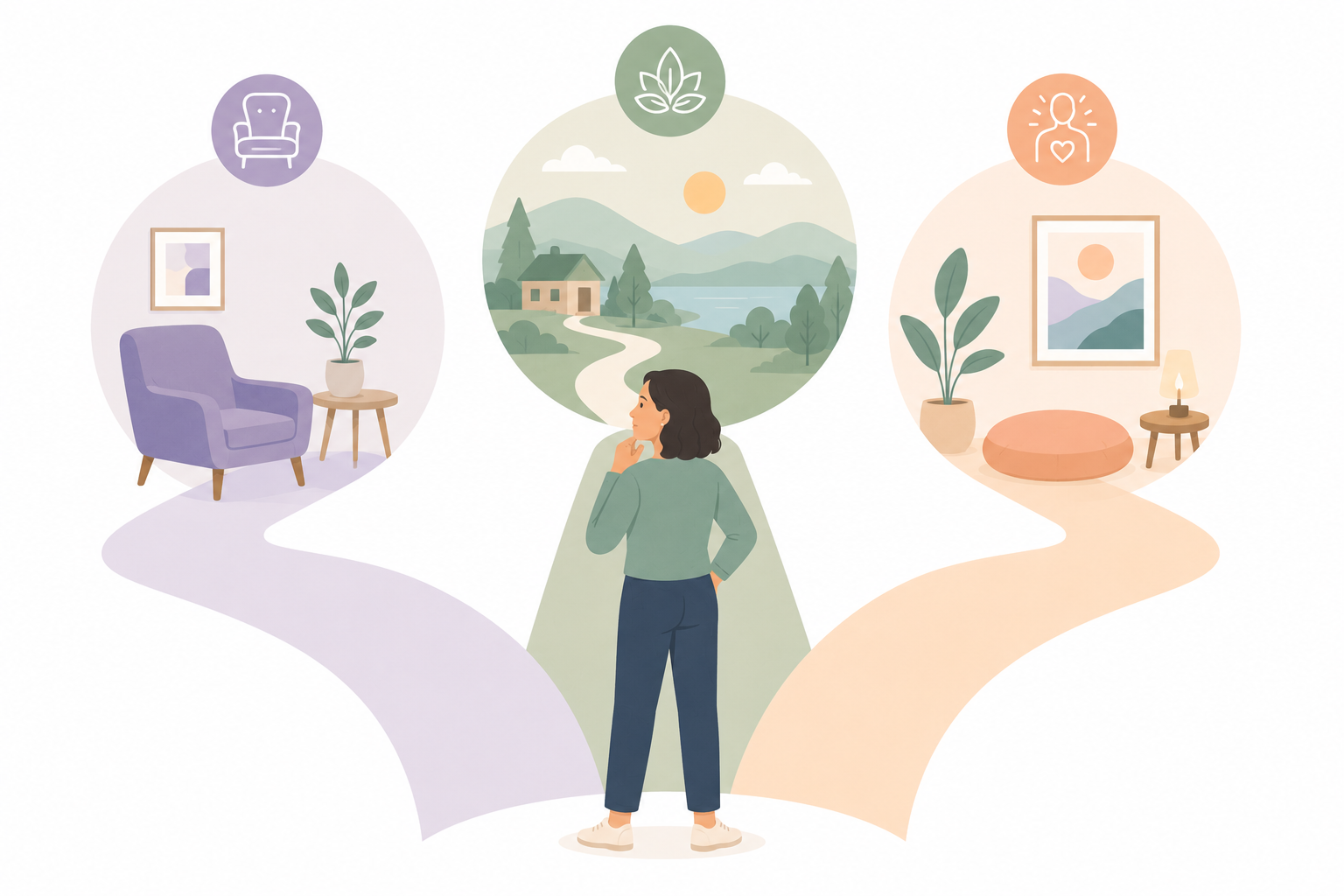
Feeling numb or dejected despite external successes is common, especially for folks entering or navigating middle age. And there’s actually some surprising science behind why you might feel like you’re swept up in a quiet storm.
Here’s what you need to know - and how to stop suffering in silence.
Why Midlife Often Triggers Identity Questions
In the 1960s, famed psychologist Erik Erikson put forth the ideas of generativity and stagnation.
- Generativity describes one’s capacity for care and creativity, particularly as it relates to providing for others.
- Stagnation is the opposite. To Erikson, it describes not a lack of empathy per se but a lack of motivation to have a positive impact outside of oneself.
These concepts help us understand why it’s so easy to feel stuck in middle age. Our first 20 to 30 years of life are packed with significant, formative experiences. Things change rapidly. We inhale novelty like a vacuum.

But, eventually, most of us come to settle into a routine: careers stabilize, children are born, and so on. The ground shifts less under our feet. But these experiences, while affirming and welcome, don’t always translate to deep, personal satisfaction.
Why This Experience Isn’t Always a Crisis
We must recognize and respect the distinction between a crisis and just feeling dejected. You may have been harboring these feelings for a long time, but they don’t necessarily impact your day-to-day in big ways.
And, while troublesome, feeling stuck - in a way that’s, at minimum, tolerable - has a silver lining. Feeling lost isn’t indicative that something is wrong in your life. It may, however, signal that your perspective, wants, needs, or calling is evolving. Growing pains don’t just happen in puberty.
Why People Explore Therapy, Retreats, or Psychedelics in Midlife
A desire for change may manifest as feeling stuck in midlife. Your feelings of listlessness, ambivalence, or apprehension could be masking a deeper desire. To uncover the source of these troubles, many middle-aged adults explore avenues of expanding their consciousness.
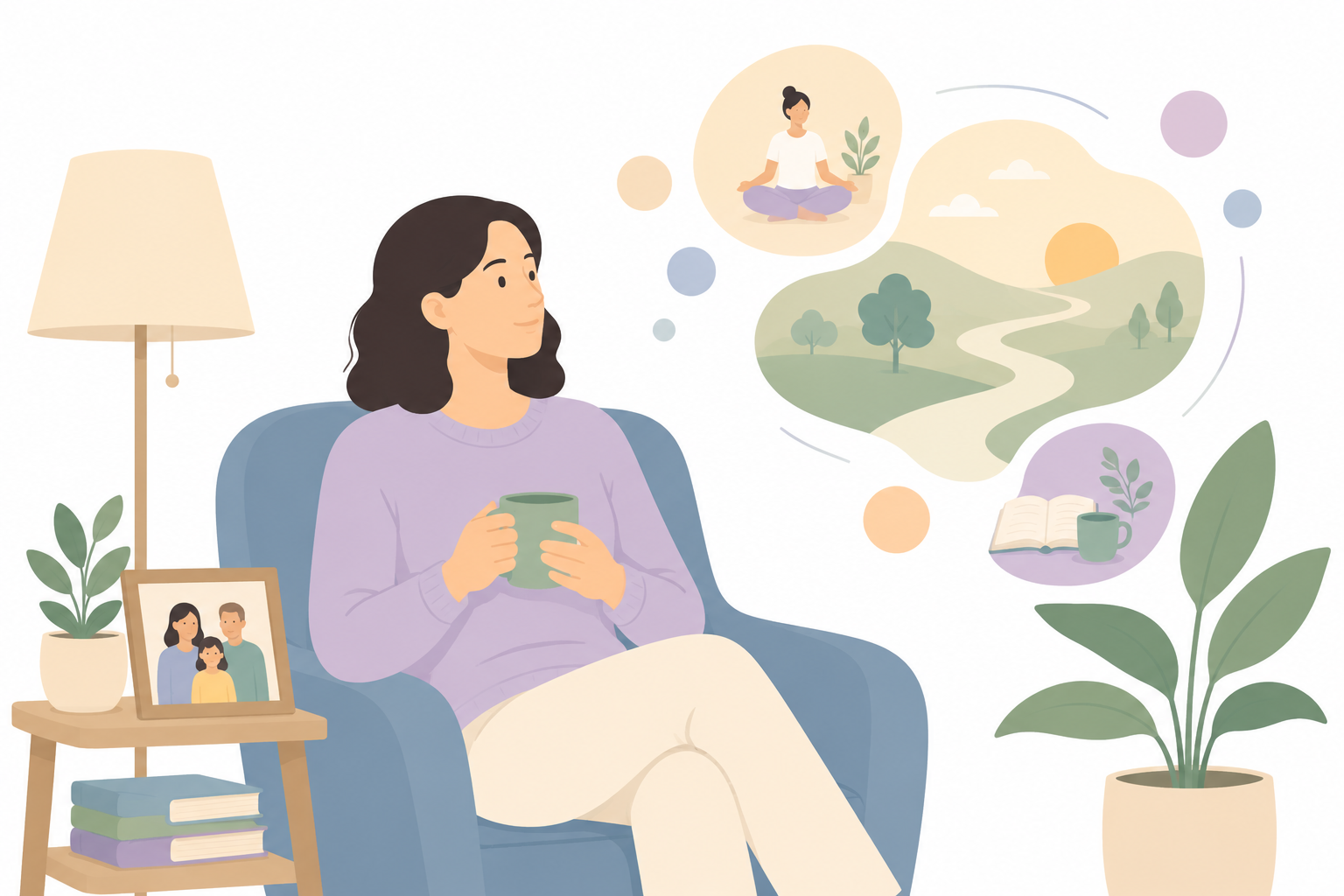
This often starts with therapy. According to data from the U.S. Centers for Disease Control & Prevention, adults aged 45-64 seek mental health treatments, therapy included, more often than other age groups.
Therapy or counseling helps identify unexamined patterns or unpack deep-seated traumas. These may be overlooked factors that have influenced your direction in life without you even noticing.
Some are turning to more intensive experiences like psychedelics. The field of psychedelic-assisted therapy (PAT) is in its infancy, but what we do know so far is that PAT seems “safe and well tolerated” for older adults.
- Psychedelics like psilocybin facilitate new neural connections, opening a “window of plasticity” that may help people break out of rigid thought patterns.
- They can also lead to “persistent reductions in anxiety, neuroticism, and burnout” in some patients.
- Some users also find psychedelics have the capacity to facilitate new insights on life, potentially shifting life values and evoke deep, meaningful change. For some, there’s more spiritual utility than therapeutic.
It’s worth noting that psychedelics aren’t a cure-all. You don’t take psilocybin and wake up the next day with a completely new outlook on life. When it comes to recovering from burnout specifically - which is not the same thing as feeling stuck - the process can be months-long.

It’s all about what you do with the insights you glean from whatever you’re trying, whether it be talk therapy or a psychedelic trip.
What Actually Helps People Feel Reconnected
Escaping a rut and feeling reconnected with your life is a common middle-life challenge. But the research on satisfaction and psychedelics alike point to the same conclusion - interventions help, but you have to do the work yourself:
- Fostering relationships: Go beyond surface-level interactions and small talk. Deepen the relationships in your life through quality time and genuine empathy
- Seek novelty: Sometimes, you really are just stuck in old habits. If you have the means, middle age is a great time to explore new interests or rediscover an old hobby.
- Be reflective: Meaning comes from within. To access it and find fulfillment, you must be willing to look inward and examine the “why” behind the “what.”
- Seek everyday awe: Try and tap into your childlike sense of wonder at the world, imagining you’re perceiving everything for the first time, cultivating those everyday moments of awe and wonder.
- Pay attention: Your connection to nature and the world around you is built on where you put your awareness. Pay attention to your surroundings and the elements of nature, tuning in with all your senses - even moments of attention can help you reconnect to the natural world.
Frequently Asked Questions
Sources
- Bartram, D. (2023). Is happiness u-shaped in age everywhere? A methodological reconsideration for Europe. National Institute Economic Review, 263, 61–75.
- Reinilä, E., Saajanaho, M., Fadjukoff, P. et al. The Development of Generativity in Middle Adulthood and the Beginning of Late Adulthood: A Longitudinal Study from Age 42 to 61. J Adult Dev 30, 291–304 (2023). https://doi.org/10.1007/s10804-022-09436-1
- Bouchet L, Sager Z, Yrondi A, Nigam KB, Anderson BT, Ross S, Petridis PD, Beaussant Y. Older adults in psychedelic-assisted therapy trials: A systematic review. J Psychopharmacol. 2024 Jan;38(1):33-48. doi: 10.1177/02698811231215420. Epub 2024 Jan 19. PMID: 38240068.
- Laabi S, LeMmon C, Vogel C, Chacon M, Jimenez VM Jr. Psilocybin and psilocin regulate microglial immunomodulation and support neuroplasticity via serotonergic and AhR signaling. Int Immunopharmacol. 2025 Jun 26;159:114940. doi: 10.1016/j.intimp.2025.114940. Epub 2025 May 26. PMID: 40424654.
- Nayak SM, Jackson H, Sepeda ND, Mathai DS, So S, Yaffe A, Zaki H, Brasher TJ, Lowe MX, Jolly DRP, Barrett FS, Griffiths RR, Strickland JC, Johnson MW, Jackson H, Garcia-Romeu A. Naturalistic psilocybin use is associated with persisting improvements in mental health and wellbeing: results from a prospective, longitudinal survey. Front Psychiatry. 2023 Sep 19;14:1199642. doi: 10.3389/fpsyt.2023.1199642. PMID: 37795509; PMCID: PMC10545967.
- Karlson, B., Jönsson, P. & Österberg, K. Long-term stability of return to work after a workplace-oriented intervention for patients on sick leave for burnout. BMC Public Health 14, 821 (2014). https://doi.org/10.1186/1471-2458-14-821
- Carhart-Harris RL, Bolstridge M, Day CMJ, Rucker J, Watts R, Erritzoe DE, Kaelen M, Giribaldi B, Bloomfield M, Pilling S, Rickard JA, Forbes B, Feilding A, Taylor D, Curran HV, Nutt DJ. Psilocybin with psychological support for treatment-resistant depression: six-month follow-up. Psychopharmacology (Berl). 2018 Feb;235(2):399-408. doi: 10.1007/s00213-017-4771-x. Epub 2017 Nov 8. PMID: 29119217; PMCID: PMC5813086.
Before you apply
Beckley runs legal, guided psilocybin retreats in Jamaica and psilocybin retreats in the Netherlands: four weeks of preparation, two guided sessions on retreat, six weeks of integration, online and at your own pace, one to two hours a week. Plain answers to the questions people ask first:
What a psilocybin retreat costs · What happens, day by day · Jamaica or the Netherlands · Who should not attend · Apply
mental health• retreat guides• psychedelic therapy• Sam Gandy• midlife transition• wellness retreats