
-2-1.png)

Sleep is easy to take for granted - until you can’t get as much as you need. CDC data tells us that around one-third of adults in the United States get fewer than 7 hours of sleep in a 24-hour period.
People turn to all sorts of solutions to catch their Z’s - from hot showers to slow music and sleeping pills - and some are more harmful than others. But what about psychedelics and sleep? Psychedelic drugs have limited evidence regarding improving sleep directly; however, the circumstantial benefits make a stronger case.
How Sleep and Mental Health Influence Each Other
Sleep isn’t downtime. The hours between bedtime and breakfast are crucial for your brain to reformat, reorganize, and recover from the cognitive load it undertakes during the day. Research indicates the risk of mental health conditions like depression shoots up significantly when our brains starve for sleep.
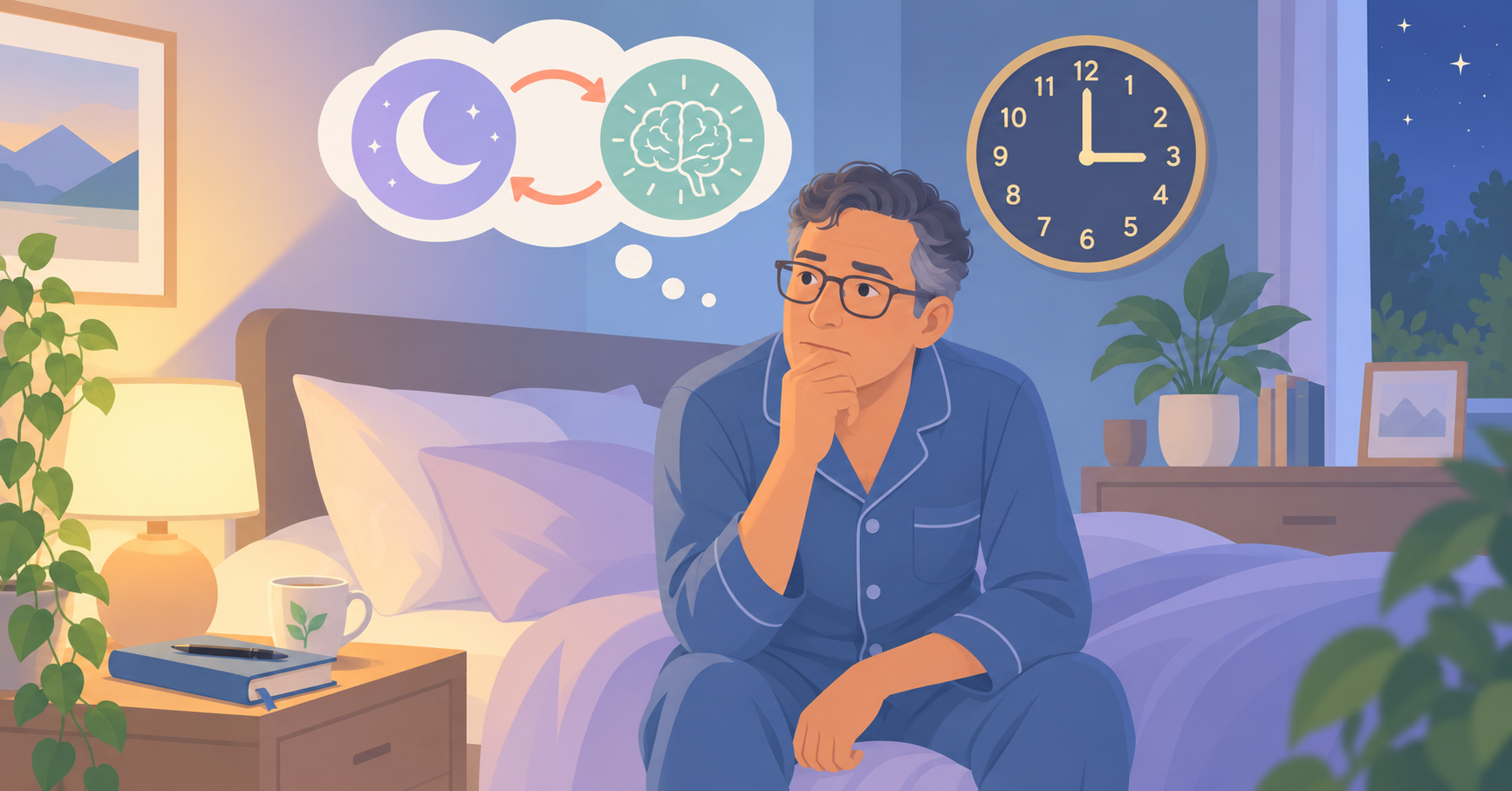
Our contemporary understanding of the relevance of sleep to mental health stands in contrast to earlier findings; previously, insomnia was considered a byproduct of deleterious mental health.
That’s still true to a degree, but there’s a clear two-way relationship at play - poor mental health can worsen sleep, and poor sleep habits can worsen mental health. If left ignored, this two-way relationship may put you at risk of developing conditions like dementia later in life, too.
It stands to reason that tackling either may improve the other - and getting better sleep is easier than “fixing” depression.
How Psychedelics Affect Sleep
Psychedelics have tremendous potential in treating certain mental health ailments. There’s more research on sleep and psychedelics than you might think, but the findings are far from conclusive. Here’s what we know about the acute and chronic effects of psychedelics on sleep habits & hygiene.
Immediately After Use
Psychedelics like psilocybin, ayahuasca, or DMT, target specific receptors in the brain. Stimulating these 5-HT1A and 5-HT2A receptors helps create the dreamy, out-of-body experiences associated with psychedelics, but they also play a role in regulating the body’s sleep-wake cycle.

Psilocybin appears to have mild antidepressant properties relating to sleep, but more research is needed. In this paper, the authors note that psilocybin taken in the morning delays the onset of REM (rapid eye movement), the deepest and most restorative phase of the sleep cycle.
Ayahuasca presents some similar effects on sleep; inhibiting REM sleep and altering slow-wave sleep, which is believed to be responsible for orchestrating memory organization and bodily tissue repair. However, subjects in this paper did not report acute sleep quality disruptions.
MDMA may be the most potent psychedelic sleep disruptor due to its ability to create significant psychological arousal. Some studies show that acute MDMA disrupts sleep, but without leading to subsequent sleepiness the next day.
Ketamine appears to work in the other direction, however. Systematic reviews call for more robust research, but do indicate that ketamine can reduce the severity of insomnia in depression sufferers.
What Research Says About Psychedelics and Long-Term Sleep
Here’s where things get more complicated: research generally indicates that many psychedelics acutely disrupt sleep patterns on a neurological level. However, many users in these studies report no changes in their subjective sleep quality. Some even report slightly better sleep overall.
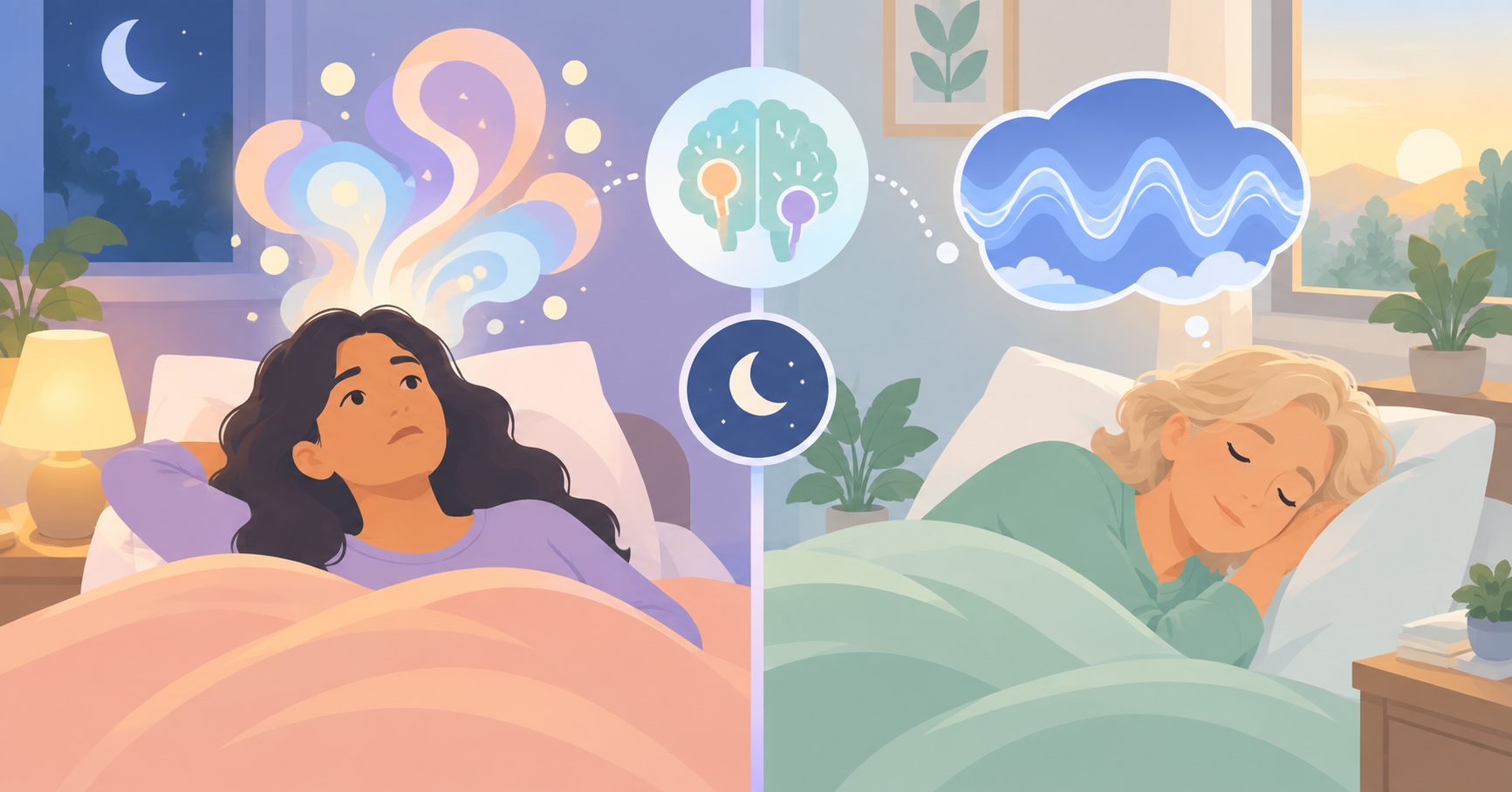
There’s a disconnect between what’s happening in the brains of sleeping psychedelic users and how they feel the next day. That may support the idea that psychedelics improve sleep indirectly and may bolster their case as a long-term or behavioral intervention.
Can Psychedelic-Assisted Therapy Help People Sleep Better?
Psychedelic-assisted therapy (PAT) describes combining psychedelic drugs with traditional psychotherapy interventions like counseling, meditation, or journaling. Some studies have revealed “significant improvements” in depressive and anxiety symptoms.
Unfortunately, there is limited long-term research on PAT for sleep. Some studies have thrown support behind the idea of psychedelics (psilocybin in particular) facilitate an interaction between depression relief and sleep quality: “Addressing sleep disturbances could enhance therapeutic outcomes in psilocybin-assisted therapy…”

Whether psychedelics themselves are helping or harming long-term outcomes in depression sufferers with insomnia remains unclear. At this point, it’s premature to compare psychedelics to standard sleep aids like over-the-counter medication or prescriptions.
Sleeping pills are triage, not treatment: you take them as needed to induce sleep, but they don’t address the root causes of sleep disruption. Psychedelics may work the other way around - some drugs can acutely disrupt sleep, but may confer broader behavioral changes that end up improving sleep quality long-term.
What We Still Don’t Know
So far, there are no direct studies examining sleep quality as a clinical endpoint for psychedelic administration. How these drugs influence sleep is observed circumstantially. Moreover, many of these studies examine brief periods, such as 24 hours, during which participants sleep only once.

Sleep hygiene is an ongoing effort that takes diligence and patience to address. A single dose of psilocybin produces meaningful clinical change with respect to certain depressive symptoms, but we can’t yet argue that one trip equates to weeks of restful sleep.
Future research needs to put long-term sleep hygiene with psychedelics under the microscope. It’s possible that regular microdosing may produce better outcomes, but it’s simply too early to tell for sure.
Frequently Asked Questions
Sources
- Baglioni C, Battagliese G, Feige B, Spiegelhalder K, Nissen C, Voderholzer U, Lombardo C, Riemann D. Insomnia as a predictor of depression: a meta-analytic evaluation of longitudinal epidemiological studies. J Affect Disord. 2011 Dec;135(1-3):10-9. doi: 10.1016/j.jad.2011.01.011. Epub 2011 Feb 5. PMID: 21300408.
- Barbanoj MJ, Riba J, Clos S, Giménez S, Grasa E, Romero S. Daytime Ayahuasca administration modulates REM and slow-wave sleep in healthy volunteers. Psychopharmacology (Berl). 2008 Feb;196(2):315-26. doi: 10.1007/s00213-007-0963-0. Epub 2007 Nov 21. PMID: 18030450.
- Simmonds, E., Levine, K.S., Han, J. et al. Sleep disturbances as risk factors for neurodegeneration later in life. npj Dement. 1, 6 (2025). https://doi.org/10.1038/s44400-025-00008-0
- Dudysová D, Janků K, Šmotek M, Saifutdinova E, Kopřivová J, Bušková J, Mander BA, Brunovský M, Zach P, Korčák J, Andrashko V, Viktorinová M, Tylš F, Bravermanová A, Froese T, Páleníček T, Horáček J. The Effects of Daytime Psilocybin Administration on Sleep: Implications for Antidepressant Action. Front Pharmacol. 2020 Dec 3;11:602590. doi: 10.3389/fphar.2020.602590. PMID: 33343372; PMCID: PMC7744693.
- Barbanoj MJ, Riba J, Clos S, Giménez S, Grasa E, Romero S. Daytime Ayahuasca administration modulates REM and slow-wave sleep in healthy volunteers. Psychopharmacology (Berl). 2008 Feb;196(2):315-26. doi: 10.1007/s00213-007-0963-0. Epub 2007 Nov 21. PMID: 18030450.
- Randall S, Johanson CE, Tancer M, Roehrs T. Effects of acute 3,4-methylenedioxymethamphetamine on sleep and daytime sleepiness in MDMA users: a preliminary study. Sleep. 2009 Nov;32(11):1513-9. doi: 10.1093/sleep/32.11.1513. PMID: 19928391; PMCID: PMC2768958.
- Kwaśny A, Włodarczyk A, Ogonowski D, Cubała WJ. Effect of Ketamine on Sleep in Treatment-Resistant Depression: A Systematic Review. Pharmaceuticals (Basel). 2023 Apr 10;16(4):568. doi: 10.3390/ph16040568. PMID: 37111325; PMCID: PMC10143949.
- Aboulafia-Brakha T, Buchard A, Mabilais C, Alaux S, Amberger C, Furtado L, Seragnoli F, Briefer JF, Thorens G, Sabé M, Szczesniak L, Iuga R, Zullino D, Penzenstadler L. Real-world effectiveness and safety of psychedelic-assisted psychotherapy: Outcomes from a large-scale compassionate use cohort in Switzerland. Psychiatry Res. 2026 Apr;358:116992. doi: 10.1016/j.psychres.2026.116992. Epub 2026 Feb 2. PMID: 41643299.
- Reid MJ, Kettner H, Blanken TF, Weiss B, Carhart-Harris R. Preliminary Evidence of Sleep Improvements Following Psilocybin Administration, and their Involvement in Antidepressant Therapeutic Action. Curr Psychiatry Rep. 2024 Nov;26(11):659-669. doi: 10.1007/s11920-024-01539-8. Epub 2024 Nov 13. Erratum in: Curr Psychiatry Rep. 2026 Jun 5;28(1):34. doi: 10.1007/s11920-026-01685-1. PMID: 39532819; PMCID: PMC11579049.
Before you apply
Beckley runs legal, guided psilocybin retreats in Jamaica and psilocybin retreats in the Netherlands: four weeks of preparation, two guided sessions on retreat, six weeks of integration, online and at your own pace, one to two hours a week. Plain answers to the questions people ask first:
What a psilocybin retreat costs · What happens, day by day · Jamaica or the Netherlands · Who should not attend · Apply